8 min read
How to age in place
Blog article

Making adjustments to age in place has become an emerging trend amongst homeowners. In fact, WHO states that by 2030, 1 in 6 people will be 60 years and over. By 2050, the world’s population of those aged 60 years and older will double. And with that comes specific challenges and opportunities affecting our way of life today and tomorrow. In this blog, we’ll uncover ways to age comfortably and safely in the place you love the most.
Did you know that according to the AARP, nearly 90% of Americans want to grow older in their current homes? It shouldn’t come as a shock. We spend most of our lives at home, and there’s no place like it.
Ageing in place and the risk of accidents
One thing that we know for certain is that accidents happen, and they become more common as we age. Approximately one in four people 65 and older have experienced a fall yearly. The risk of falling and fall-related injuries increases with age. As individuals age, bone mass becomes more fragile and susceptible to fractures. In some cases, a broken bone can mark the beginning of more serious health concerns or prolonged disability amongst the elderly.
Adaptations make a difference
Nearly 3 in every 4 seniors want to stay in their homes as they get older and do not want to move into care homes. 97% of older people in the UK do not want to go into a care home, even if they become ill. Fortunately, care homes are not the only option.
Ageing in place is gaining popularity, but people don’t know where to start or how much to invest to achieve this. Fortunately, many things can be done to adapt your home into a place you can grow old in and keep your independence.
Ageing in place and home modifications
Depending on your current home, you can implement several home modifications to make your home safe and accessible. Start by assessing your home to see which areas can be updated to make your life more comfortable and secure.
Bathroom safety grab bar
A sturdy grab bar or handrail is an easy and small investment with a significant impact. A grab bar is a great preventative measure to aid in the case of dangerous falls in slippery places like the bathroom. Grab bars generally cost around 200 euros, including installation costs.


Anti-slip carpets
On top of that, another inexpensive fix to age in place securely and prevent bathroom slips is adding an anti-slip rug. Not only do they keep you safe from slipping on wet floors, but they also brighten up your bathroom and keep your feet warm when you come out of the shower.


Replace your bathtub with a walk-in shower
Though beautiful and luxurious, a bathtub can become challenging to enter as mobility decreases. It is a wise investment to replace it for a walk-in shower that is spacious and easy to access. This is a much safer option. Although costly, according to the CDC, 235,000 Americans visit the emergency room yearly due to injuries sustained in the bathroom. Similarly, 9.8% of injuries are caused when exiting the bathtub or shower. So, investing around 10,000 € to renovate the bathroom can be worthwhile since it can help reduce your risks of injury in the long run.

In addition to changing your bathtub for a walk-in shower, we recommend investing in a foldable shower chair or stool. A shower chair can be attached to the shower wall or completely detached.
A shower chair is very useful for those who use wheelchairs or find movement painful or difficult. Additionally, it is a very inexpensive solution offering unparalleled home safety and comfort.
Install a residential lift to future-proof your home
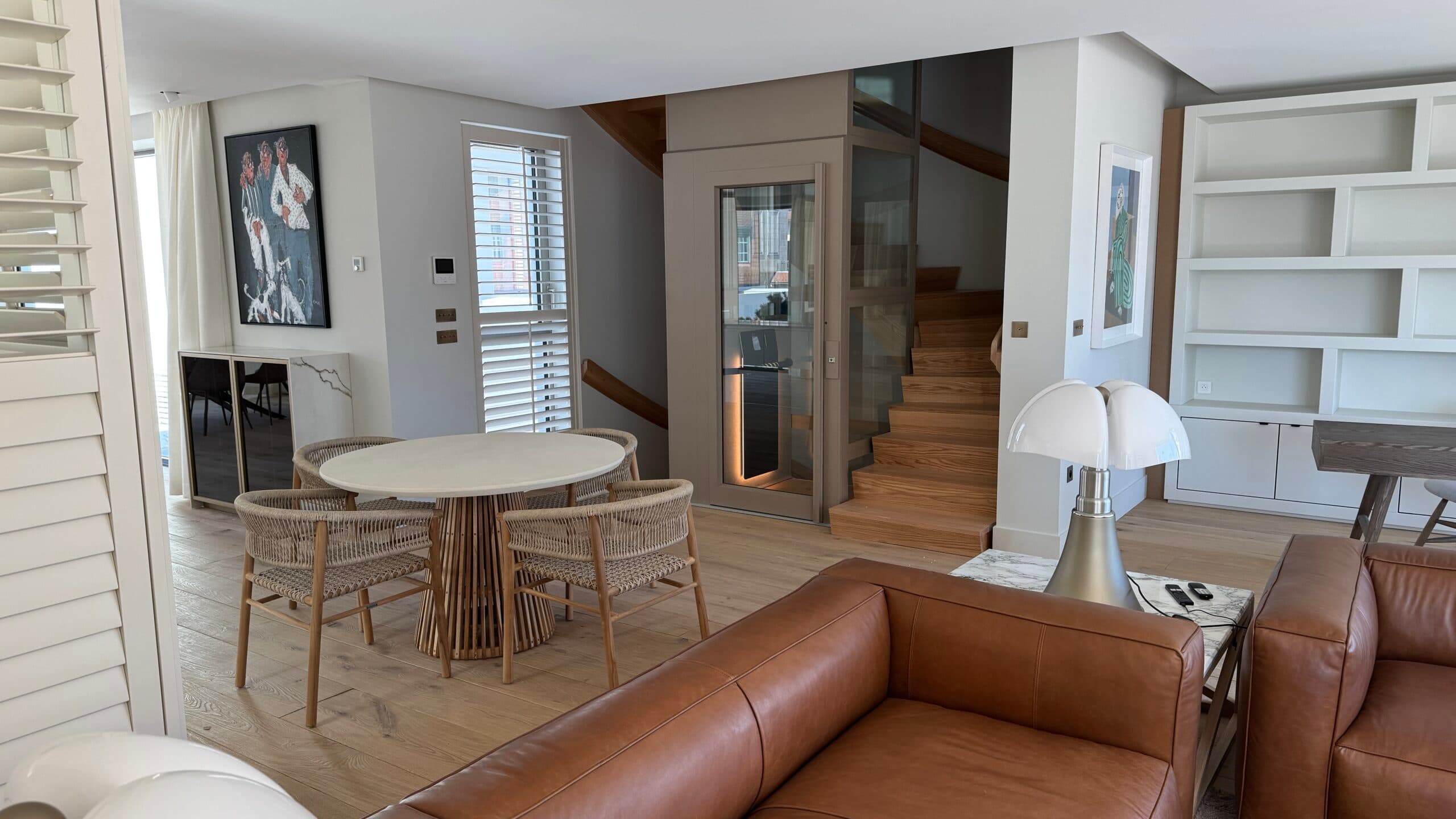
Installing a home lift might not be the first that comes to mind, but it is growing in popularity for good reasons. Unlike stairlifts, home lifts can be used with mobility devices and by multiple passengers simultaneously. Home lifts also increase the value of your property by 10%, whereas stair lifts don’t.
Moreover, home lifts are our expertise; Cibes has been manufacturing lifts since 1947 and we are proud to provide a safe alternative to stairs for those who want to future-proof their home.
To learn more about the differences between home lifts and stairlifts, visit our blog: The difference between a stairlift and a home lift

Whether you opt for a platform lift or a cabin lift, you can quickly be taken from the ground floor to your bedroom by pressing a button. Though you might think a home lift is out of the budget, lifts are more affordable than you might think. To give you an idea, a Cibes home lift serving two floors may cost anything from 20 000€ – 40 000€, and in some instances, you can receive a grant to purchase one. By opting for a home lift now, you can future-proof your home and enjoy a comfortable and luxurious addition.
Read our blog: 7 Reasons to get a Cibes home lift
Don’t forget about storage
An often-overlooked factor is storage space. Storage is usually in places that are difficult to reach, so to future-proof, being able to reach your kitchen cabinets and bathroom storage without hassle is key. If you have the budget, you can install lower cabinets and cupboards closer to the ground.

Emma Reed from Kitchens by Emma has mentioned some things to consider: “If you want to future-proof your kitchen, you need to think about how you can make your kitchen ergonomic. How can you reduce the time and energy of walking, bending, twisting, and lifting in your kitchen? A good designer will work with you to position your appliances in a way that optimises efficiency here.” If you think this way, a few simple changes will do the trick! You can start by placing all the items you use the most in the lower cabinets and move lesser-used items to the upper cabinets.
Widen existing doorways
Most homes do not have doorways wide enough for wheelchairs or mobility devices. Though it requires some work, having a perfectly accessible home is worth the effort. If you ever require a mobility device, navigating your home will be simple. To be wheelchair accessible, you will need 900mm wide doors and 1500mm wide corridors to turn around in a wheelchair comfortably. According to Assurance Builders, widening a door in your home costs about 300-2500 USD.

Integrate smart technology
Innovative home technology can play a considerable role in future-proofing your home. The adoption of home technology has significantly increased over the recent years. Intelligent software developed for seniors has grown in popularity. From systems that enable 24/7 health monitoring to wearable devices that can detect when there has been a fall and report it directly to the health authorities.
Setting up your smart home can help you to age in place in more ways than you might imagine. For example, installing a ring doorbell with a camera is now possible, so you do not need to walk to the door to see who is visiting. Ring and other software like it are also compatible with lock systems, meaning you can remotely open and close your front door via the app.

Another phenomenal tool is the virtual assistant devices. To name a few, Amazon Alexa, Apple Siri, and Google Assistant help you to stay connected with your loved ones and are voice-activated. This means you can tell it to perform specific actions like calling a loved one or asking it to read the news. If you have other smart appliances, you can also control them through your digital assistant, which means you can remotely control your thermostat, lights, and TV.
Ageing in place is a journey.
Remember, ageing in place is a journey, and your approach should be tailored to your needs, budget and personal preferences. We hope that this blog has given you insight into how to age in place and the alternatives that are available for you.
Don’t forget that you are not alone; reach out to professionals to gain valuable insight into creating a personalised plan that works for you. If you would like advice on installing a home elevator, we invite you to contact our team of experts by clicking here– obligation free.
Written by

Paulette CastroSocial Media Content Specialist, Author