8 min read
Is it possible to retrofit a lift into an old building?
Blog article
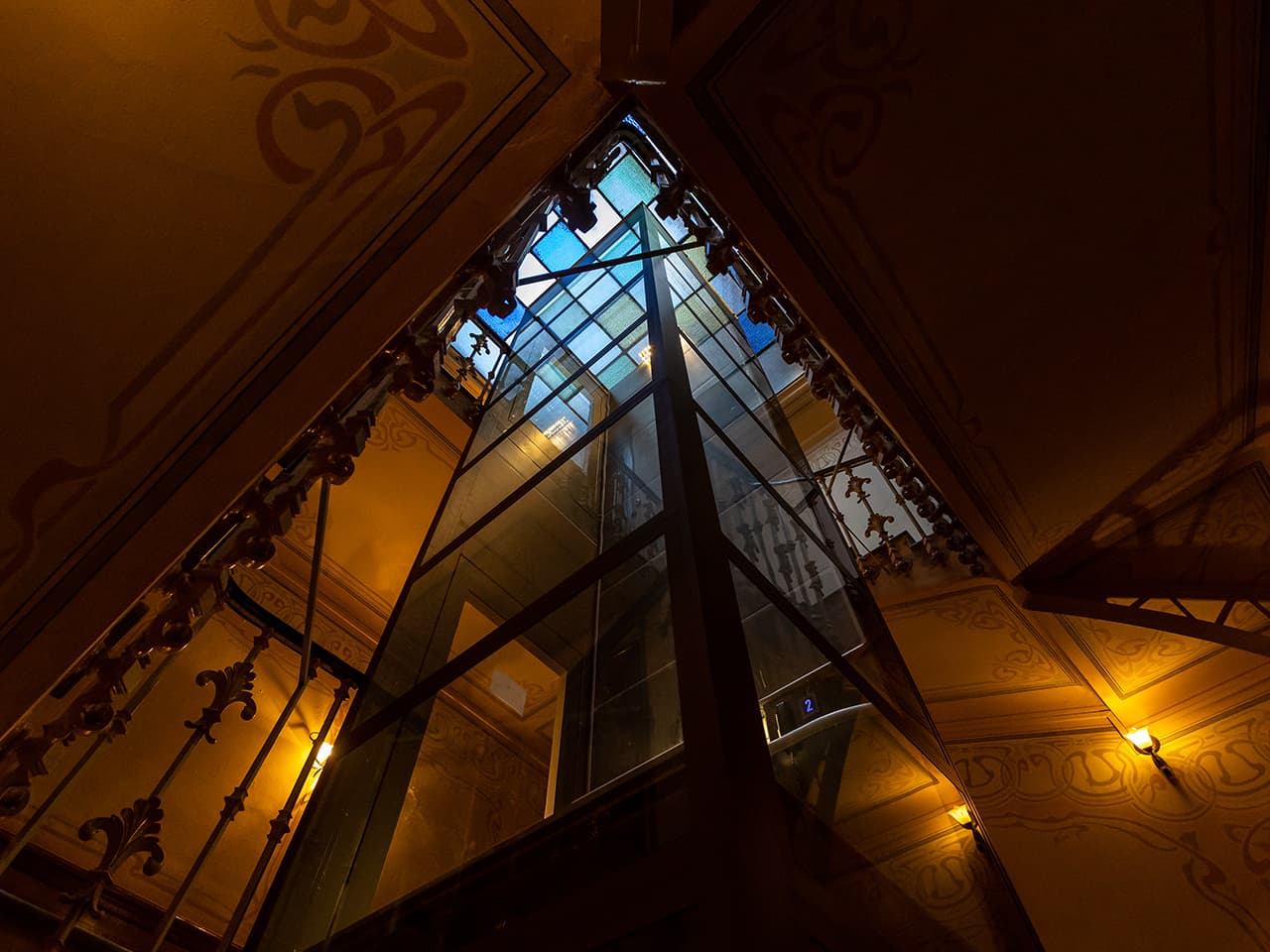
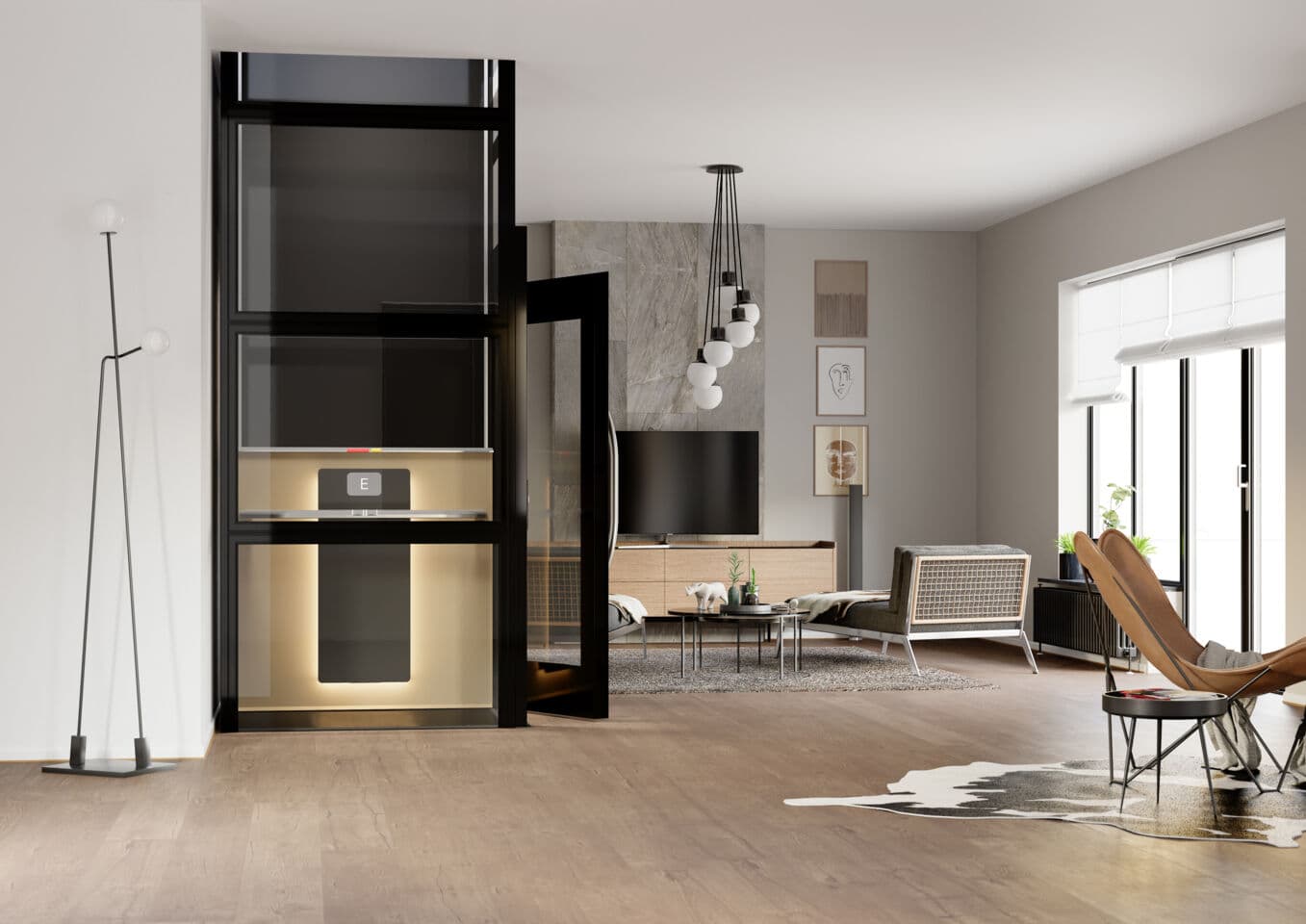
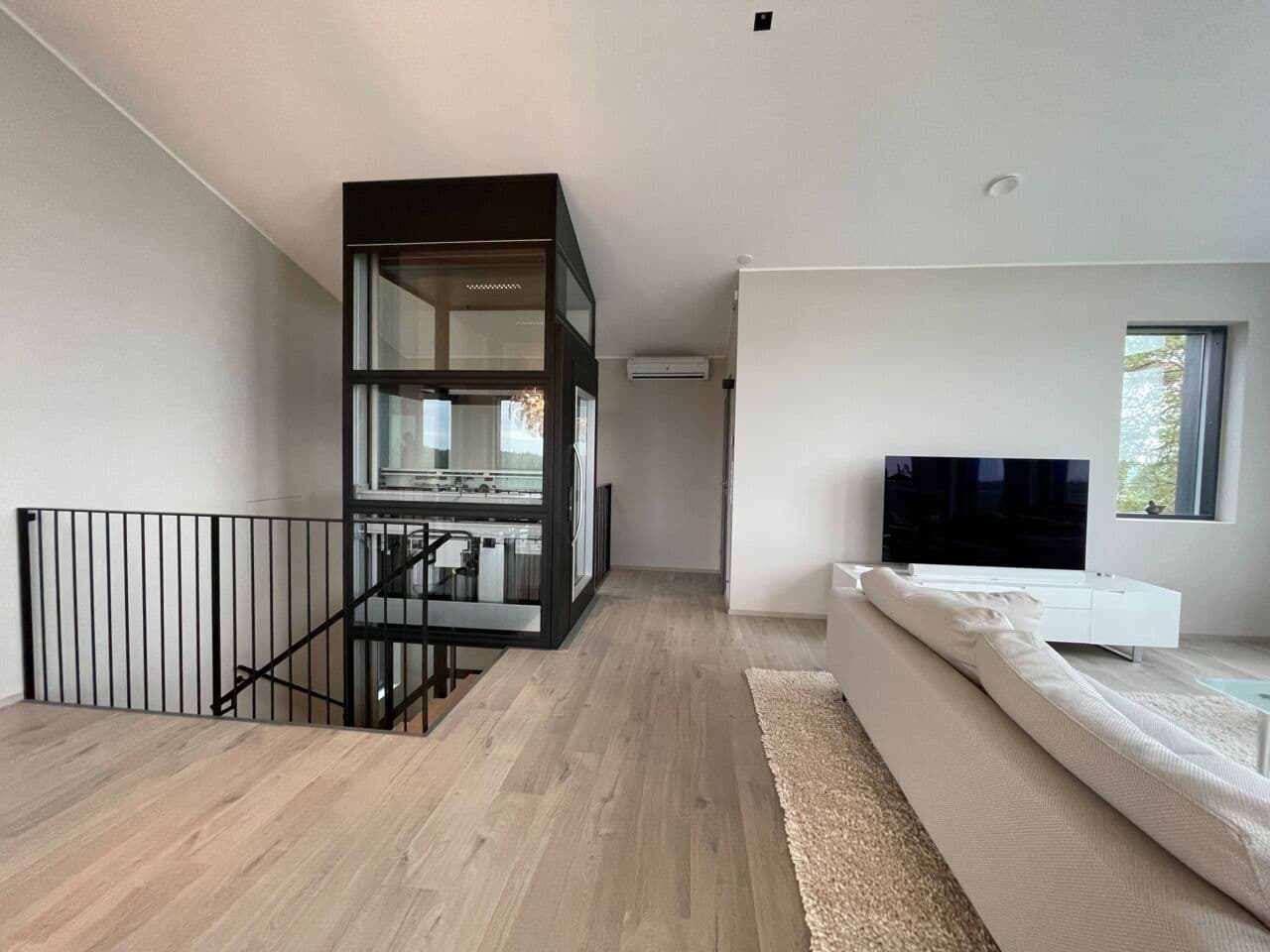
Of course, it is possible to retrofit a lift or an elevator into an old building. It is even a very smart investment, as installing a lift will increase the value of your property and make it more attractive. But although modernising an existing building with a lift has many benefits, it also requires you to make building alterations. The good news is that extent of these alterations varies a lot depending on the type of lift or elevator you choose.
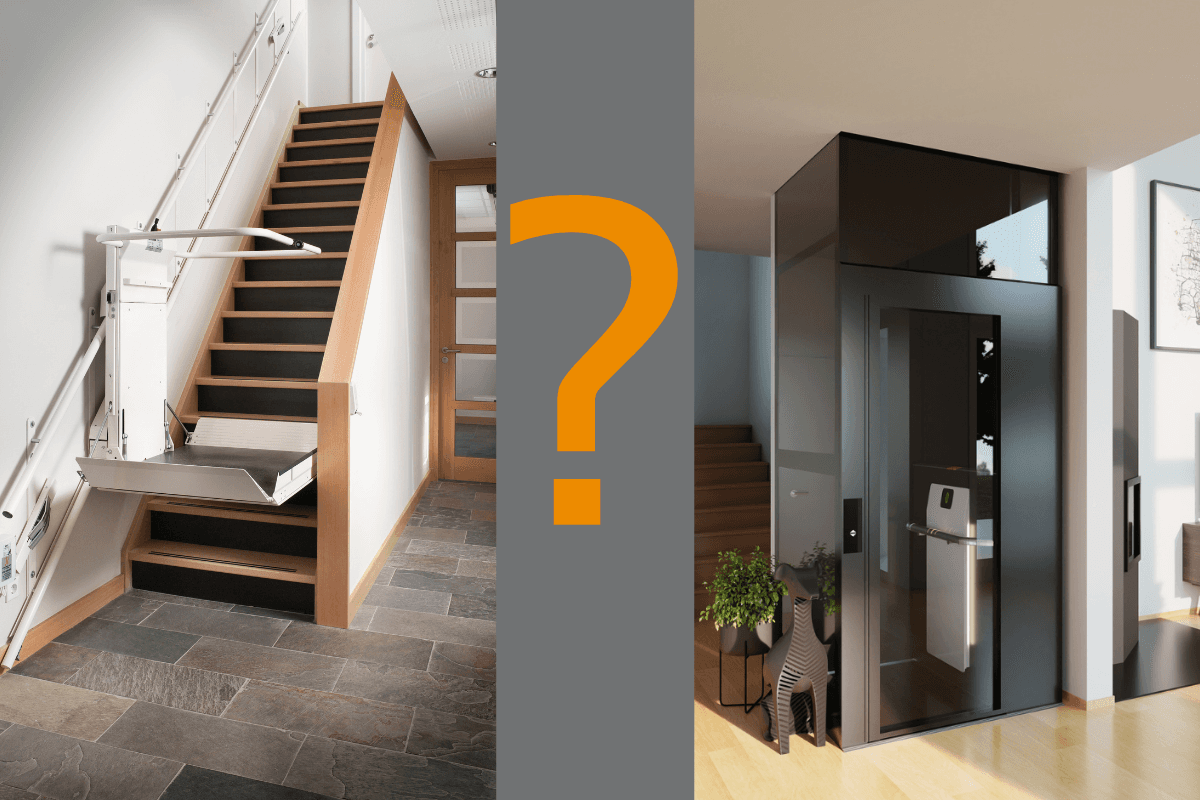
So, how do you know which kind of lift is the best one for you? Just a bit of knowledge about different lift and elevator types will guide your choice and help you avoid many pitfalls. For example, your first instinct might be to choose a classic traction elevator. But traction elevators are very expensive and for many buildings, a cost-effective screw-driven platform lift, is more than enough.
In this article, we will walk you through the benefits and challenges of retrofitting different types of lifts and elevators into existing buildings. We then showcase a few examples of successful lift installations and wrap it all up with a shortlist of general guidelines.
Impact of different lift and elevator types on existing buildings
Retrofitting an elevator or a lift will inevitably have some impact on the building structure. But the impact greatly depends on your choice of lift type.
Space-saving screw-driven lifts
This type of lift takes up less space, has a lower structural impact, and requires less building work than conventional traction elevators and hydraulic lifts.
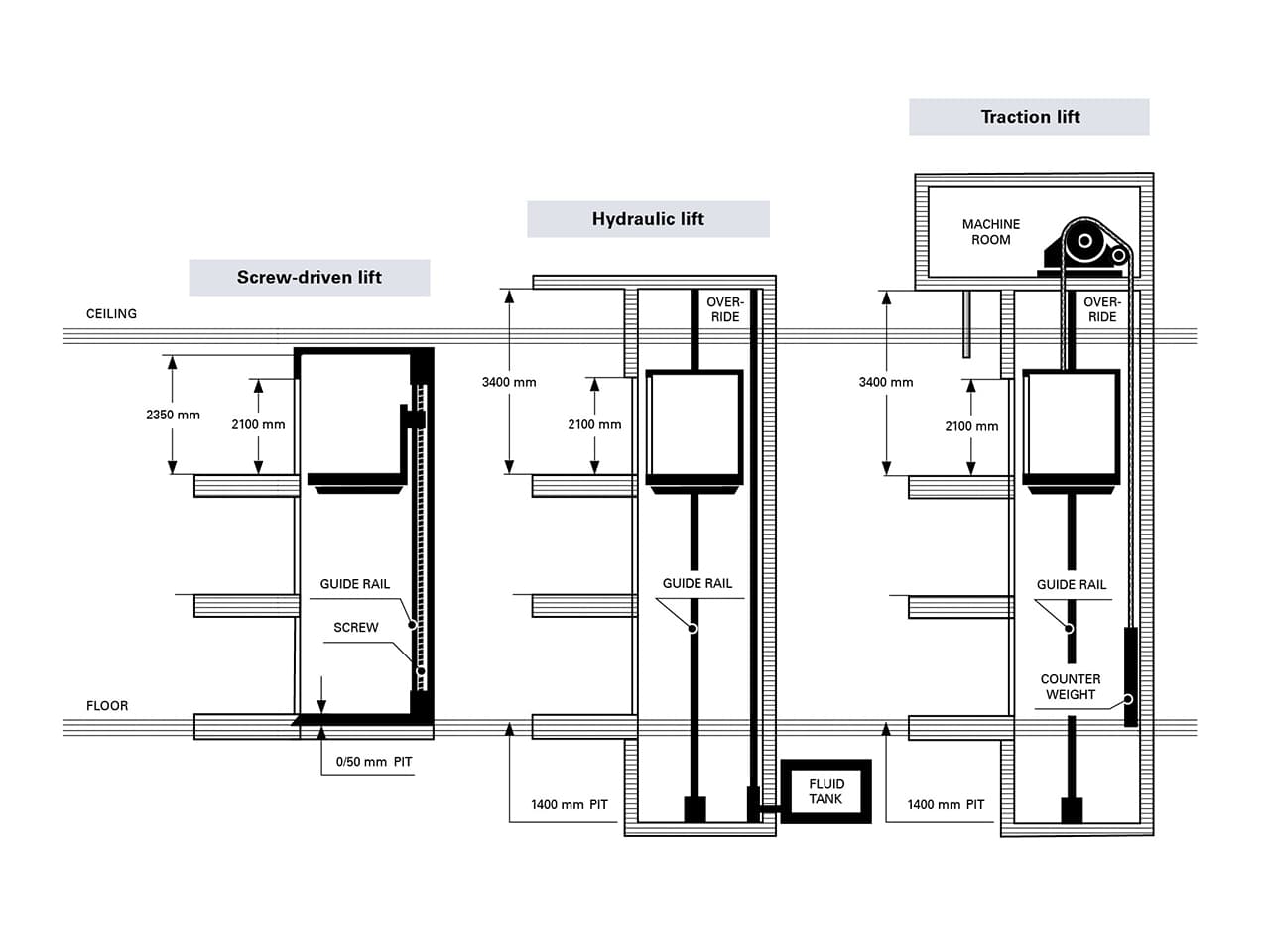
It is thanks to the smart and space-saving construction that screw-driven platform lifts are so much easier and cheaper to retrofit into old buildings than conventional elevators. One of the main advantages of screw-driven lifts is that the entire drive system fits inside the shaft, so there is no need to dig out a deep pit or open the ceiling on the top floor. Another advantage is that screw-driven platform lifts are always delivered as a pre-assembled, all-inclusive concept, including a modular lift shaft.
Screw-driven platform lifts do not travel as fast as traditional elevators and are not designed for heavy passenger traffic. Nevertheless, they are a space-saving and cost-effective alternative for existing low-rise to mid-rise buildings and private homes.

Hydraulic lifts and traction elevators
Conventional elevators, such as hydraulic lifts and traction elevators are both comfortable and fast. They are, however, also particularly challenging to retrofit into old buildings. The reason is that they generally require a lot of space above and beneath the elevator, as well as the construction of a big and bulky concrete shaftway. In addition, many conventional elevators need a separate machine room, placed near the lift.
Given the relatively high investment, conventional elevators are mostly used in mid-rise and high-rise buildings with heavy passenger traffic.
Benefits of retrofitting an elevator into an old building
Installing a lift or an elevator in an existing building is a great way to add value, simply because it makes your property more attractive to potential buyers and tenants. People pay extra for comfort and amenities all the time and lifts and elevators are no exception. In some cases, not having a lift may even be a deal breaker. Just ask yourself this question: Would you rent a flat or an office space on the fifth floor in a building that did not have a lift?
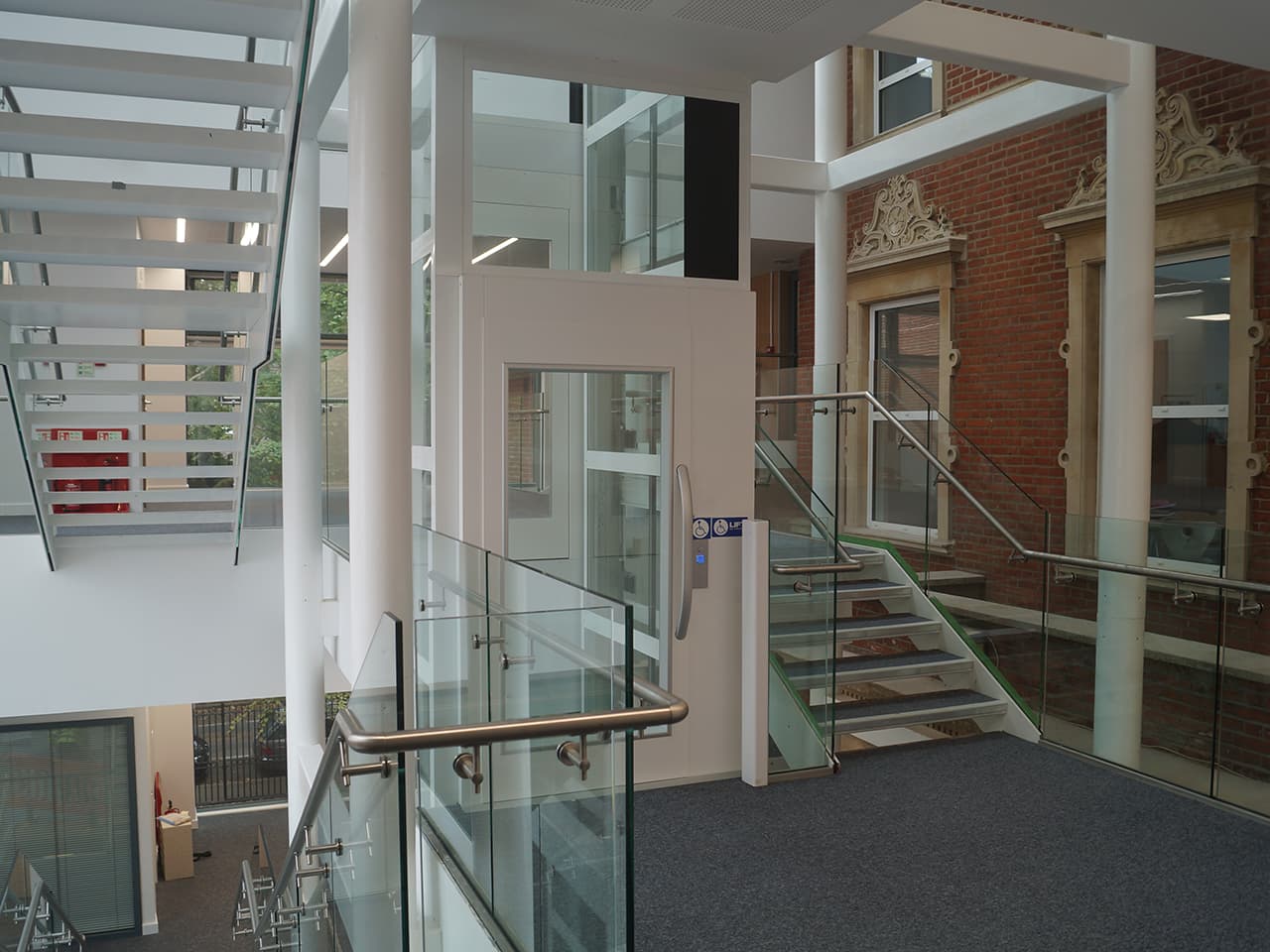
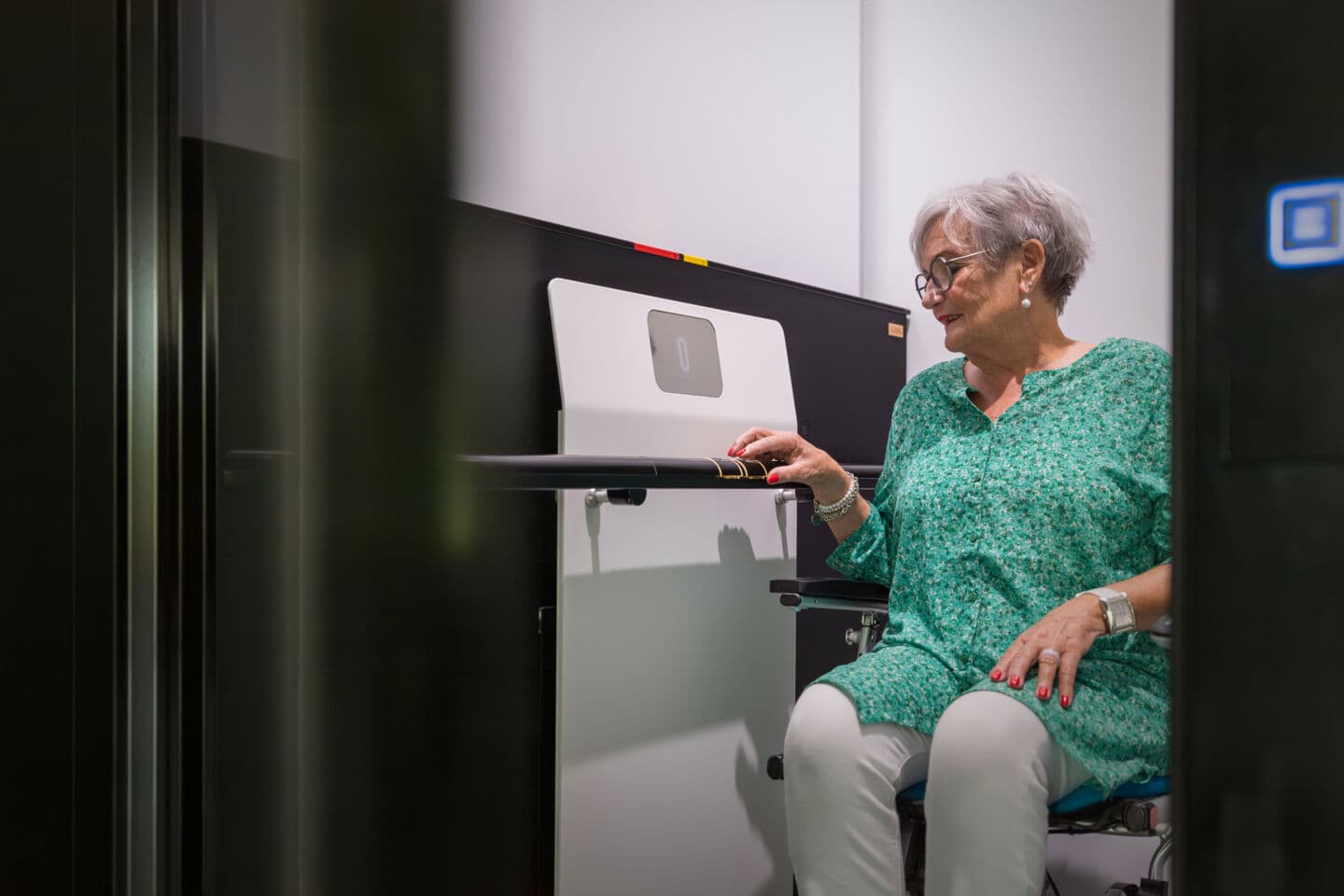
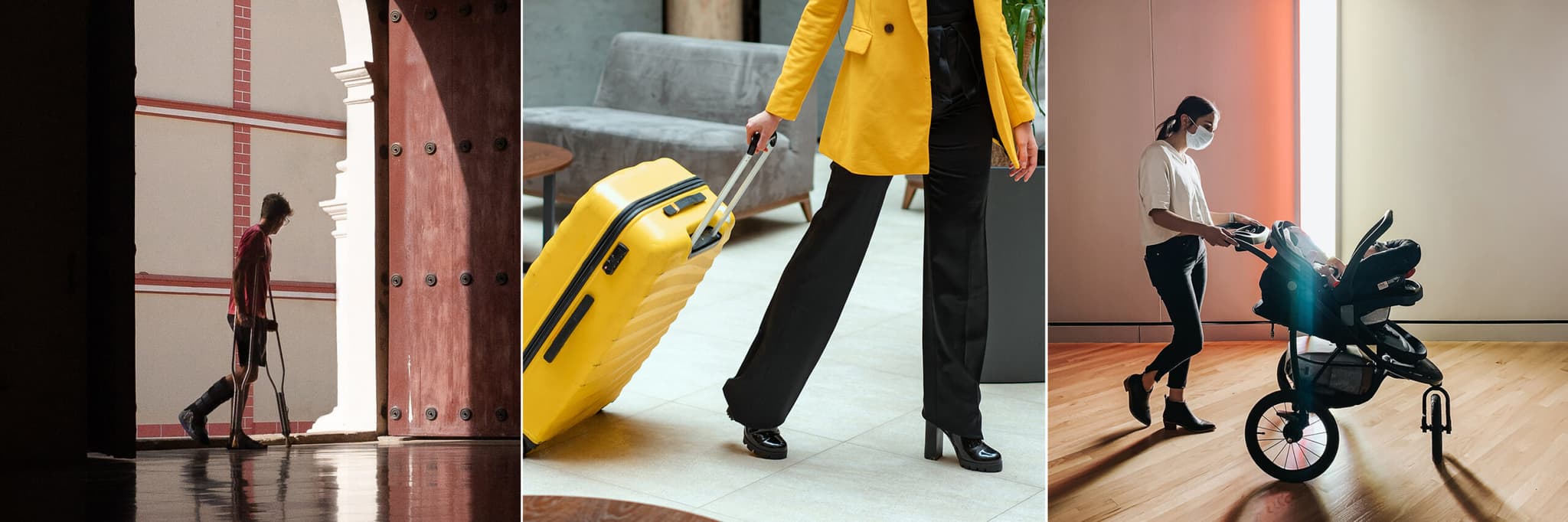
For existing public and commercial buildings, installing an elevator or a lift may even be mandatory to comply with accessibility requirements. However, customers and visitors using wheelchairs and walkers are not the only ones to benefit from a lift. Anyone who, for various reasons, has difficulties taking the stairs will benefit from it: People on crutches, parents with prams or strollers, customers with shopping carts, or a person pulling a suitcase are just a few examples.

Examples of lift installations in old buildings
Screw-driven lifts are easy to retrofit into existing buildings. Here are a few examples of Cibes lift installations in buildings where seamless integration and minimal structural impact are key.
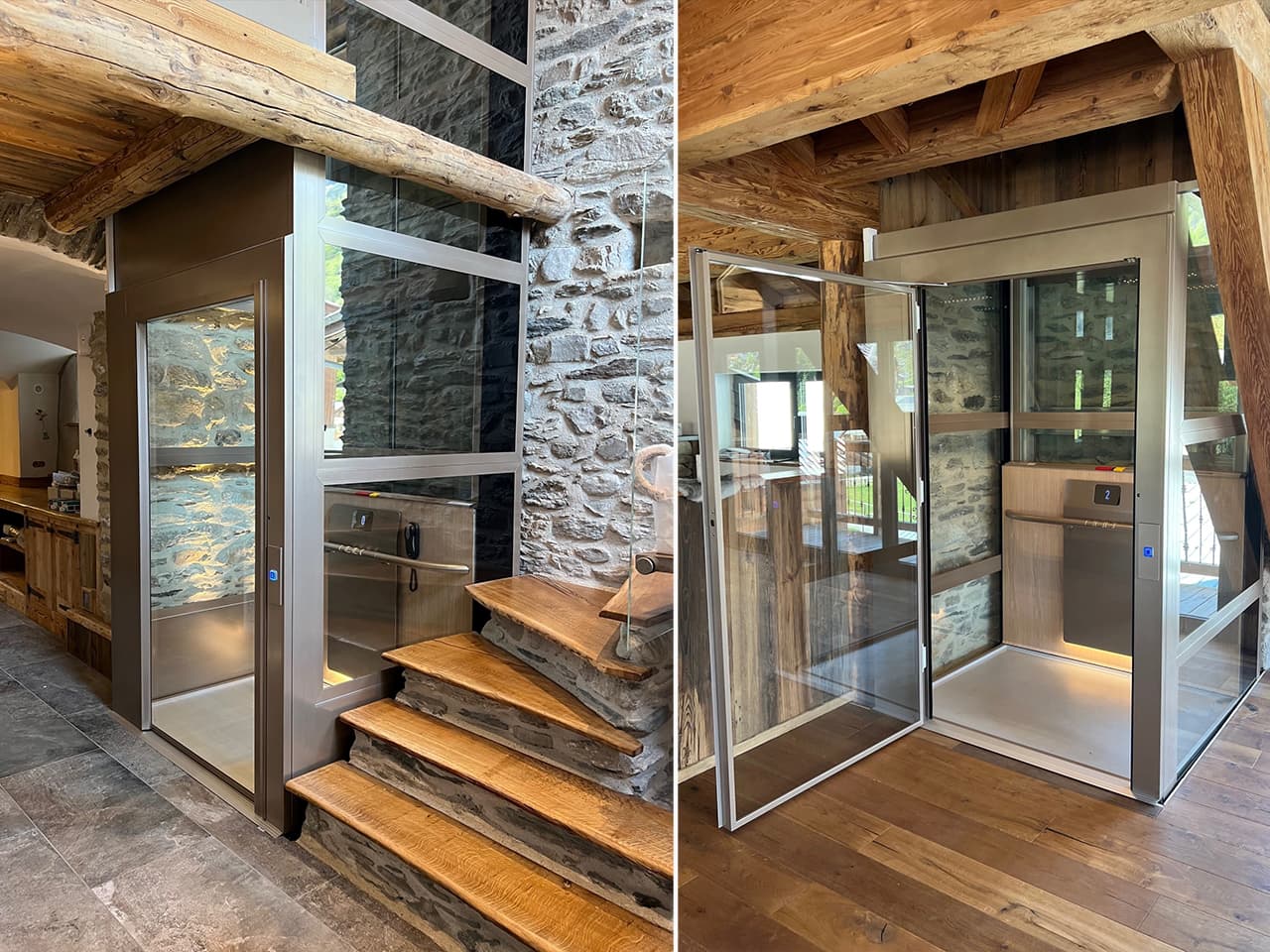
Lift in an old mountain chalet
The Cibes Air platform lift is installed through the mezzanine floor right next to the old staircase. Thanks to the compact design, the lift fits perfectly in the limited space and the panoramic glazing of the lift shaft and doors highlights the beauty of the exposed limestone walls. Lift installation by AAM, in France.
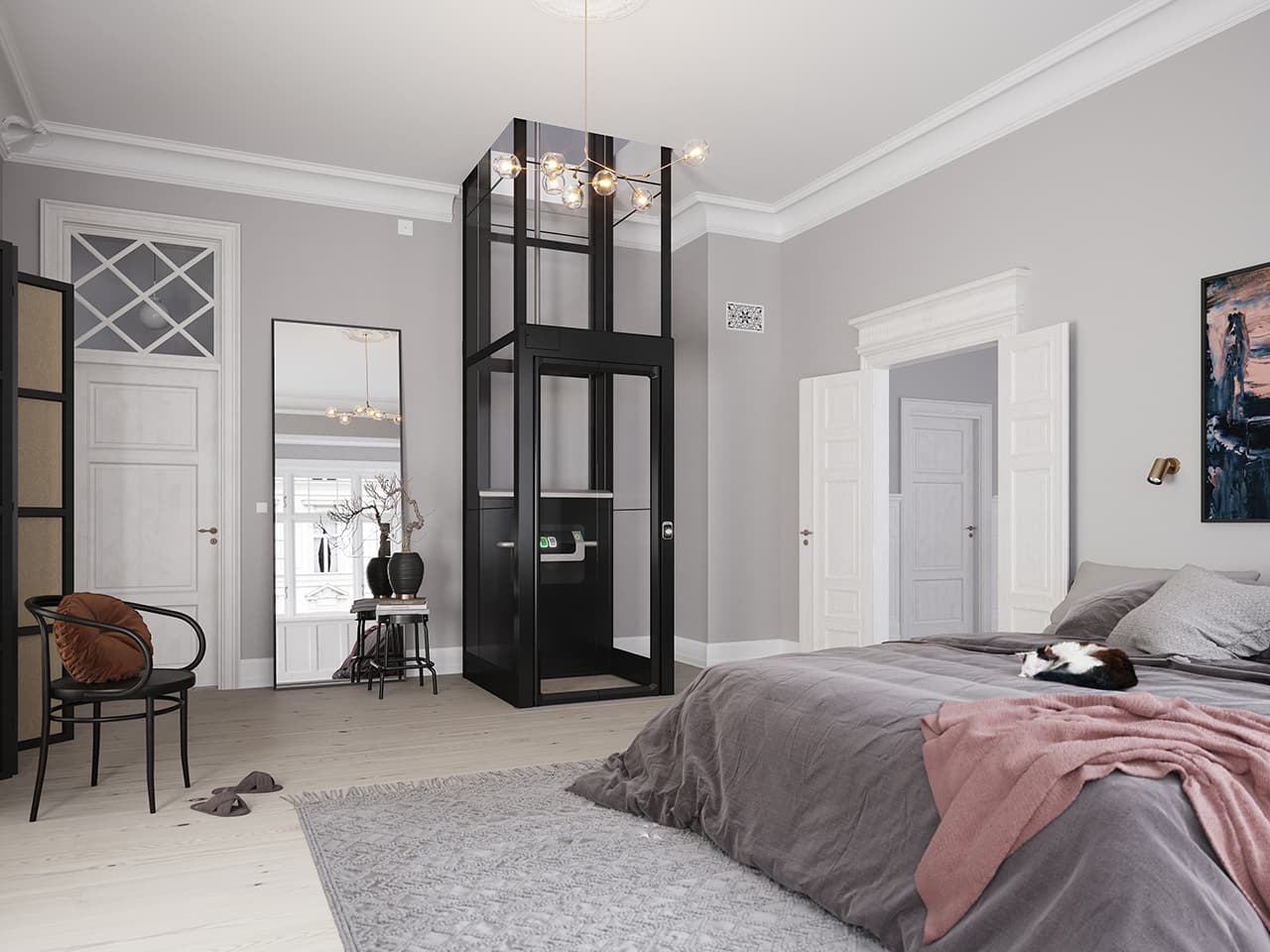
Private lift in a 19th century duplex apartment
The owner of this 19th century duplex apartment retrofitted a Cibes Cloud Plus to facilitate access between floors. The panoramic glazing of the shaft and elegant, double-hinged saloon doors makes the lift blend in beautifully. The fact that the Cibes Cloud Plus only needs a 5-centimetre pit or no pit at all, makes it ideal for existing flats and apartments.
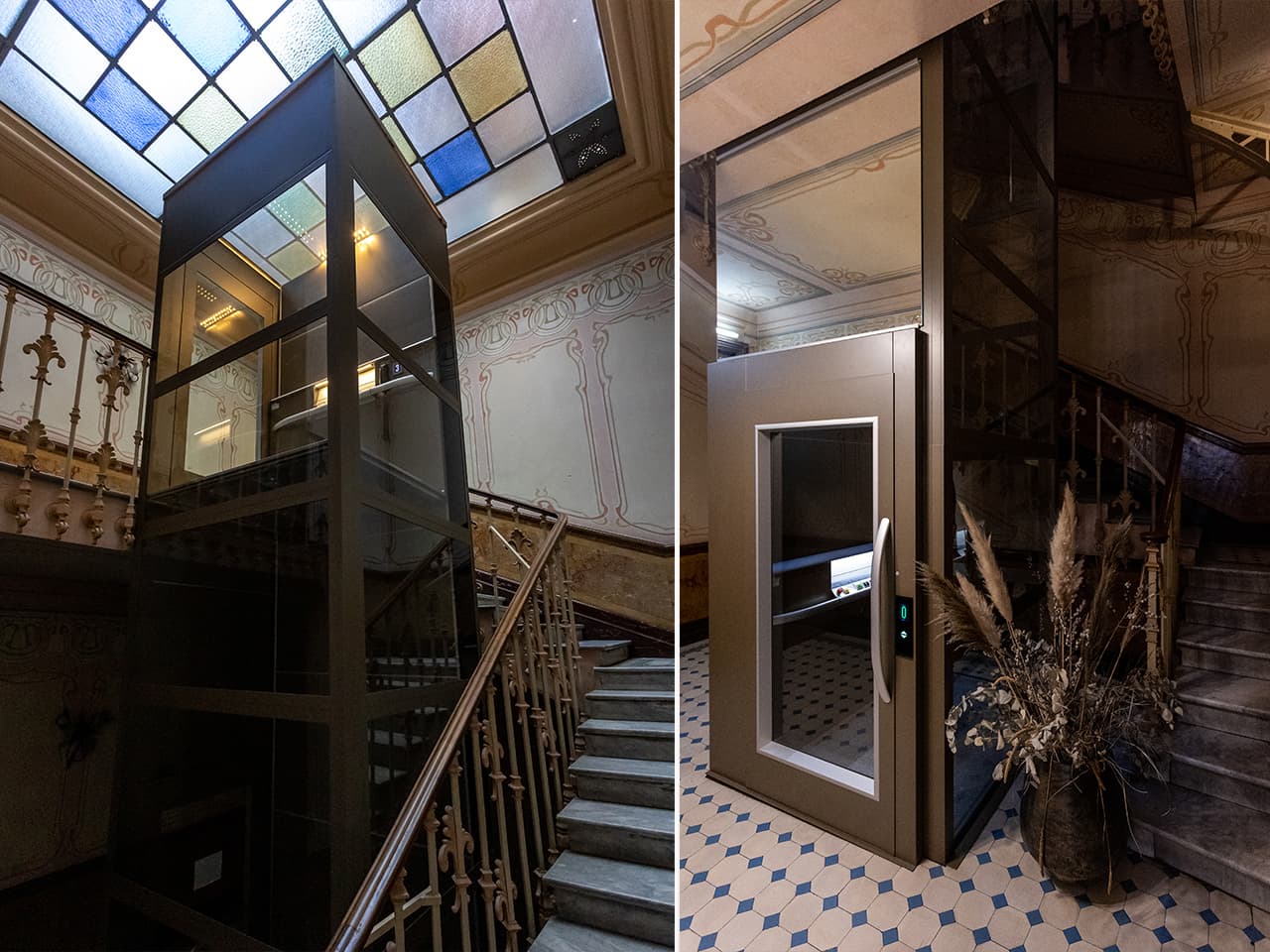
Residential lift in an old apartment building
This co-operative housing society opted for a Cibes A5000, powder coated in an elegant, dark bronze colour. The lift is big enough to accommodate a wheelchair or up to 5 passengers but still fits comfortably inside the staircase of the beautiful Art Nouveau building. The mirror that is fitted just above the door on the bottom floor, is a very nice touch. It reflects the lovely mural paintings and makes the most of the surrounding architecture. Lift installation by ALP, in France.
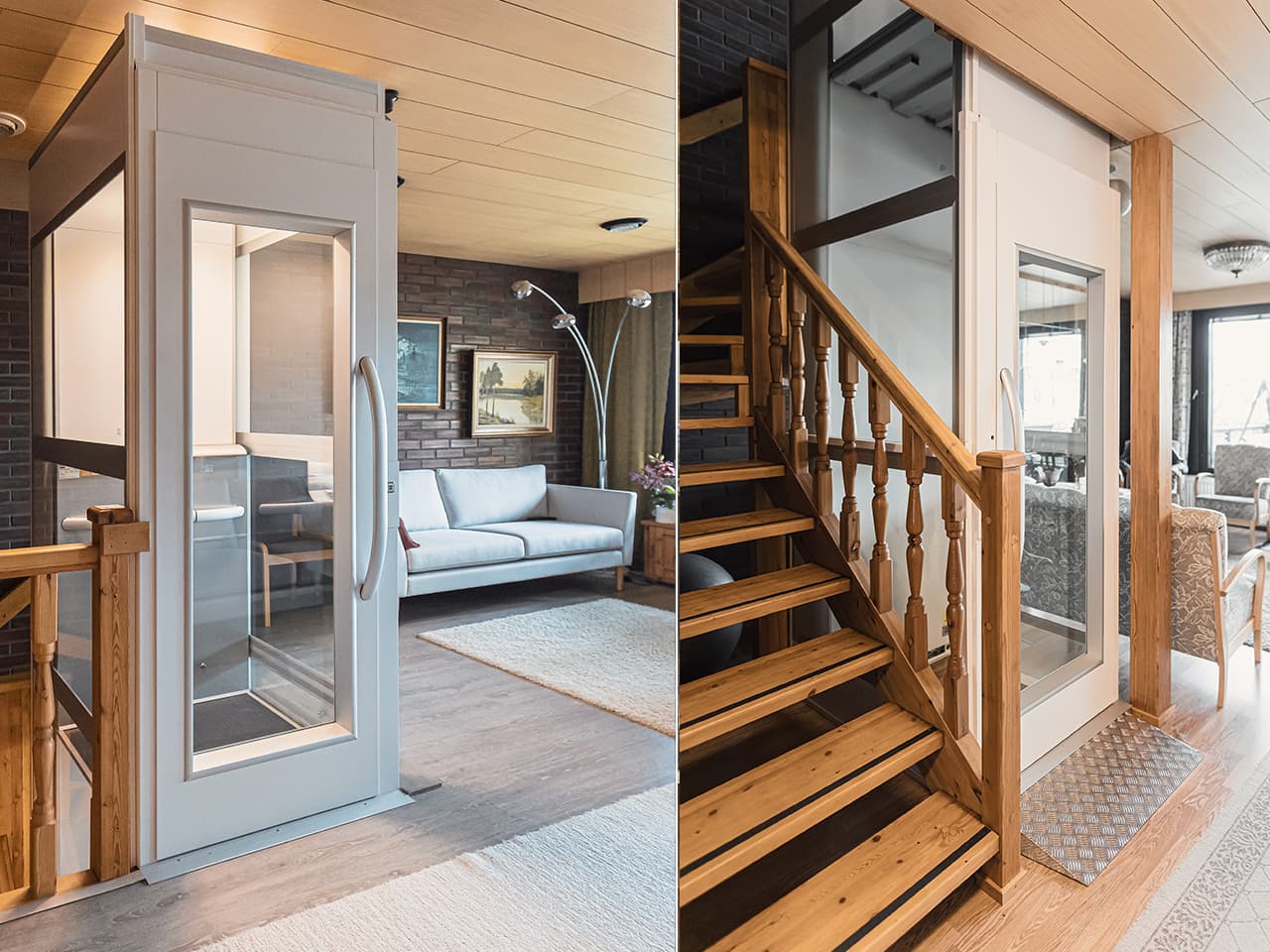
Home lift in a 1960s townhouse
As the owners of this townhouse from the 1960s are short of space, they opted for a compact Cibes A4000 platform lift. Thanks to its space-saving construction, the lift does not take up more space than a wardrobe on both floors. As you can see, the lift fits like a glove inside the wooden staircase and is installed without a pit. For pitless installations, an access ramp is always delivered for the bottom floor. Lift installation by Cibes Amslift, in Finland.
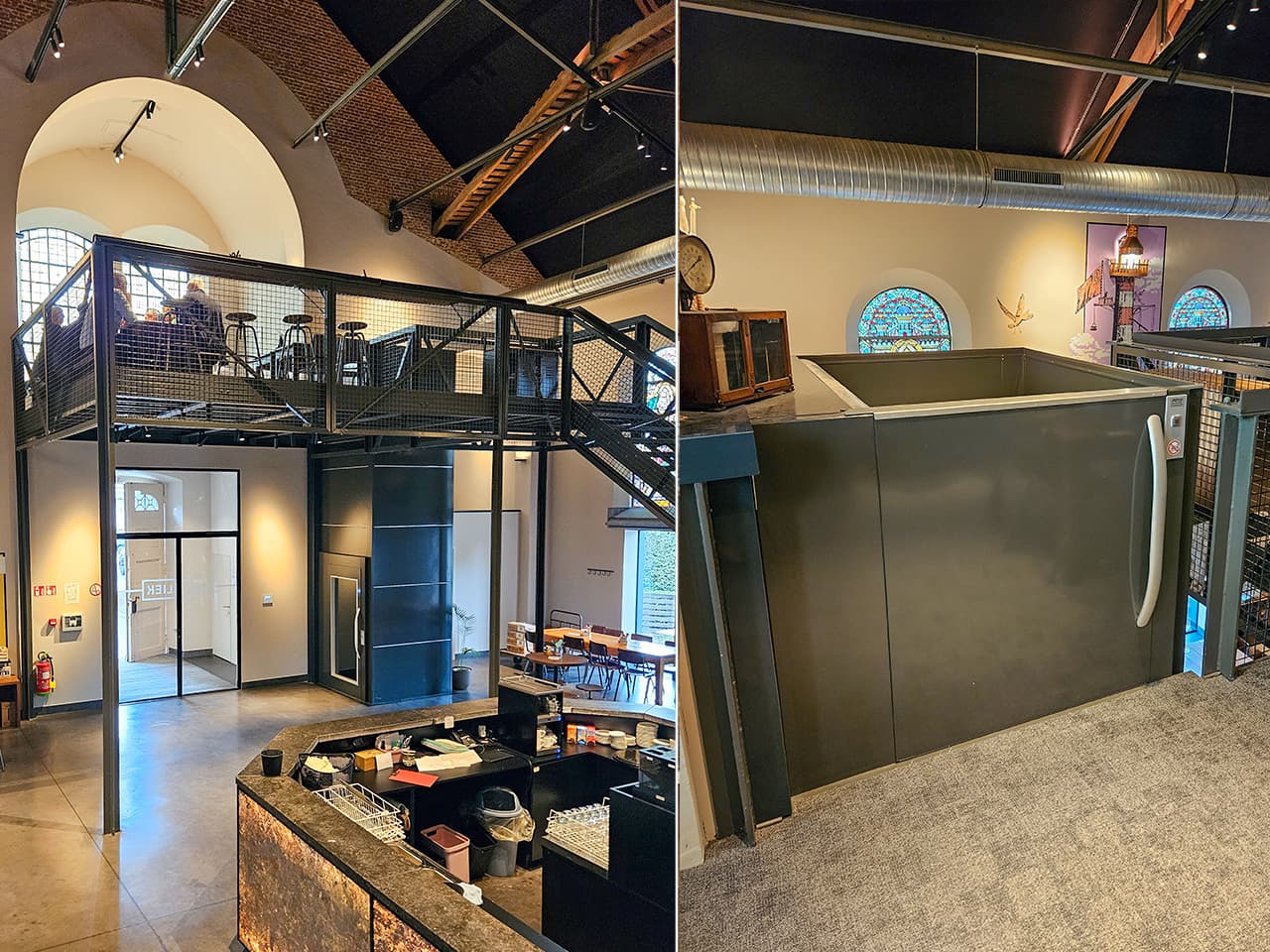
Wheelchair lift in a converted church building
When the old church building was converted into a micro-brewery, a Cibes A5000 platform lift was retrofitted. The lift offered an easy solution to make the mezzanine floor of the resto bar accessible for wheelchairs. Painted in a grey colour, matching the bannisters, the lift also features a gate on the top floor. The gate is a great option for top floors with a low headroom and preserves the open and airy feel of the space. Lift installation by Aesy Liften, in Belgium.
Shortlisted advice for retrofitting elevators into old buildings
To conclude, we would like to leave you with a shortlist of general guidelines. Factors such as available footprint, number of floors and budget will help guide your choice:
- As a rule of thumb, existing buildings with 8 or more floors require a traction elevator but that is also the least space-efficient and most expensive alternative.
- Up to about 8 floors, a hydraulic elevator may be a slightly more affordable and space-efficient option.
- For most buildings with up to 6 floors, space-saving lift technologies, such as screw-driven lifts offer you a very cost-effective alternative.
We hope that you found some useful advice in this article. For more information about Cibes lifts, please contact us. To discover more articles like this one, please visit our blog space.