7 min read
Guide to different lift types for schools and educational buildings
Blog article
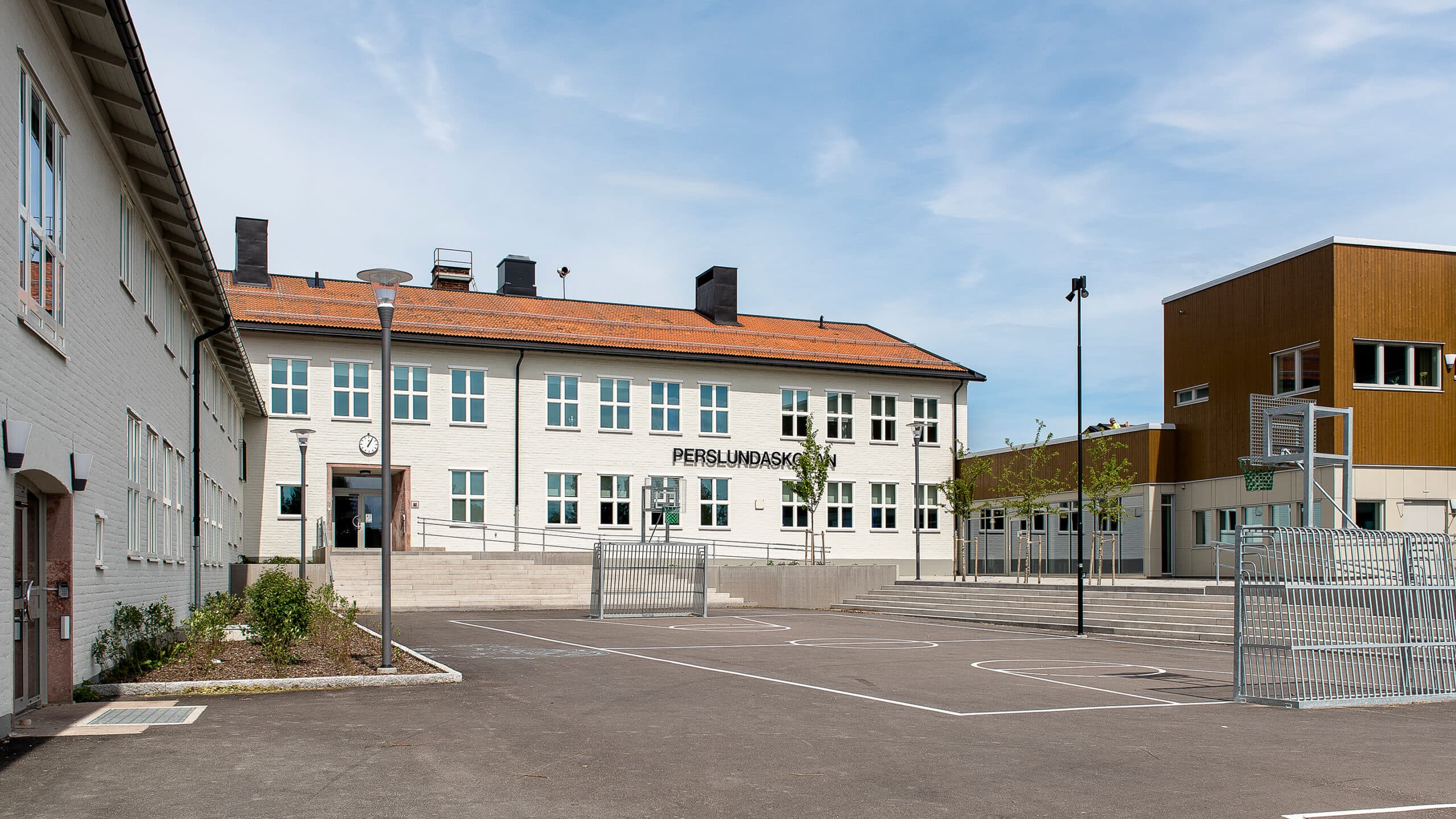
In this guide to different lift types for schools and educational buildings, we will explore the pros and cons of some of the most common types of lift solutions to help you make an informed choice.
Lifts and elevators play a crucial role in making educational buildings, such as schools, colleges, and universities, safely accessible for all. Lifts and elevators are also essential to ensure building compliance with legal requirements and sustainability goals of inclusivity. That is why selecting the right lift type, or combination of types, is so important in school environments.
1. Passenger Lifts
This is the lift type that most people associate with the word lift or elevator. It is also the most common lift type in larger educational facilities. Passenger lifts are designed to handle frequent use and large passenger volumes in mid-rise to high-rise buildings.
Description: Enclosed lift car installed in a masonry shaft, automatic sliding doors.
Speed: From 1 m/s for low-rise buildings to 10 m/s for tall buildings (Elevator Wiki).
Operation: Automatic drive (one-touch).
For information about safety and accessibility standards for this lift type, please consult Lift Directive 2014/33/EU and European Standards such as EN 81-20 and EN 81-70. It can also be useful to consult more specific standards, such as EN 81-58 for fire resistance of lift doors and EN 81-72 and EN 81-76 for firefighting lifts and evacuation lifts.
Pros (+)
- Thanks to their high capacity and speed, passenger lifts can handle tall buildings and frequent and heavy passenger traffic.
- The design of passenger lifts can be adapted to comply with accessibility standards.
- Passenger lifts can be installed and equipped to fulfil the requirements for evacuation lifts and firefighting lifts that are a requirement for some educational buildings.
Cons (-)
- Due to their high speed and capacity, the installation of passenger lifts requires the construction of a sturdy, concrete shaft and expensive structural work to sustain the forces.
- Because passenger lifts tend to be heavily used, they also have high maintenance costs.
- Passenger lifts require a lot of space and often take several weeks to install.
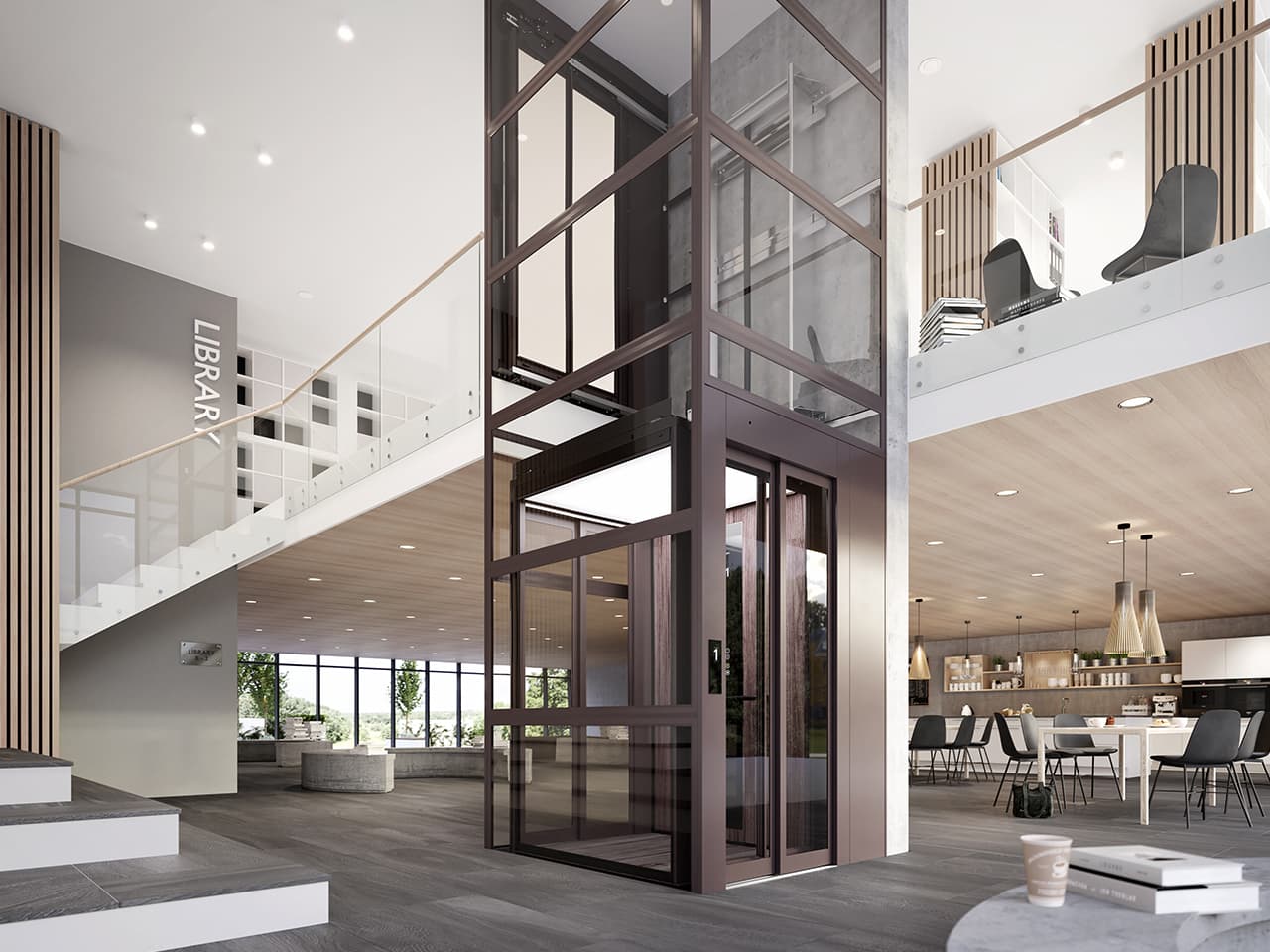
Cibes cabin lifts
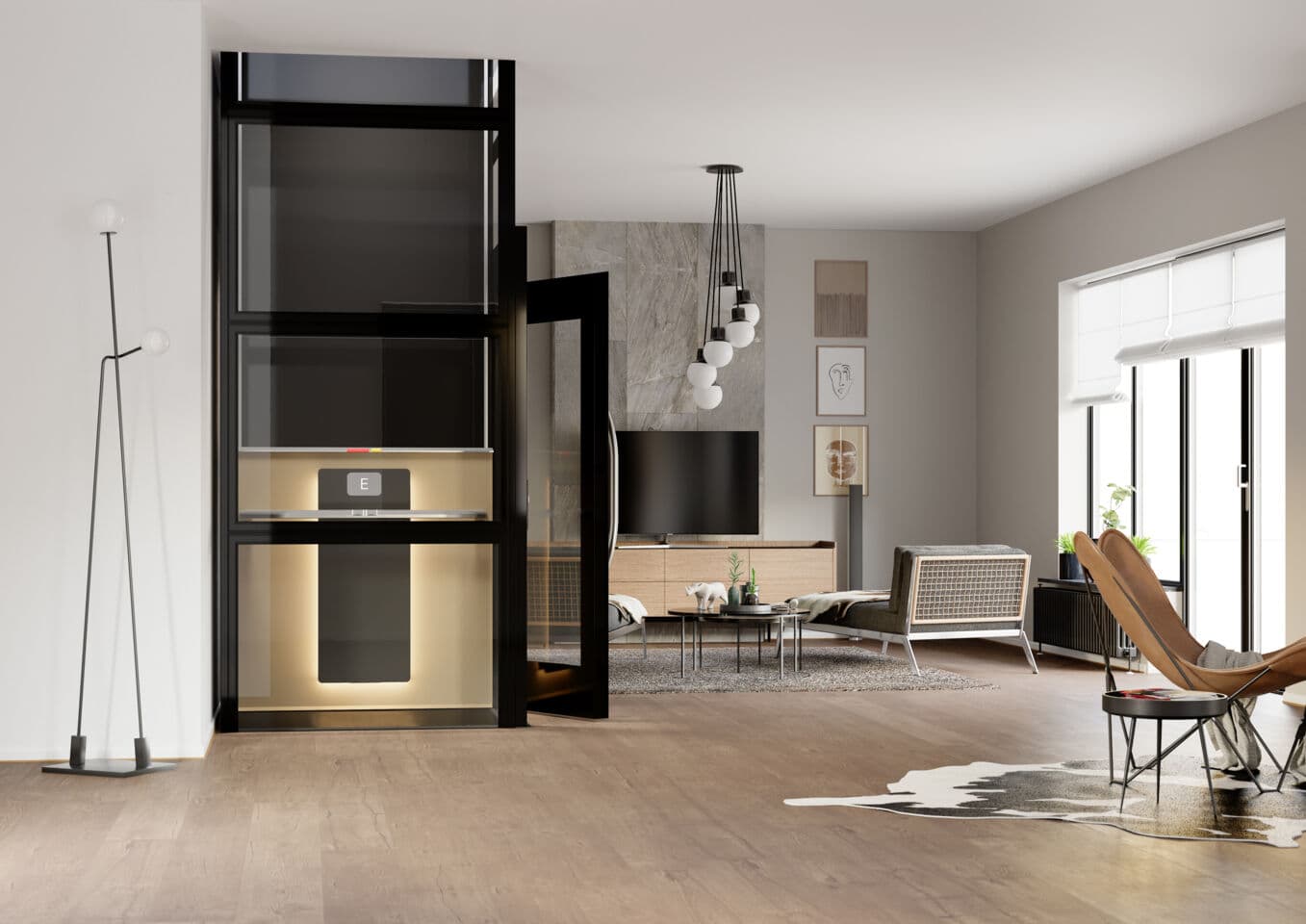
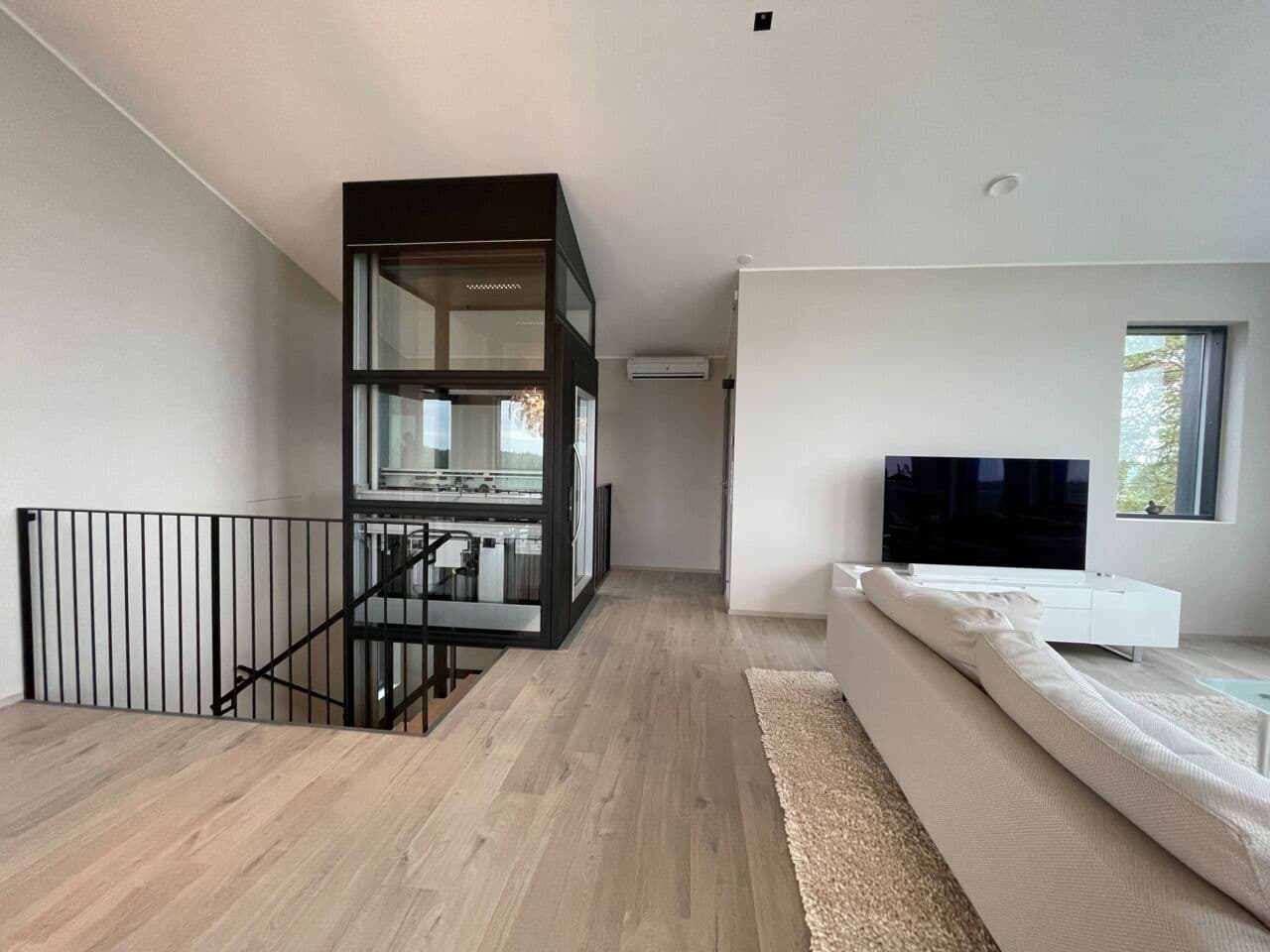
Based on vertical platform lift technology, Cibes cabin lifts offer you a space-saving and cost-efficient alternative to passenger lifts in educational establishments. Our cabin lifts travel at a lower speed than passenger lifts but look and feel just like a normal passenger lift. The main difference is that they are much easier and cheaper to install.
- Enclosed lift car with automatic sliding doors and automatic drive.
- Reduced headroom (2500 mm) and lift pit (10 cm).
- Available with a ready-made, modular shaft for fast installation.
Inclined control panel, mirrors, extra-large call buttons, various locking solutions and EI60 fire rated doors are available as options.
2. Vertical platform lifts
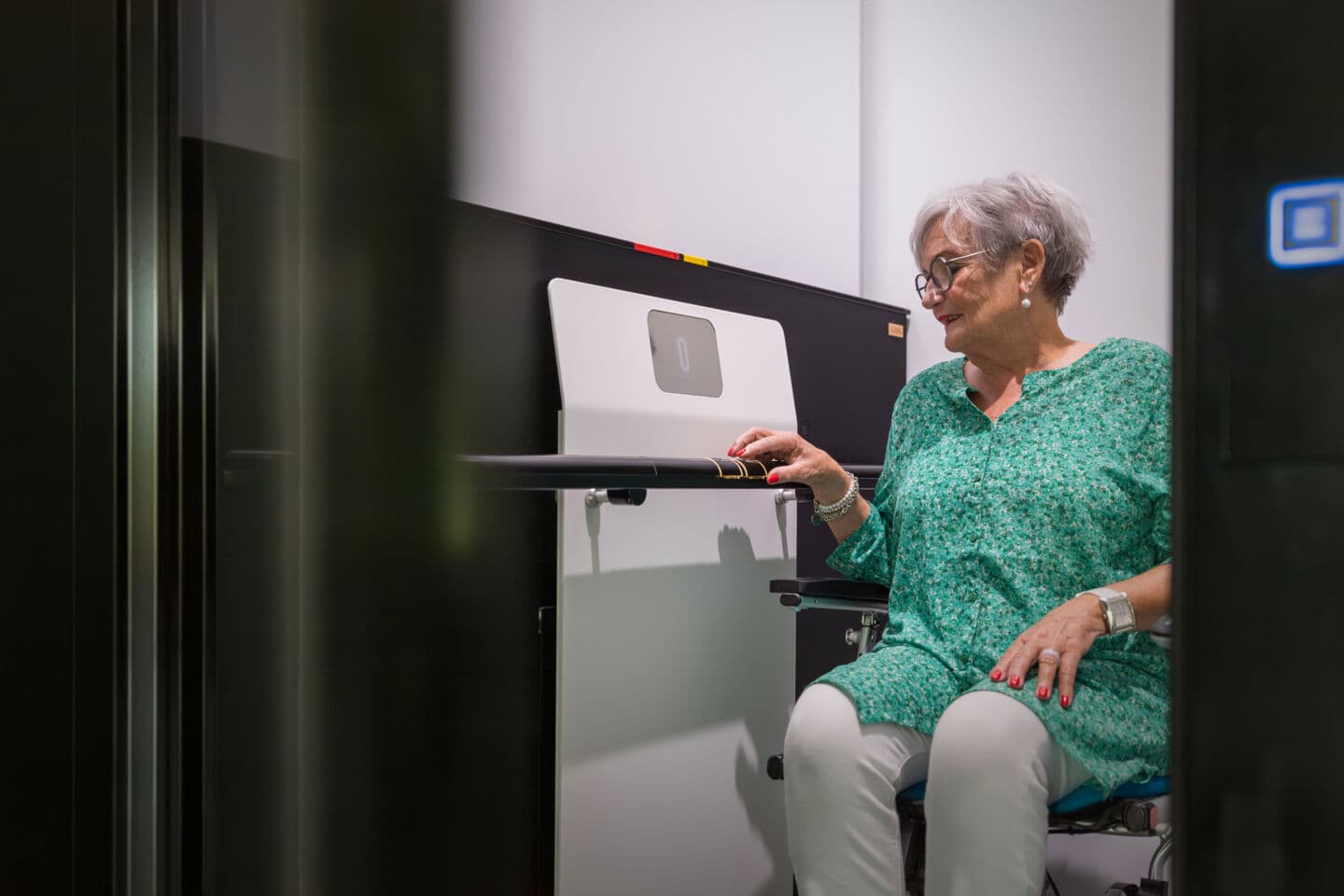
Vertical platform lifts are designed for wheelchair users and individuals with mobility challenges but can be used by all students and members of school staff. This type of lift does not travel as high or as fast as passenger lifts but is much more space-efficient and easier to install. Vertical platform lifts are suitable for buildings with 2-6 floors. Platform lifts are also ideal as accessibility solutions for split-level floors and mezzanine floors within the building.
Description: Open platform installed in a prefabricated shaft, manual or automatic swing-doors.
Speed: Max 0.15 m/s.
Operation: Automatic drive (one-touch) on landings, hold-to-run on platform.
For information about safety and accessibility standards for this lift type, please consult Machinery Directive 2006/42/EC and European Standards such as EN 81-41 for vertical platform lifts.
Pros (+)
- Vertical platform lifts are designed for people with reduced mobility and comply with accessibility standards.
- The space-saving, preassembled design makes platform lifts ideal for retrofit in existing educational buildings, even listed school buildings.
- Fast and easy installation (2–3 days for a 2-stop lift) with low labour costs.
Cons (-)
- Due to their limited speed and travel height, vertical platform lifts are not suitable for tall buildings.
- Vertical platform lifts are less suitable for heavy and frequent use than passenger lifts.
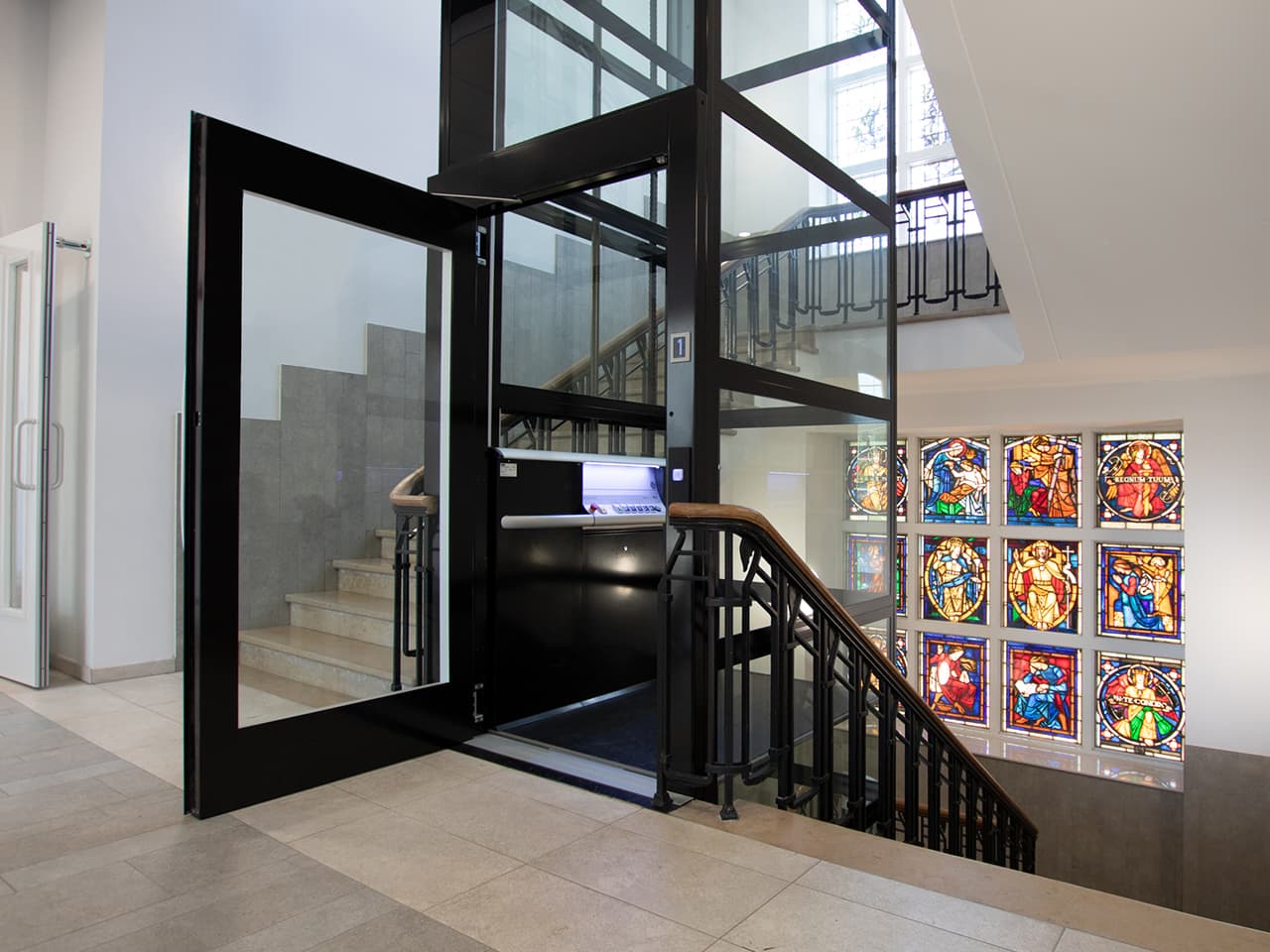
Cibes platform lifts
Cibes platform lifts are space-saving, ready-made lift solutions, designed for fast and easy installation. They are available in several wheelchair-friendly and accessibility compliant sizes.
- Always delivered with a modular lift shaft for fast and easy installation.
- Pitless installation with access ramp or with a reduced lift pit (5 cm).
- Reduced headroom on the top floor (2300 mm).
Locking systems, concealed automatic door openers and various gate and door models are available as options.
3. Service lifts and goods lifts
Service lifts and goods lifts are designed to transport equipment, catering supplies, and maintenance materials, with or without attending staff, depending on certification and design.
Larger service and goods lifts may be designed and certified for both passengers and goods, while dumbwaiters, are a lot smaller and designed to transport food and smaller goods only.
Description: Enclosed lift car installed in a masonry or modular shaft, various door types.
Speed: From 0.15 m/s for low-rise buildings to 1-4 m/s for higher buildings.
Operation: Automatic drive (one-touch).
For information about safety standards for this lift type, please consult Lift Directive 2014/33/EU and European Standards, such as EN 81-31 and EN 81-3.
Pros (+)
- Service and goods lifts improve the operational efficiency of educational buildings.
- This type of lift also makes goods and material handling safer for service and maintenance staff.
Cons (-)
- Classic service/goods lifts are dedicated to goods and staff and cannot serve as accessibility/wheelchair lifts.
- Goods and service lifts generally require dedicated spaces and safety measures.
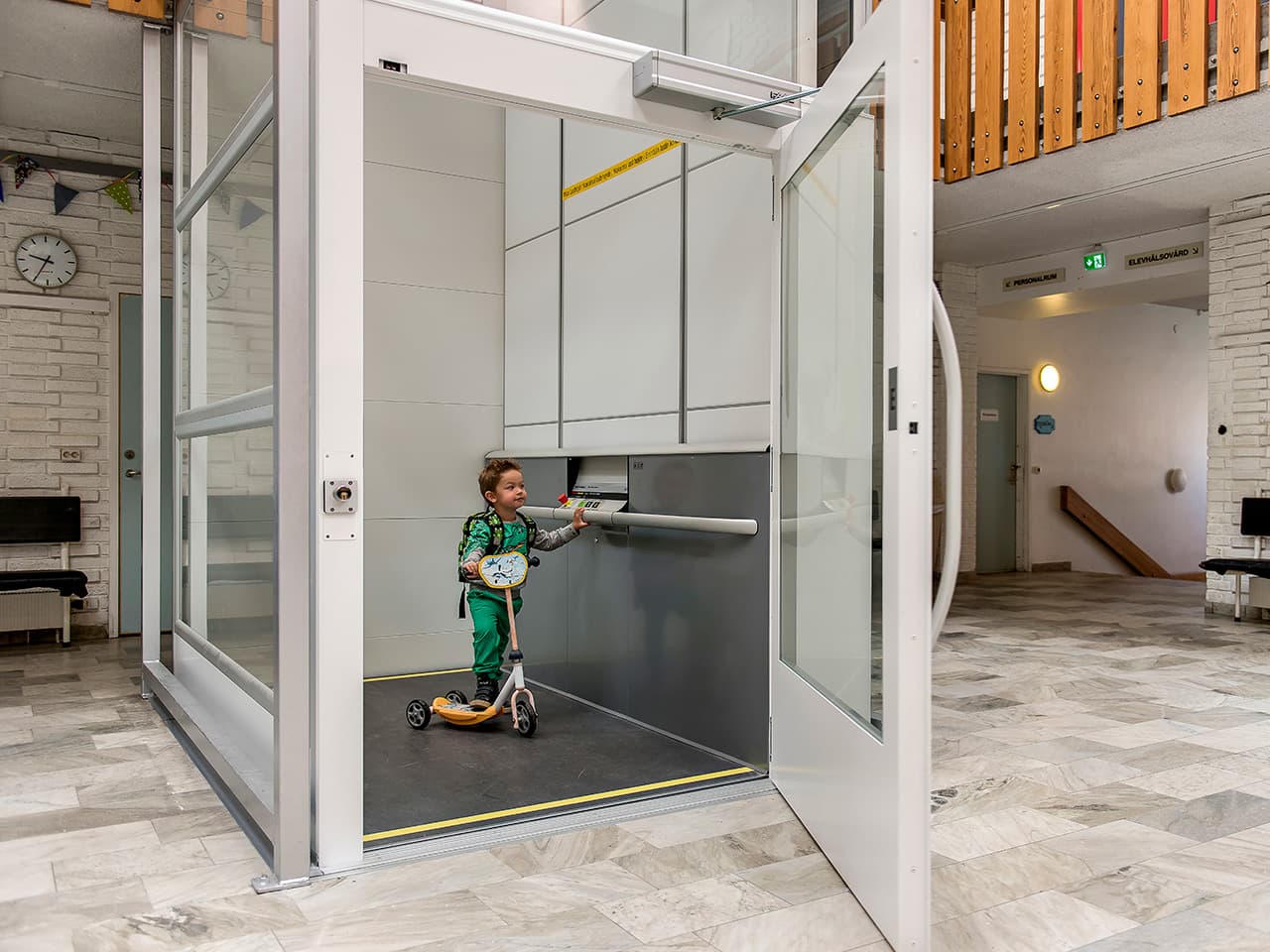
Cibes goods lifts
Cibes goods lifts offer a cost-efficient alternative to classic service and goods lifts. Our large and powerful platform lifts are approved for both goods and passenger transport and can be equipped to comply with accessibility standards.
- Always delivered with a modular lift shaft for fast and easy installation.
- 1000 kg of goods/13 passengers and can serve as a wheelchair lift.
- Low headroom (2350 mm) and reduced lift pit (13 cm).
Locking systems, automatic door openers and various door models are available as options.
Related questions & answers
What is a screw-driven lift?
A screw-driven lift has a simple but ingenious system for elevation: The platform or cabin of the lift is attached to a drive nut that moves up and down the screw, powered by an electric motor. When the motor turns one way, the drive nut makes the lift travel upwards, and when the motor turns the other way, the drive nut makes the lift travel downwards.
Advantages of screw-driven lift technology
The screw and nut drive is a very safe and reliable system that has a long lifespan (approximately 25-30 years with proper maintenance). The secret behind its longevity is its simplicity. Thanks to the reduced number of moving parts and the robust and durable mechanics, there simply is not that much that could go wrong. The drive system is also compact enough to be fitted inside the lift shaft, which is why this type of lift requires no separate machine room, nor extra headroom. Another advantage is that many lifts with screw and nut drive can be installed without a lift pit.
Low maintenance drive system
The screw and nut system is very robust and requires less maintenance than hydraulic or belt-driven lifts. Our lifts come with an auto lubrication system that keeps the screw oiled at all times, so that maintenance visits are needed less frequently.
How much noise does a lift make?
The amount of noise that a lift makes, depends on the lift type but also on the acoustic environment surrounding the lift. No lift is completely soundless but just like the humming of a fridge, the noise of a lift will generally blend in with the sounds of everyday life. Our lifts equipped with the EcoSilent drive system only generate 40dB*, which is comparable to the sound level inside a library.
- Quiet suburb: 55 dB
- Lift with EcoSilent drive: 40 dB
- Quiet rural area: 30 dB
*Sound measurement performed 2 m from a lift with a 150 kg load travelling at a constant speed.
How often should a passenger lift be serviced?
One of our main advantages is that our lifts require very low maintenance, which means that they do not require as much maintenance as a traditional lift. Maintaining your lift properly ensures the quality and safety of your lift. In addition, proper maintenance ensures a longer life for your lift.
How much maintenance your lift needs depends on a number of factors, such as the use of your lift. A lift that is used often every day needs more maintenance than a lift that is rarely used. So the maintenance will be tailored to the use of your lift. In addition, the number of maintenance visits also depends on the type of the lift you have, for example, an outdoor lift will require more maintenance and will need to be cleaned more often than an indoor lift.
Maintenance is necessary at least once a year and generally this is enough for a lift that is used at home. Want to know how much maintenance your lift needs? Then we will be happy to provide you with personalized advice.
Advice according to use
Since 2018, our lifts have been equipped with a trip counter as standard, which keeps track of exactly how many voyages your lift makes. Our technicians can check this via a computer and tell you exactly how many travels your lift has made. Based on this information, we can give you appropriate advice on the desired number of maintenance visits you need per year. Often people underestimate how much the lift is used and therefore do not maintain it often enough. Our technicians will check the number of travels every at maintenance visit and, if necessary, give you advice on adjusting your maintenance contract.
More information about our maintenance here.


General advice on lift types for schools
In this blog we have highlighted some of the most common types of vertical lift solutions used in schools and educational institutions, as well their main pros and cons. However, for most educational establishments, especially bigger ones, a mix of several lift types is probably the best solution:
- Passenger lifts for high-rise buildings and busy areas with large amounts of passenger traffic.
- Vertical platform lifts in low-rise and mid-rise building with less passenger traffic, or as a complement to passenger lifts.
- Service lifts and goods lifts, as a complement to both passenger lifts and vertical platform lifts to facilitate the activities of service and maintenance staff.
It is good to know that there are cost-effective and space-saving alternatives to conventional lifts and elevators. If you would like to know more about Cibes lift solutions, just reach out to us through the contact form below and we will get back to you shortly!
Would you like to know more about our school lifts?
Just send us a message. We would love to help.