13 min read
Choosing the right care home lift
Blog article
Choosing the right care home lift for is very important in order to secure safe transportation of patients between floors. In fact, lifts and elevators play a key role in the activities of most medical establishments, such as nursing homes and clinics. Although the needs may differ between establishments, the elevator you choose should be reliable and easy to use. Furthermore, in larger care homes or nursing homes, a mix of several different lift solutions may be preferable. We will try to help you evaluate different alternatives by focusing on your needs.
Specifying the needs of your care home
Just answering a few questions will help you determine what type of lift is best suited for your care home or nursing home:
- How many floors does your care home have?
- Is the speed of the elevator essential?
- Does the lift need to transport stretchers and beds?
- Do you deliver patient meals on several floors?
- How big is your lift budget?
Elevators & lifting equipment for care homes
Different kinds of elevators and lifting equipment have different usage that are useful for residential homes. In many cases, especially for larger medical facilities, finding the right mix of elevator solutions and lifting equipment is key.
Stretcher lifts
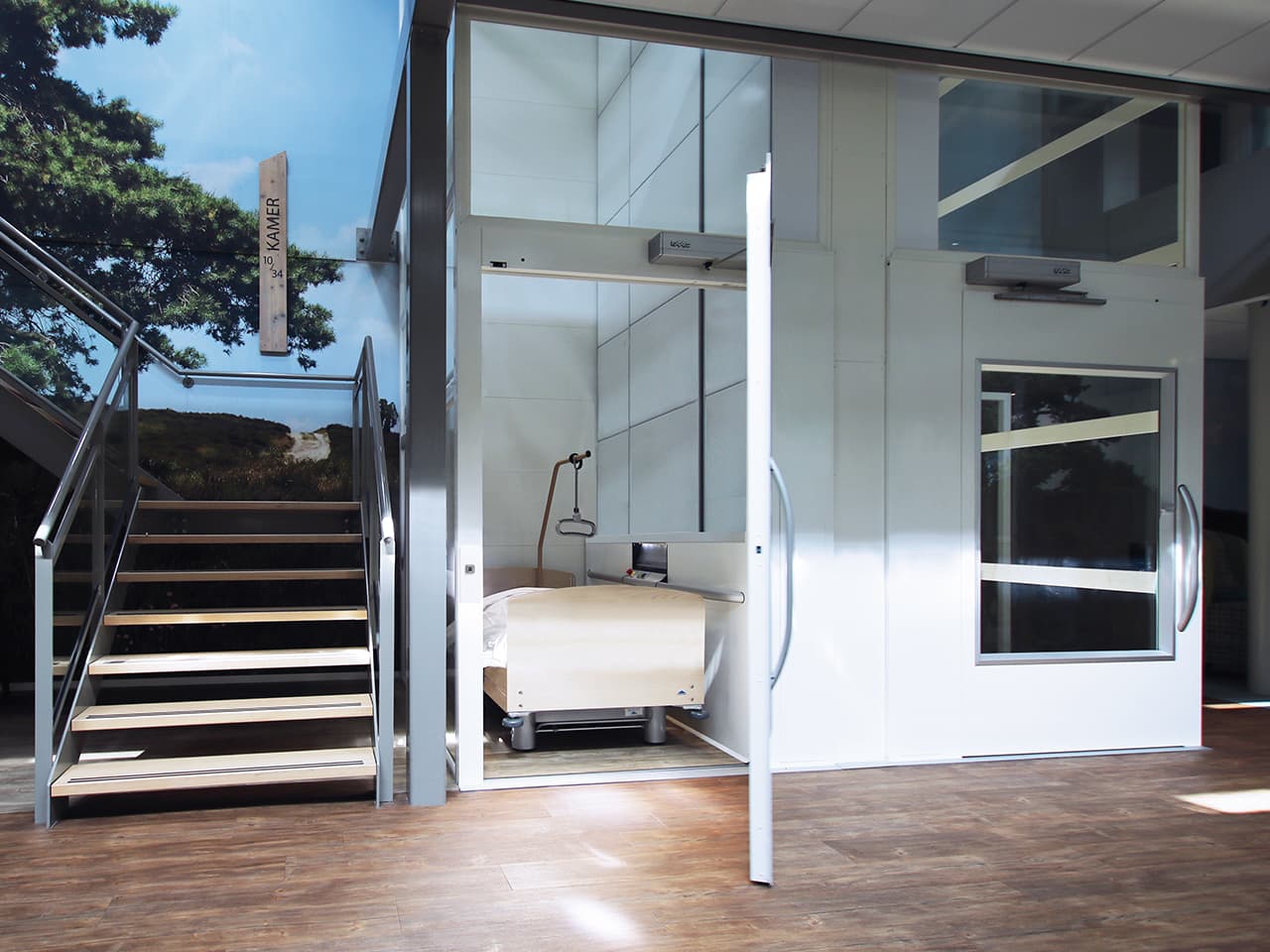
Stretcher lifts, also known as bed lifts, are elevators designed to take stretchers and gurneys, in some cases even hospital beds. Stretcher lifts should have a cabin or platform size of at least 1400 x 2400 mm to fit a patient on a stretcher or gurney and accompanying staff. Because of their generous dimensions, stretcher lifts can also carry large trolleys, medical equipment and goods pallets.


The Cibes A8000 is large enough for stretchers and hospital beds and has a rated load of 1000 kg.
Wheelchair lifts
Wheelchair lifts are designed for passengers in wheelchairs but are just as suitable for all kinds of passengers. These lifts are also useful for transporting medical equipment, trolleys and cleaning carts. Wheelchair lifts generally travel at a lower speed than traction lifts or hydraulic lifts and are a great choice for less busy wards within the care home. To comply with European Standards, wheelchair lifts need to have a platform size of minimum 900 x 1400 mm (w x d). However, we recommend a platform size of at least 1000 x 1400 mm (w x d) and a door clearance width of 900 mm. Visit our wheelchair lifts page to learn more.

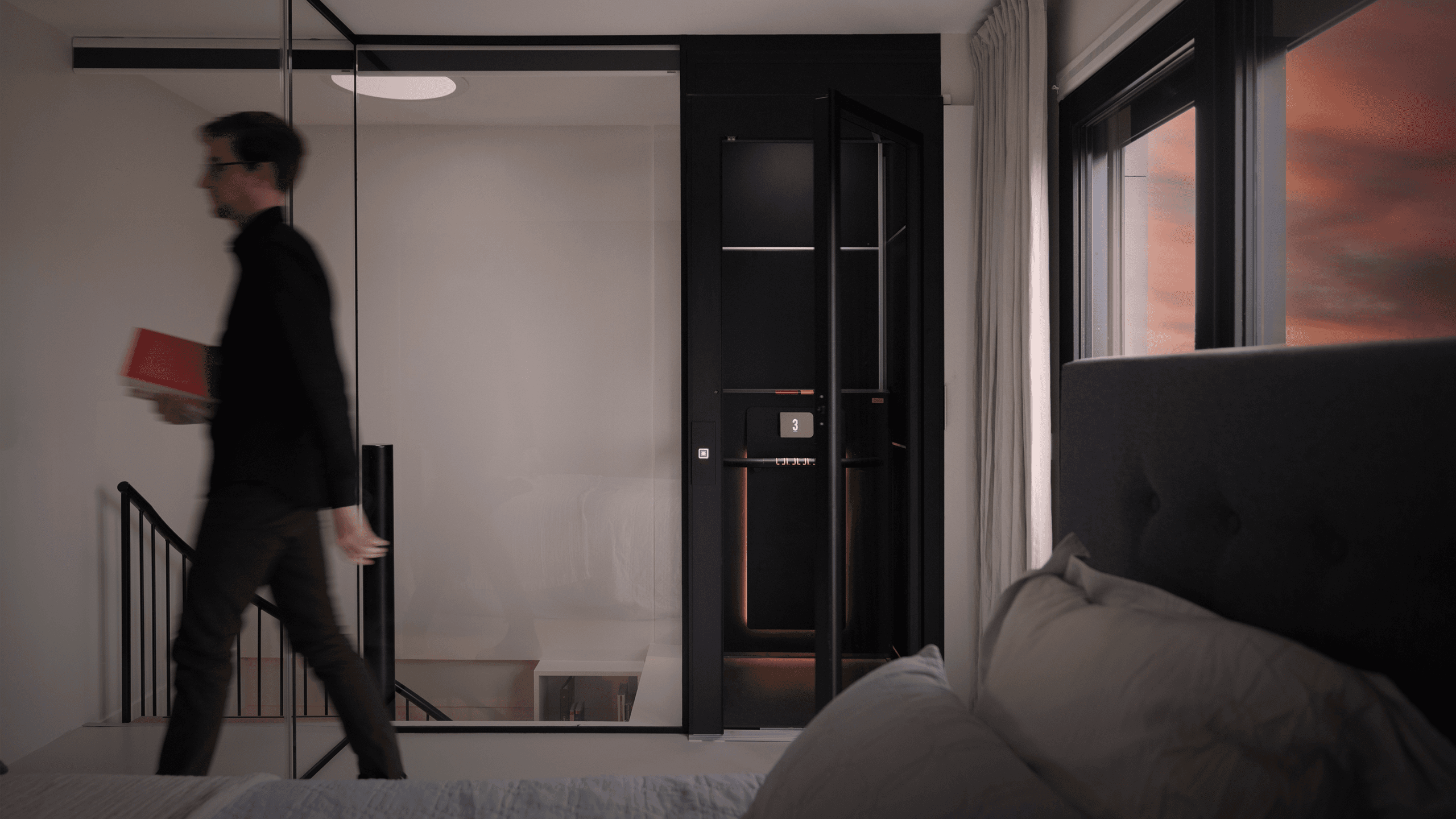
The Cibes Air is a wheelchair accessible platform lift with an intuitive design.
Patient lifts
A patient lift or patient hoist is a piece of electric or hydraulic lifting equipment, designed to transfer individual patients between resting places, like between a bed and a wheelchair. Patient lifts help staff handle care home residents safely and can prevent falling accidents. A common type of patient lift is the sling lift that lifts and moves the patient in a seated position. Sling lifts can be mobile units or fixed installations. When a sling lift is fitted to the ceiling using overhead tracks it is often referred to as a ceiling lift.
Dumbwaiters
A dumbwaiter is a small freight elevator designed to carry food between floors in all kinds of buildings. Although mostly used in restaurants and hotels, dumbwaiters can also make mealtimes in care homes and nursing homes much easier. Delivering and returning patient trays through dumbwaiters can save a lot of time for the care home staff. In addition, speedy food deliveries through dumbwaiters reduces the risk of the food getting cold before it reaches the residents.
Care home lifts with different drive systems
Care home lifts are available with different drive systems. Some of the most common drive systems are traction, hydraulic and screw-driven systems. As it is with most things, each drive system has its pros and cons:
- Traction lifts are powerful and fast but also very cumbersome. This is because the lift machinery requires a lot of space above and beneath the lift. In addition, the high speed of this elevator type requires strong surrounding constructions to handle the forces. Such powerful lifts also need regular maintenance which can become quite costly.
- Hydraulic lifts take up less room than traction lifts and are generally less expensive to install but cannot travel as fast. Hydraulic elevators are also sensitive to temperature changes and require frequent maintenance to minimise the risks of leakage.
- Screw-driven lifts travel at a lower speed than traction elevators and hydraulic lifts. However, they have other advantages. Screw-driven lifts are reliable and space-saving and require only minimal building adaptations to be installed. In addition, the screw-driven system is low-maintenance.

Summarised advice about care home elevators
Ultimately, the best lift choice for your nursing home or care home is most likely a mix of different elevator and lifting equipment solutions with different drive systems. A care home may need a wide range of solutions to handle needs for passenger transport, food distribution and patient handling. However, when it comes to the choice of drive system for patient and passenger elevators, the building type of your establishment can guide you:
Traction lifts are the most expensive, but they are the best choice for busy high-rise buildings where lift speed is essential. Hydraulic elevators constitute a less expensive option for 2-6 storey buildings but require excellent temperature control. Screw-driven do not travel very fast but offer you a very reliable, space-saving and cost-efficient option for buildings with 2-6 floors.

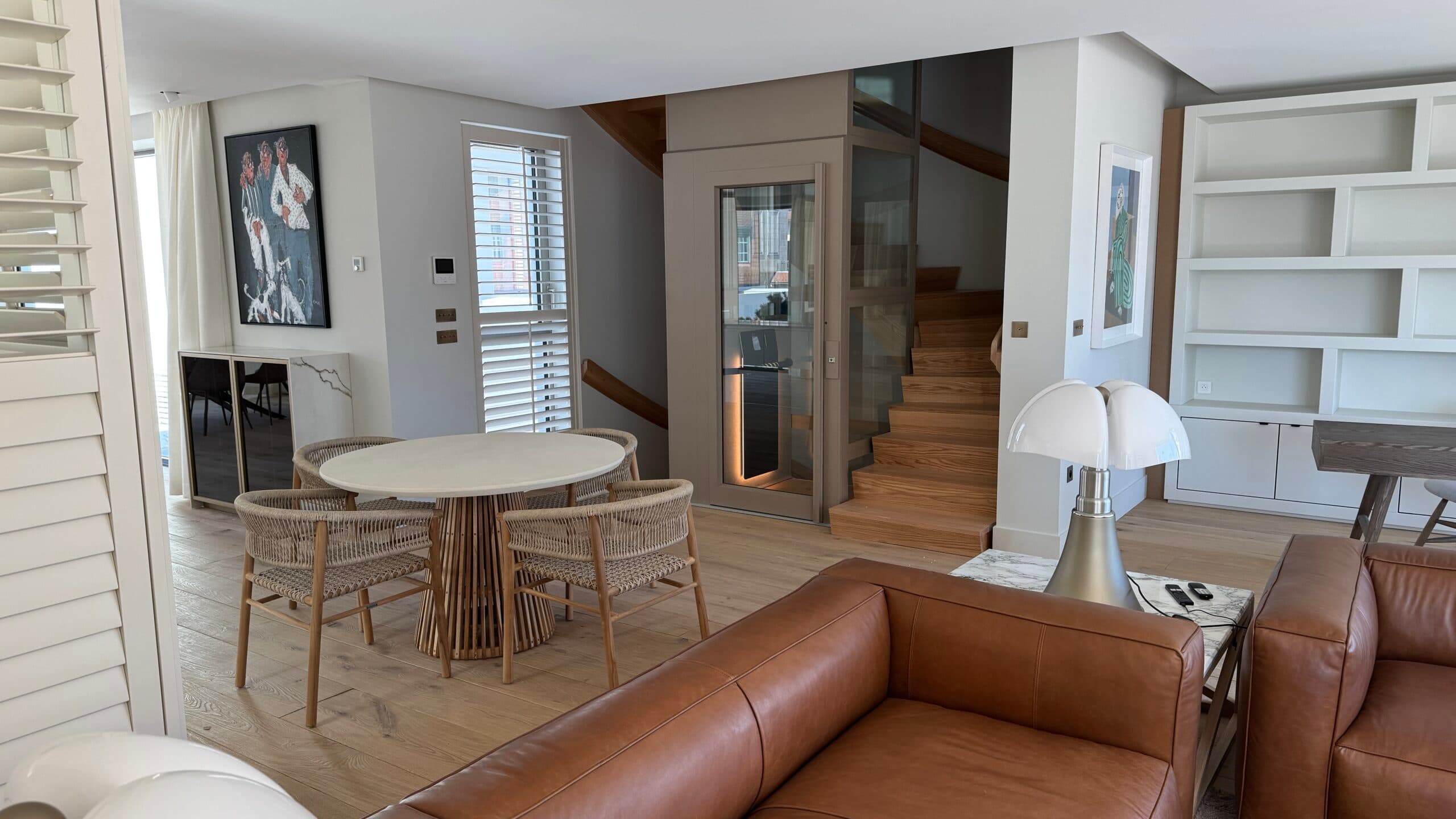
The Cibes C1 Pure is a screw-driven cabin elevator with sliding doors and automatic drive.
Get advice from an elevator professional
Getting good professional advice will make it easier to find the right lift for your care home. Most lift dealers will offer you advice and provide you with a lift quotation, completely free of charge. If your lift dealer has offices close to your establishment, you can even ask for a meeting at your facility. Cibes has a worldwide network of dealers that are trained and certified to sell, install and maintain our lifts. Just contact us and we will help you find your closest Cibes dealer.
Comparing different lift alternatives for your care home
Contacting several lift dealers makes it possible to compare different lift models and brands for your care home. As you will discover, the purchase price of the lift is only one of many important aspects.
If the lift installation has a big structural impact, the additional construction work can become very costly. Furthermore, as most lifts and elevators have a lifetime of 25 – 30 years, operating costs, such as energy consumption, maintenance and modernisation, should also be taken into account.
Another great advantage of talking to lift dealers is that they can suggest options and accessories that make it easier for care home and nursing home staff to use the elevator, like for example:
- Remote call buttons placed a few metres away from the elevator to make it easier for staff to call on the lift when transporting patients in wheelchairs and hospital beds.
- Level indicators and voice announcement informing lift users that the lift is arriving.
- Fire-rated lift doors to comply with local or national fire safety regulations.
- Kick plates in stainless steel to protect the lift doors.
- Hard-wearing and easy-to-clean elevator flooring in aluminium chequer plate.
For more information about the products of Cibes Lift, please get in touch with us through the contact form below. If you want to read more articles about lifts, please visit our blog space.
Contact us for advice. We would love to help you find the right care home lift for your establishment.
Written by

Johanna AawCopywriter & Content Marketing Specialist , Author