5 min read
Should I install a stairlift or home lift in my home?
Blog article
If you are weighing up a stair lift or home lift for a UK home, the honest answer is that it depends on one thing more than any other: whether you need to move a person, or a person and everything that comes with them. Most home owners start with the cost or space. Both matter but what you need to consider more is usually the cost of not making the right decision leading to a twice payment or waste of time. Another key point to bear in mind is avoiding the risk of fall and this article will guide you to make a more informed decision, so read on.
Stair lift or home lift: the difference that actually matters
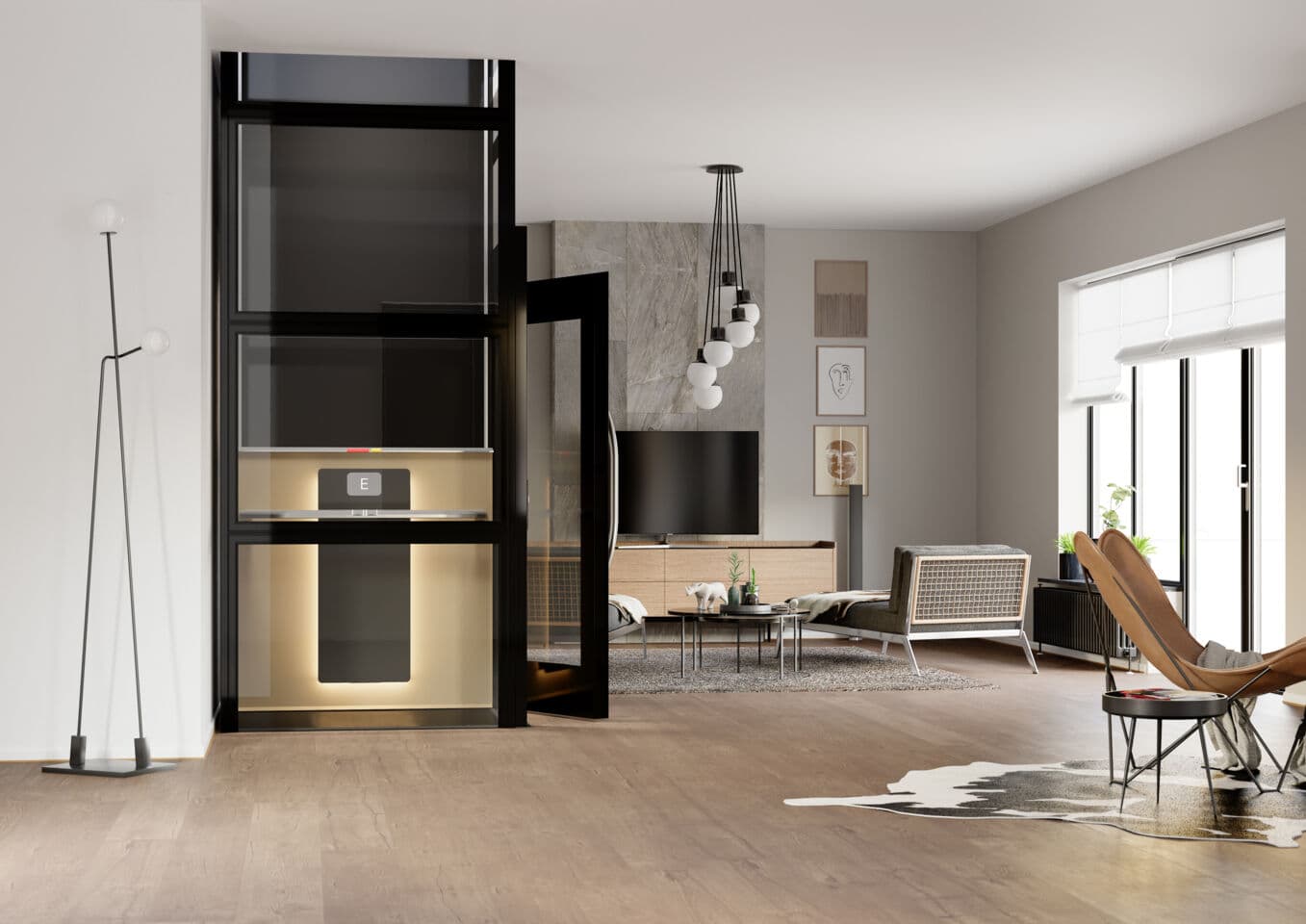
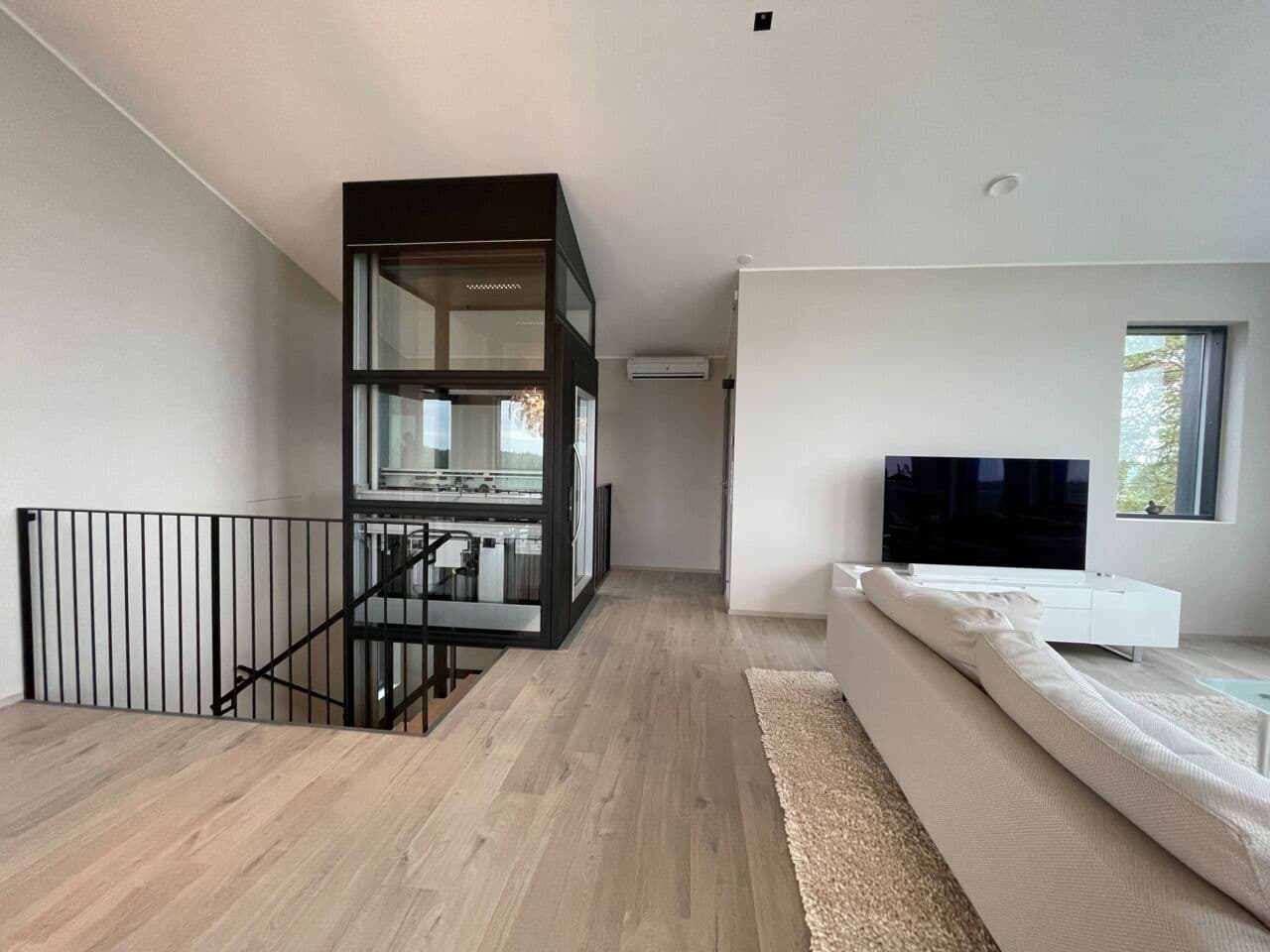
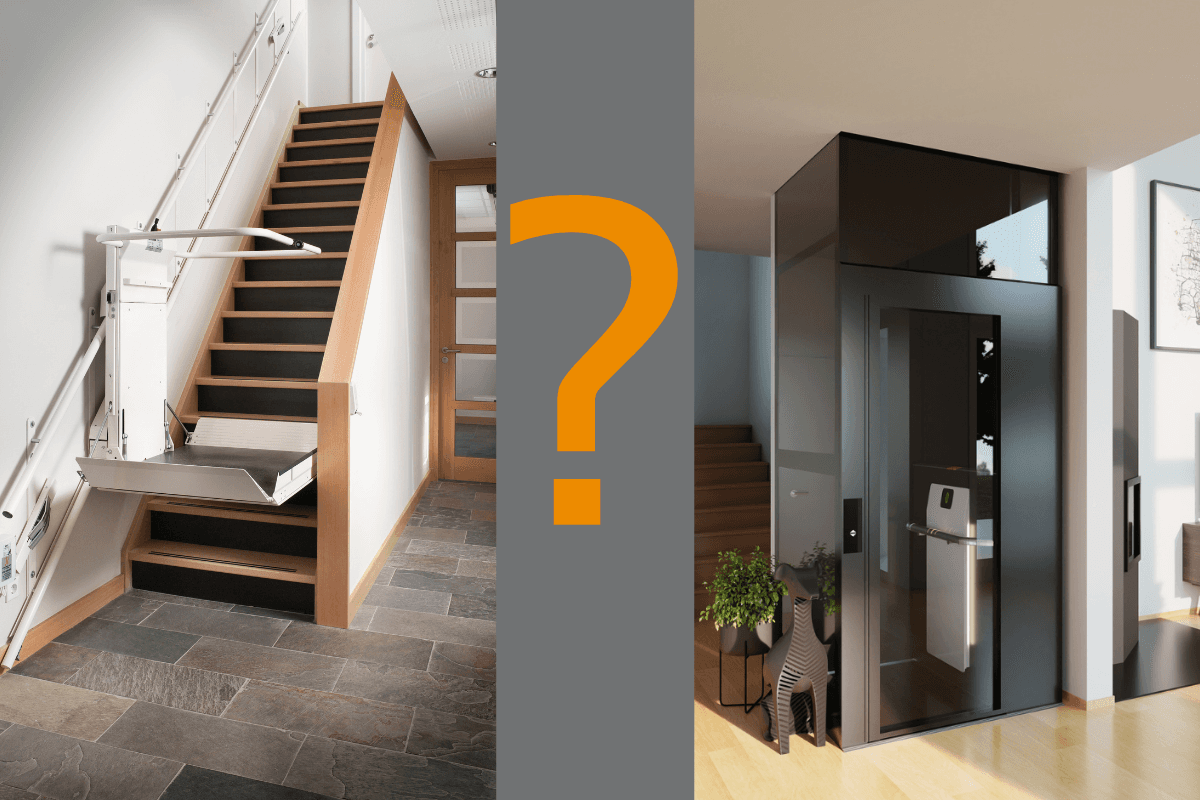
A stair lift is a chair on a rail fixed to your staircase. It carries you along the line of the stairs and it does that job well. A platform lift for the home travels vertically through an opening between floors, in its own ready-made shaft. It is not tied to the staircase at all, so it can sit in a hallway, a corner of the lounge, or beside the stairs.
The practical difference is capacity. A stair lift moves one seated person. A home lift moves a person, a wheelchair, a carer, the shopping, or a suitcase.
When a stair lift is the right choice
Be clear that a stair lift is genuinely the better option for some UK households.
Choose one if you can walk short distances and transfer in and out of a chair without difficulty, if the stairs are the only obstacle in the house, if you need a solution in days rather than weeks, or if budget is the deciding factor. It requires no structural work and costs considerably less upfront. For example, At Cibes Lift UK, a standard stairlift cost around £16000 to get it installed in your home.
When a home lift makes more sense
A home lift earns its place when the need is likely to grow.
Consider one if you use a wheelchair or walking frame, if a carer travels with you, if other people still need the stairs while you are using them, or if you would rather not repeat this decision in five years. Many older UK homes have narrow or winding Victorian and Edwardian staircases where a stair lift rail eats into an already tight walkway.
Cibes home lifts start at roughly one square metre, about the footprint of a wardrobe, so a compact model like the A4000 fits beside or within most staircases without taking a room.
The transfer problem most people overlook affects the decision of whether home lift or stairlifts
This is another important part of the decision factors, and it is often missing from most comparisons.
If you use a wheelchair, a stair lift means transferring out of the chair downstairs, riding up, and transferring into a second chair waiting at the top. Two chairs, two transfers, every trip. Each transfer carries a fall risk, and falls are the leading cause of hospital admission for older people in the UK according research from NICE, 2025.
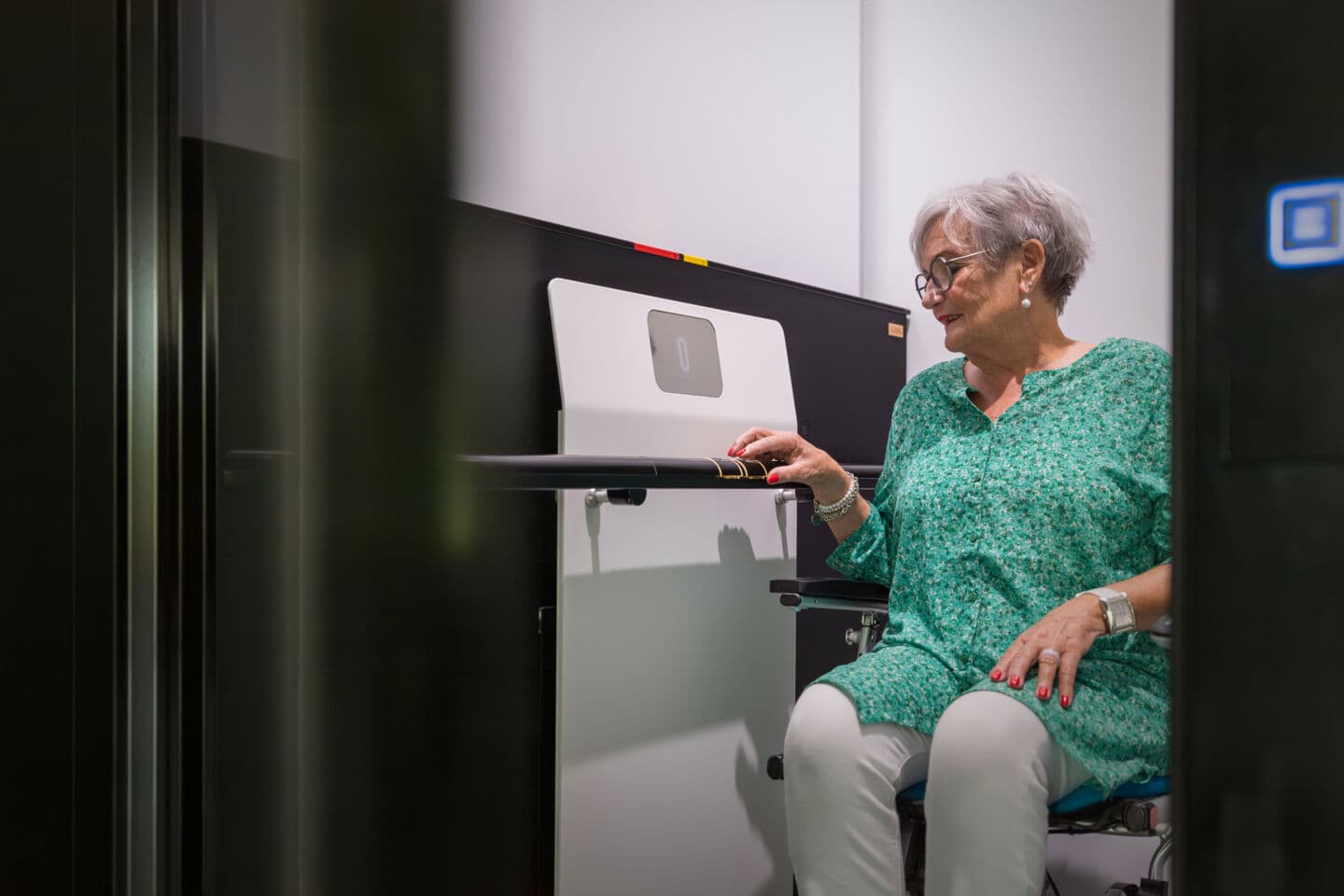
With a home lift you roll in on one floor and roll out on the next. No transfer, no second chair, no assistance needed for the journey itself. For anyone whose mobility is likely to reduce over time, that difference compounds.
What it means for your home's value
A stair lift is an aid. A home lift is a fixture.
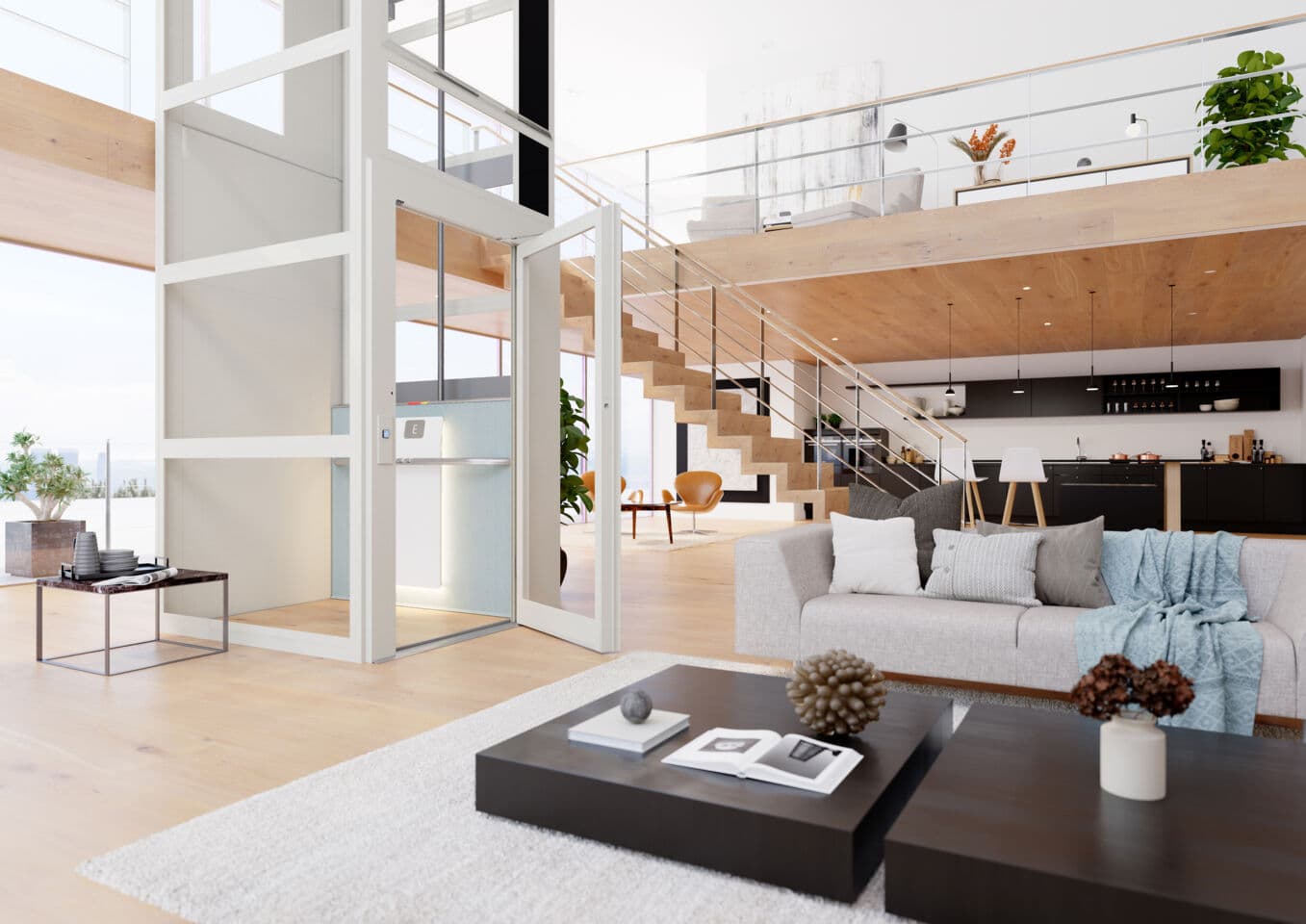
Stair lifts typically last around ten years and are often removed by the next owner when a UK property is sold. A platform lift lasts around thirty and usually stays, because it reads as an architectural feature rather than a medical device. With the finishes available, it can genuinely improve a hallway rather than apologise for being there.
That matters if you are thinking about the long term, not just the next few winters.
If the adaptation is needed because of disability or age-related need, you may be able to get help from your local council through a Disabled Facilities Grant. It covers changes that improve access to rooms and facilities in your home, and it does not affect other benefits you receive. Your council carries out an assessment and decides what is appropriate.
It is worth checking before you commit either way, because it can change the maths considerably.
Should you install a Home lift or Stairlift? Watch the short video guide
Watch Free Video Guide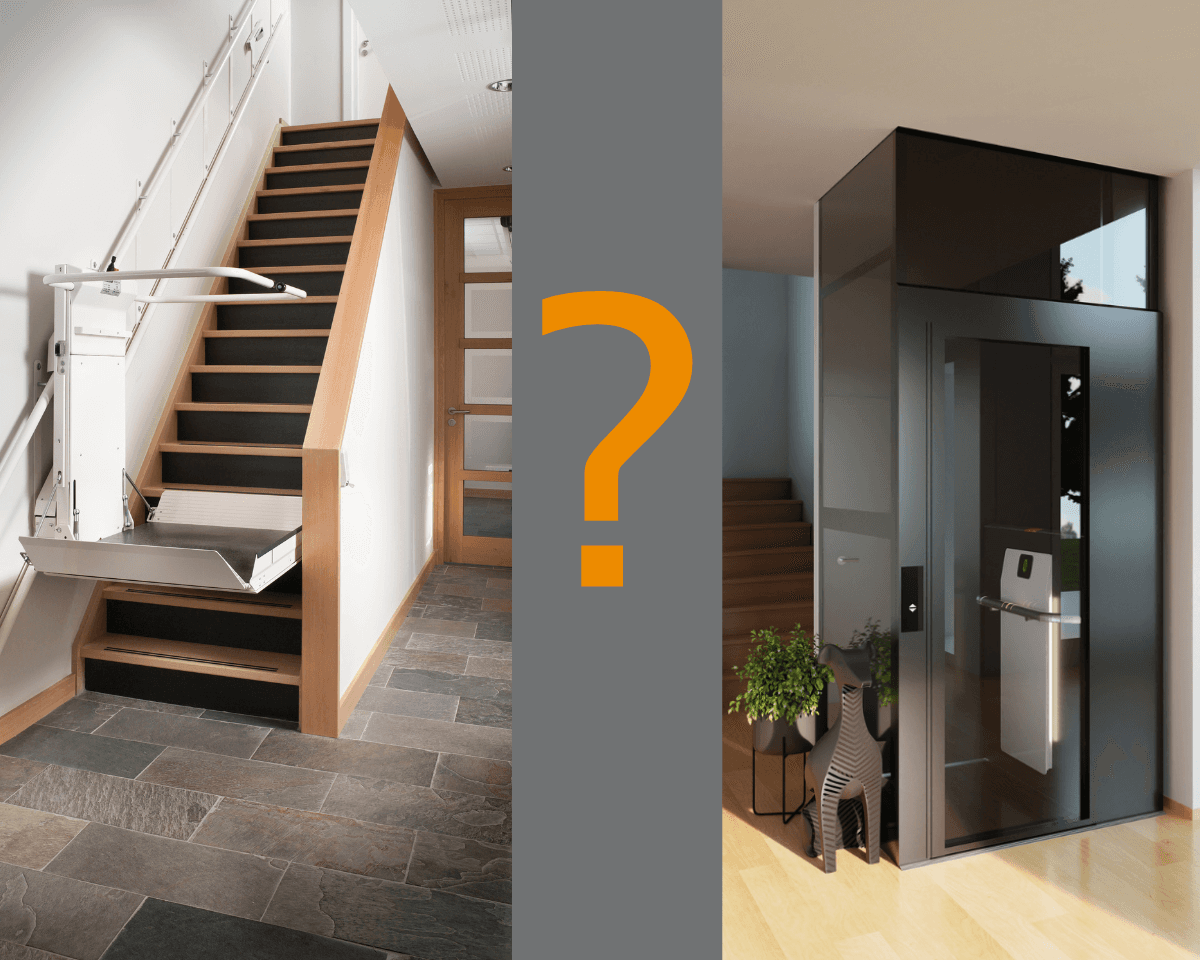
Still deciding between a stair lift or home lift?
Ask yourself three questions. Will you always be able to transfer in and out of a seat? Does anyone else in the house need the stairs at the same time? Do you expect your needs to be the same in ten years? Your answers will point to a home elevator or stairlift.
If you are still unsure, do not guess. A survey of your actual staircase and layout will tell you more than any article can. Our complete guide to home lifts in the UK covers the full range, and you can book a free consultation and we will tell you honestly which option suits your home.
Related questions & answers
Can I have a lift instead of stairs?
The short answer is that in a vast majority of countries, you would not be allowed to replace your stairs with a lift, and for very valid safety reasons. There might be exceptions, but we strongly advise against replacing your staircase with a lift. If the lift breaks down, you need to have a staircase to ensure that you are not completely blocked on one floor. In addition, if there is a fire, you must never take the lift but evacuate by the stairs instead.
If you ask yourself this question because you do not think you have enough room for both a staircase and a lift inside your home, you should know that there are other solutions that are much better and safer. In many cases, it is possible to install one of our lifts at the centre of your staircase, or just beside it. Our smallest lift size only needs1 m2 of space. It is also possible to place a staircase outside your home. Another great solution is to install our outdoor lift on the outside of your home.
Are residential lifts safe?
Most residential lifts are safe, but you should check for certification and make sure that the lift gets regular and high-quality maintenance.
The first step is to check if your residential lift carries a safety label like the CE or UL label, for example. These labels guarantee that your lift fulfills certain verified safety standards, the European safety standards for the CE mark, and the US safety standards for the UL seal. All our lifts are CE type certified by the notified body Liftinstituut to comply with all relevant EU standards. Some of our lift models are also certified by the UL for the North American markets.
Maintenance makes residential lifts safe
Step two is to make sure that your lift is properly maintained. A home lift is only as safe as the quality of its maintenance. Just like your car, a lift needs regular technical checks and service. Always sign a contract for lift maintenance and always make sure to select a lift maintenance company that is certified and trained to maintain your lift brand. At Cibes, we train all our dealers to maintain our lifts, so that you can rest assured that the maintenance of your lift is handled by qualified and trained people.
Can I fit a lift in my house?
If you have 1m2 to spare, or the space to fit a wardrobe, you can fit a lift in your house. It might sound unbelievable, but it is true for our smallest lift with a platform size of 600×830 mm. Unfortunately, many people who live in small houses with limited space wrongly assume that there is no room for a lift in their home, although there most often is.
Space-efficient lifts for your house
Cibes platform lifts are very space-efficient and can be fitted in small and narrow spaces like the void at the centre of a staircase. Unlike most lifts, our platform lifts do not require a separate machine room and can be installed without a lift pit. On the top floor, a headroom (height between the floor and the ceiling) of only 2300 mm is required for a full-height door. The smart, space-saving construction makes it easy to fit our lifts in your home without major structural alterations.
No room for a lift inside your house?
If you do not want to sacrifice any of your indoor space, or if there is no good location for a lift inside your home, installing a lift on the outside of your house is also possible. A lift leading directly to the outside also offers you comfortable, direct access to your garden and ties your indoor and outdoor living spaces together. Our outdoor lifts are equipped for tough weather conditions, including snow and rain. Discover our outdoor lift solution here.
Do elevators add value to a home?
Absolutely, lifts/elevators are known to be a smart home investment, given that they can increase your property value and make your home more appealing to a larger pool of buyers or tenants. The increase in property value varies depending on the type of lift. Typical accessibility lifts like stairlifts or chair lifts don’t add real estate value like vertical platform lifts or cabin lifts do.
Setting aside monetary value, a home lift can bring a lot of value to your home living and comfort. Lifts can help you with everyday chores and make your home a safer, more comfortable place for everyone you love.
How does a home lift work?
A lift for your home is also referred to as a vertical platform lift, this is because it transports you vertically from floor to floor through the ceiling. With this concept, it is very similar to a traditional passenger lift that you would find in buildings and public settings such as hotels and offices – however, is a much more affordable solution.
Without the need for a lift pit, shaft or machine room, our lifts are self-supporting structures that feature innovative spindle drive technology. Benefiting from quiet operation and energy consumption savings.
Innovative and easy to use, our home lift models feature a handle with integrated control buttons. To operate the lift, you have to apply pressure by holding onto the handle. You don’t have to worry about your safety either, because all our lifts are equipped with extensive safety precautions. All our models are equipped with a safety bar – as soon as you touch it, the lift stops automatically. The same applies if the lift detects an obstacle.


Would you like to know more about our home lifts?
Just send us a message. We would love to help.