11 min read
Home lifts in the UK: A complete guide to choosing the right lift for your home
Blog article
Home lifts in the UK are no longer seen as a luxury reserved for large properties or specialist needs. Across the UK, more homeowners are considering lift solutions as part of how they live, plan, and future‑proof their homes. An ageing population, changing mobility needs, and a rise in multi‑storey living have all contributed to this shift. A report from Foresight shows that by 2040, nearly 1 in 7 people is projected to be aged over 75, a trend that shows the future of residential lifts and care in the UK and even beyond. At the same time, modern home lifts have become more compact, energy‑efficient, and suitable for existing houses, making them a realistic option for many more people.
This guide is written for homeowners who want clear, practical information before making a decision. Whether you are planning ahead, supporting a family member, or simply exploring ways to make your home more accessible with home lifts, this is an all-in-one guide about home lifts in the UK. As a UK‑based lift manufacturer working with homeowners, architects, and builders, we understand the questions people ask at the early stages. This guide brings those answers together in one place.
What Does Home Lifts in the UK mean?
A home lift is a lift designed to move people vertically between floors within a private residential property. Home lifts in the UK are most commonly used to provide an alternative to stairs where mobility, safety, or long‑term convenience is a concern. They are often referred to as domestic lifts or residential lifts and are typically smaller and slower than commercial passenger lifts.
Most home lifts fall within the platform lift category. What distinguishes a home or platform lift is that it travels at a maximum speed of 0.15 metres per second and is designed for low‑rise travel, usually between two or three floors. Passenger lifts, by contrast, travel faster, require a lift shaft and machine room, and are intended for higher traffic and larger capacities.
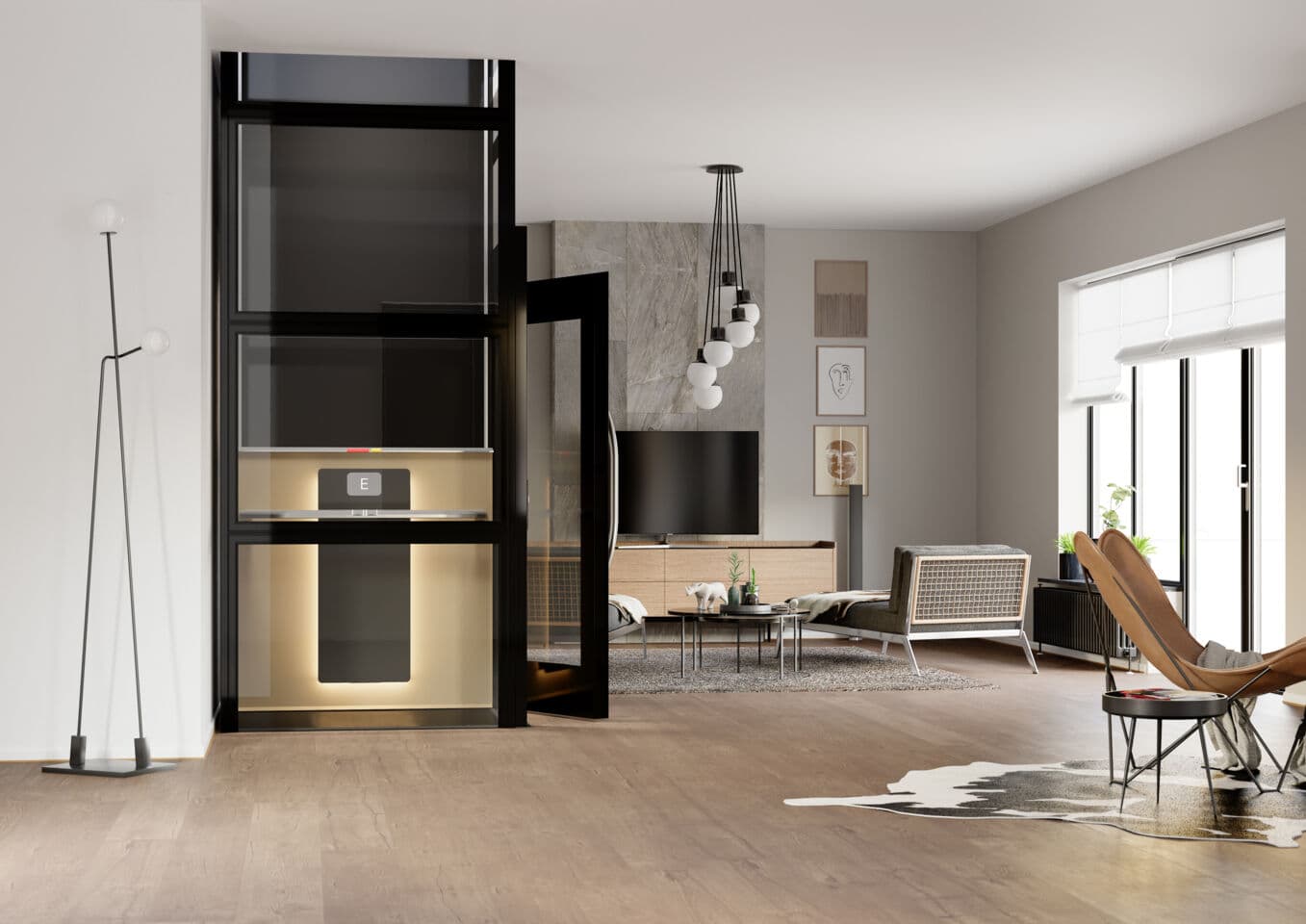
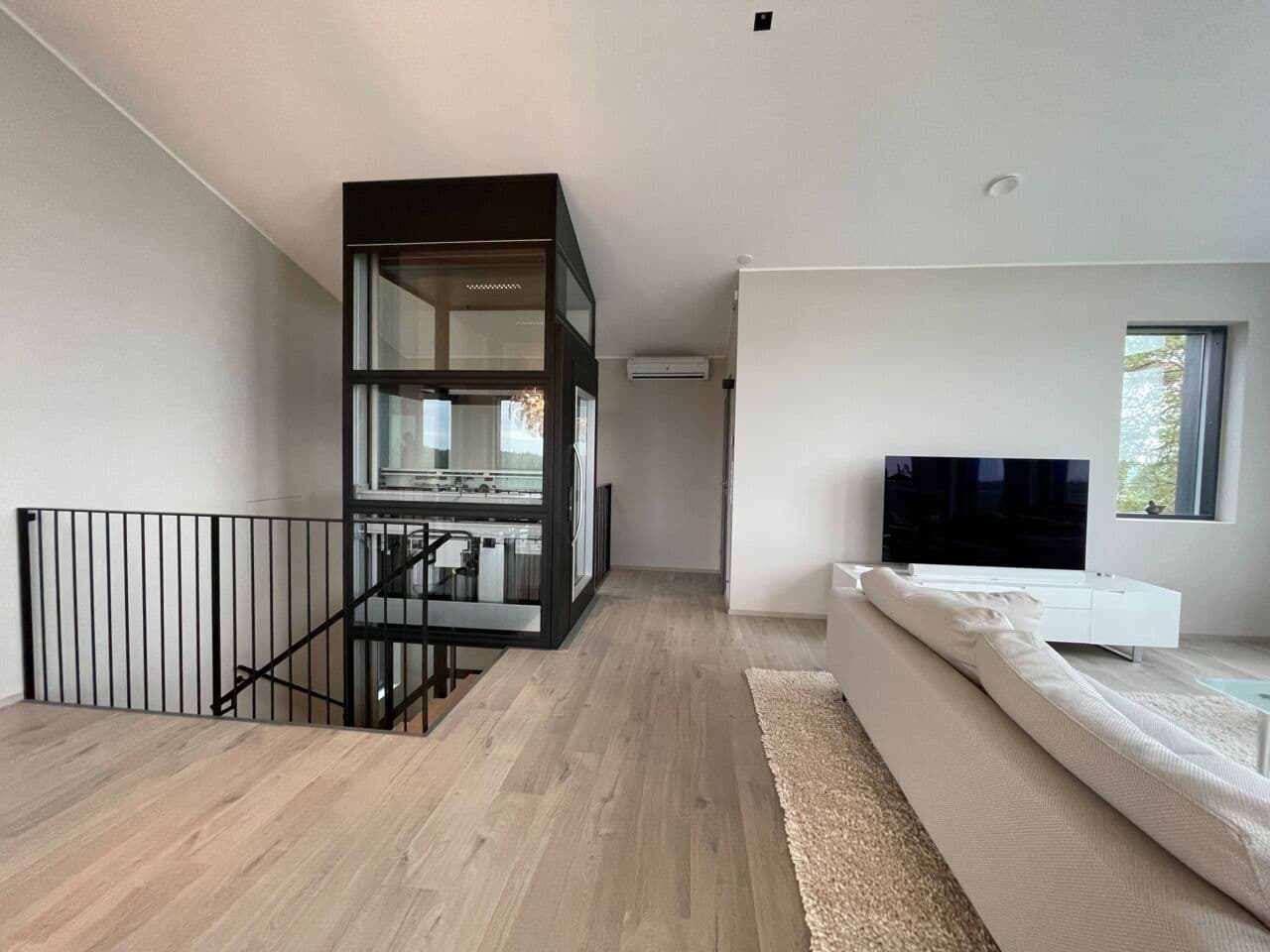
Home lifts in the UK are often installed in living areas such as a lounge or dining space, providing a simple vertical route to a bedroom above. Depending on the model and available space, a home lift can range from a compact small home elevator to a larger residential platform lift.
Who Are Home Lifts For? Real‑World Use Cases
Some of the recurring questions from people about home lifts are – do I need to be elderly to install a home lift? Or Is a home lift only for disability use? Home lifts are used by a large number of homeowners, including those with immediate mobility challenges or elderly. Many people install a home lift as part of ageing in place, allowing them to remain comfortable and independent in a multi‑storey home as their needs change over time.
Residential platform lifts or home lifts in the UK are also commonly chosen by families supporting relatives with reduced mobility, long‑term health conditions, or recovery from injury. For wheelchair users, a residential wheelchair lift or platform lift for the home can provide safe and consistent access between floors without relying on stairs. For example, our A5000 platform lift was installed in a three storey recently refurbished property on the beautiful island of Jersey. The property owners were seeking a solution for transporting goods and groceries throughout their home, alongside having the added benefit of future proofing their property.
To learn more about the home lift installed in the Island of Jersey, read our case study: Cibes Lift UK Installs A5000 in Jersey Home.
Importantly, you do not need to be elderly or disabled to install a home lift. Some homeowners choose small home elevators simply to future‑proof their house, improve accessibility, or protect long‑term property value. In many cases, a home lift is a practical, forward‑looking decision rather than a response to an urgent need.
Types of Home Lifts in the UK
There are several types of home lifts available in the UK, each suited to different properties, space constraints, and mobility needs. Understanding the main options helps narrow down what will work best for your home.
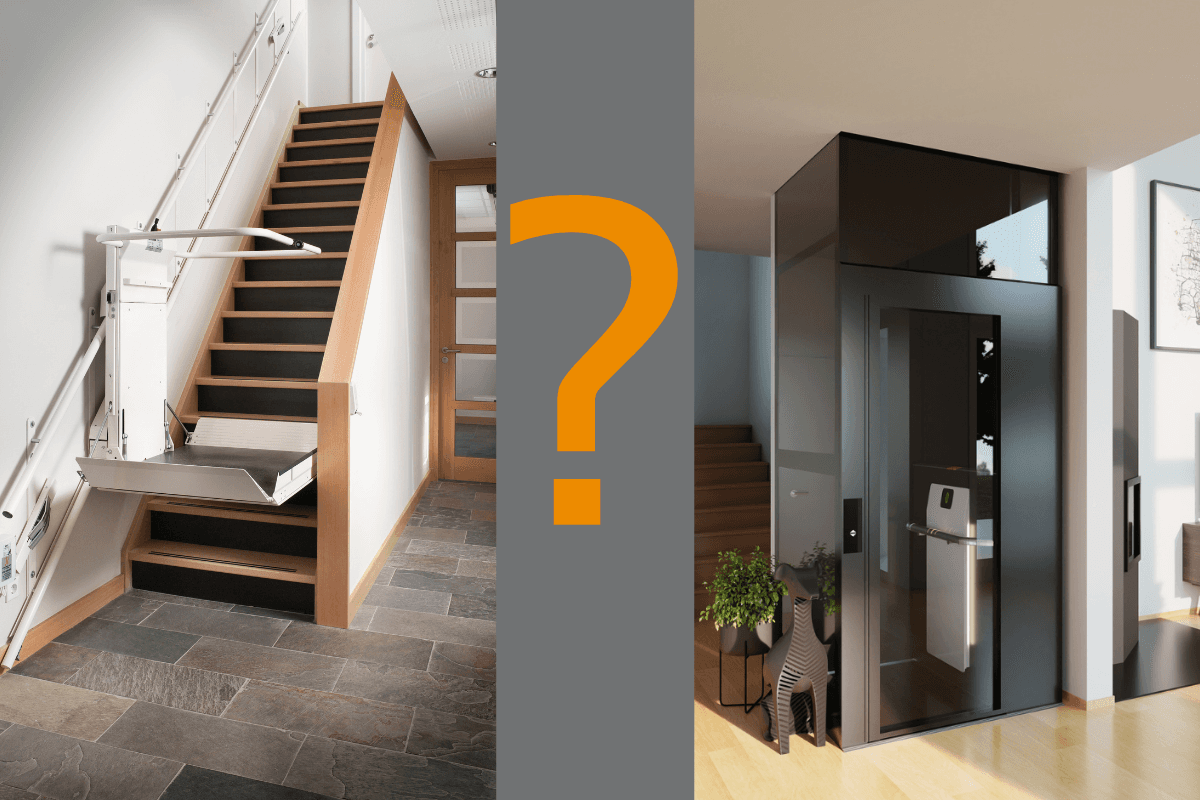
Platform lifts are one of the most common choices for residential use. These vertical platform lifts for homes are designed for low‑rise travel, usually between two or three floors, and work well for wheelchair users or those seeking step‑free access. They require relatively little space and are often installed in existing houses.
Cabin lifts look more like traditional elevators but are designed specifically for domestic settings. They are suitable where a more enclosed lift is preferred and where space allows for a lift shaft.
Through‑floor lifts travel directly through a cut‑out in the floor and are often used between two levels. They are commonly chosen for homes with limited space and minimal structural disruption.
Screw‑driven home lifts are compact, energy‑efficient, and well suited to residential properties. They do not require a machine room and are popular as small elevators for homes in the UK.
Compact home elevators are designed for tight spaces and modern living. These small house lifts offer a balance between comfort, accessibility, and efficient use of space, making them a practical option for many UK homes.
Indoor vs External Home Lifts: Which Is Right for You?
Home lifts can be installed either inside or outside a property, and the right choice depends on space, layout, and personal preference.
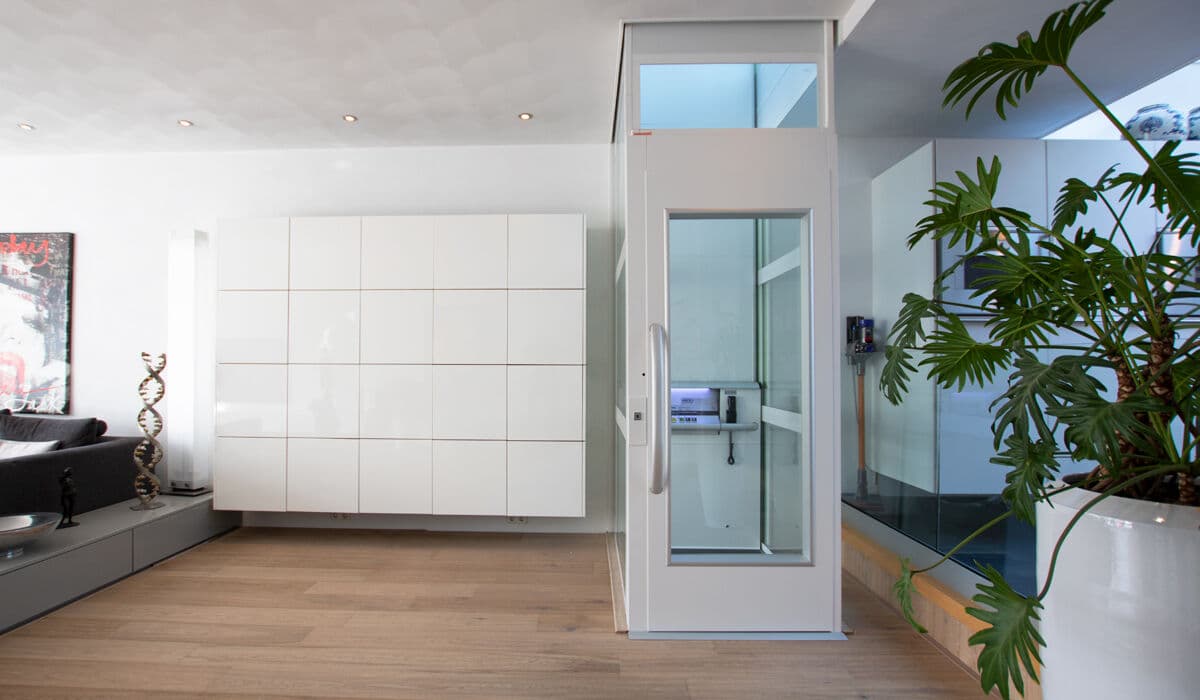
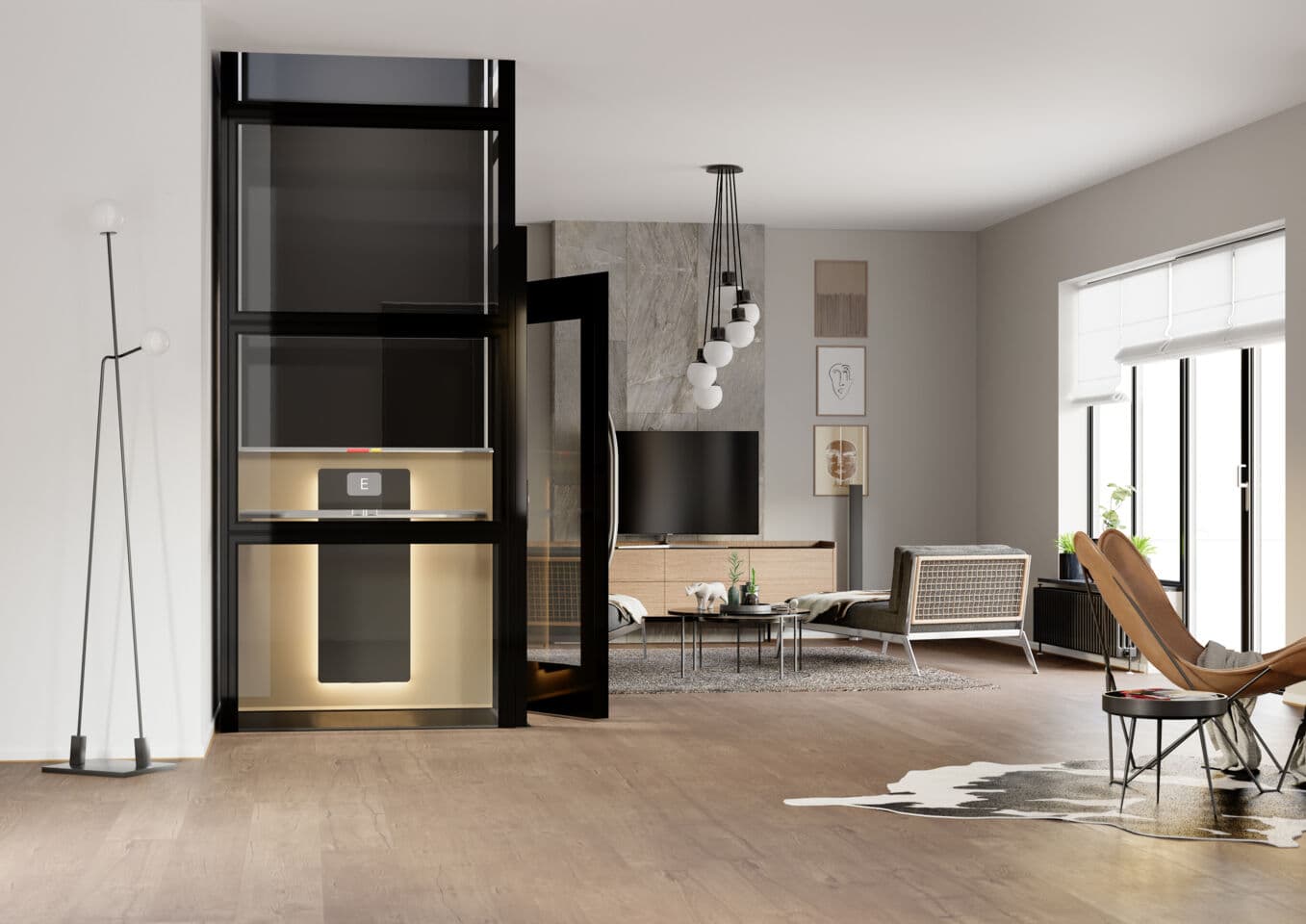
Indoor home lifts are often chosen for convenience and comfort. They provide direct access between floors and are typically integrated into living areas such as lounges or hallways. Indoor lifts also allow for greater control over finishes and design, helping them blend with the interior designs of the home.
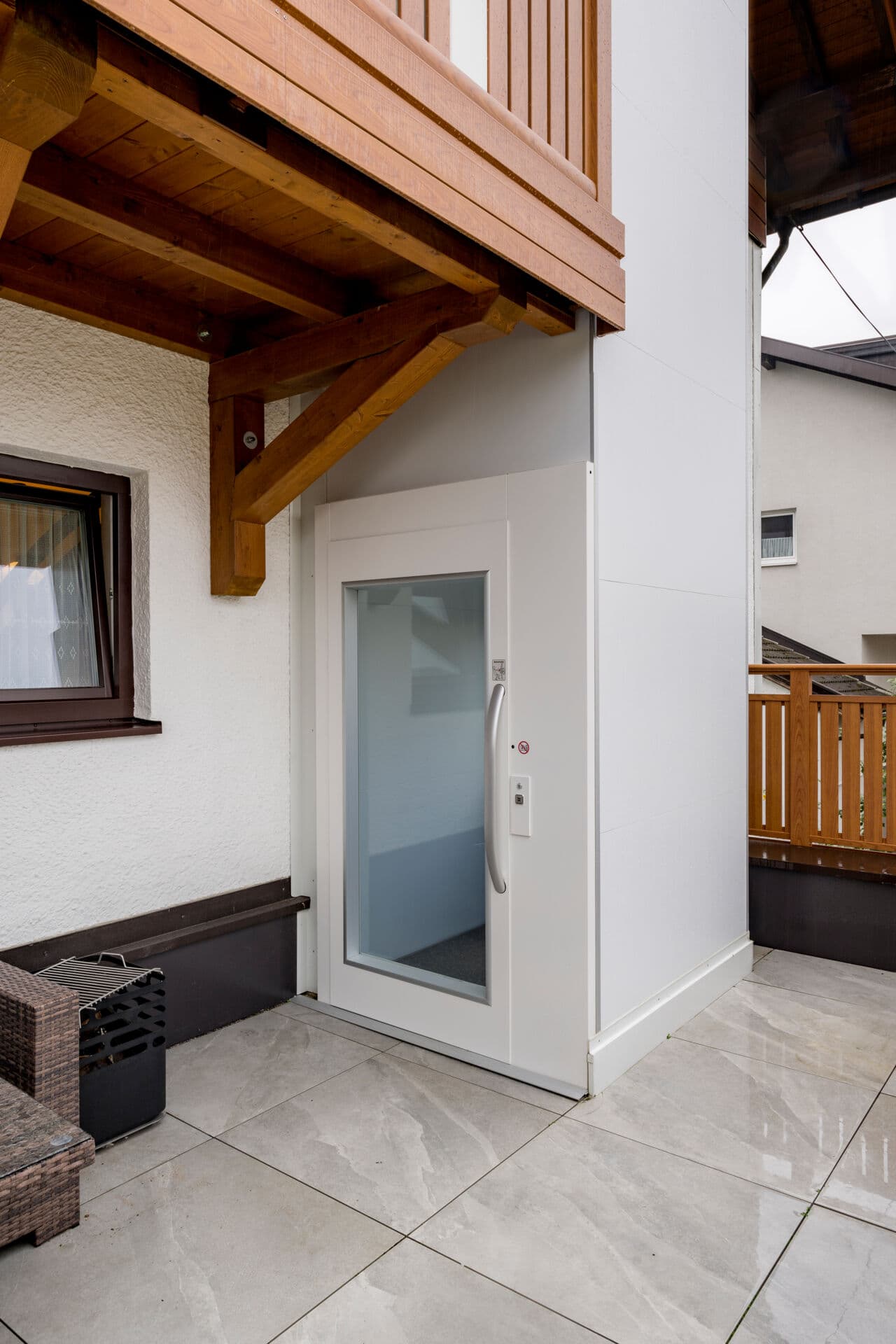
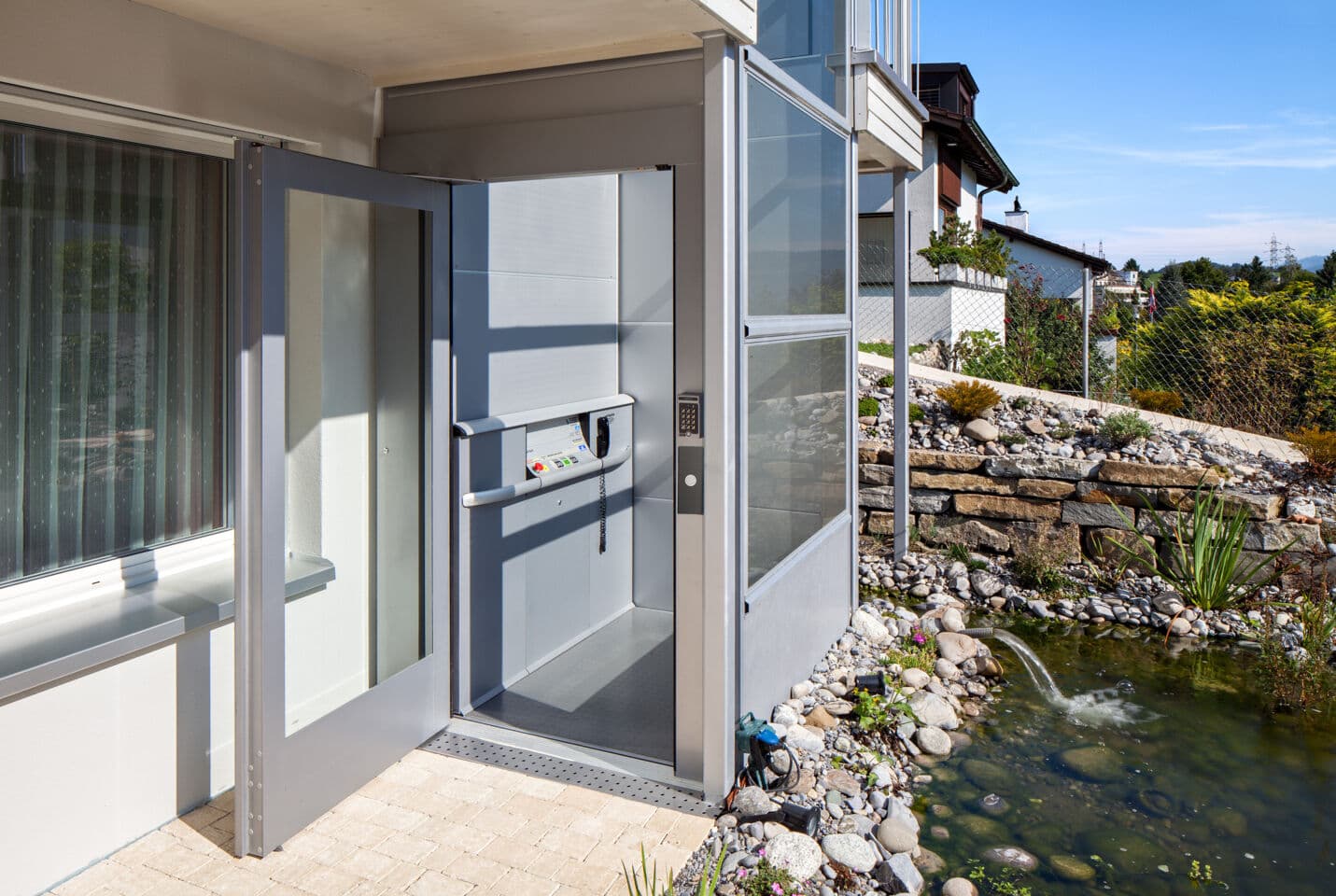
External domestic lifts are commonly used where indoor space is limited or when retrofitting a lift into an existing house. Installed against an external wall, they can reduce internal building work while still providing step‑free access between floors. Modern external lifts are designed to operate reliably in UK weather conditions when properly specified and installed.
Both options can be effective. The choice usually comes down to available space, disruption considerations, and how the lift will be used day to day.
Space, Planning Permission & Building Requirements
One of the biggest concerns homeowners have is whether their house can physically fit a home lift. In many cases, the space required is less than expected, particularly with compact platform lifts or screw‑driven designs like our A5000 and C1 Pure lifts.
Planning permission is not always required, especially for internal installations. However, it may be needed for external lifts, listed buildings, or properties in conservation areas. Each case should be assessed individually.
Home lifts can often be installed in existing houses, not just new builds. This usually involves working closely with builders, architects, or surveyors to ensure structural suitability and compliance with building regulations. A professional site survey is essential to confirm space, load‑bearing considerations, and access routes before moving forward. At Cibes lift UK, to support you in home lift space planning and building requirements we can:
- Work with Architects to specify the lift suitable for your properties,
- We can work with your builders to discuss all building work requirements,
- We also work closely with you on the style and look of your lift or work with the architect you provide to collaborate with structural engineers on the load needed for the lift.
Installation Timeline: What to Expect
Home lift installation in the UK typically follows a clear sequence. This includes an initial survey, design confirmation, any preparatory building work, installation of the lift itself, and final testing and handover.
Timeframes vary depending on the lift type and complexity of the project. Some home lifts can be installed relatively quickly once the site is prepared, while others may require more coordination with building works. On average, most home or residential platform lifts in the UK are installed within 5 – 7 days. At Cibes lift UK, we install home lifts for customers within 3-5 days depending on the type of lift. Again, this time depends on factors such as type of lift, space available, environment and preference.
Disruption is kept to a minimum, particularly with modern residential lift systems designed for retrofit installations. Thanks to our smart and space-saving construction with screw-driven platform lifts that are so much easier and cheaper to retrofit into old buildings than conventional elevators. Clear planning and communication help ensure the process runs smoothly and fits around everyday lift as much as possible.
Safety, Reliability & Ongoing Maintenance
Home lifts in the UK are built to meet strict safety standards. Modern systems include built‑in features such as emergency lowering, safety edges, controlled travel speeds, and secure access controls.
Like a car, installing residential lifts isn’t the only thing that needs to be done, there is also a need to ensure the lift is being taken care of after a long time of usage in order to keep it running safely and smoothly. Even though all Cibes lifts are built to last, we encourage customers to have a maintenance plan. Regular servicing is essential to keep a home lift operating safely and reliably. Ongoing maintenance helps prevent unexpected faults, extends the life of the lift, and ensures continued compliance with safety requirements. When properly installed and maintained, a home lift is a dependable addition to a property. Reliability is largely influenced by build quality, correct specification, and long‑term support from the lift provider.
To learn more about how we look after our lifts, visit our maintenance contracts page.
How to Choose the Right Home Lift Company in the UK
Choosing the right home lift company is just as important as choosing the lift itself. Look for a provider with experience in domestic properties, not only commercial projects.
UK‑based support, transparent consultation, and clear guidance at every stage help reduce uncertainty. A good and reliable lift company in the UK will take time to understand your home, your needs, and any constraints before recommending a solution.
Long‑term servicing and aftercare should also be considered. A home lift in the UK or residential platform lift is a permanent feature, and ongoing support plays a key role in safety and reliability. The best residential platform lift companies combine technical expertise with clear communication and consistent after‑installation support. With over 70 years of experience, Cibes lift UK offers customers a one-stop lift solution; offering you the opportunity to get your lift manufactured by us, installed and maintained in one place giving you room for reliable and customisable options. Most lift companies in the UK do not provide one-stop reliable lift solutions because they do not manufacture the lift like Cibes, a reason even builders and architects trust our lift solutions. All the building work will still need to be undertaken by a reliable builder who we can work hand-in-hand with to get your lift installed.

Make your choice from a unique colour palette up to 300 different shades.
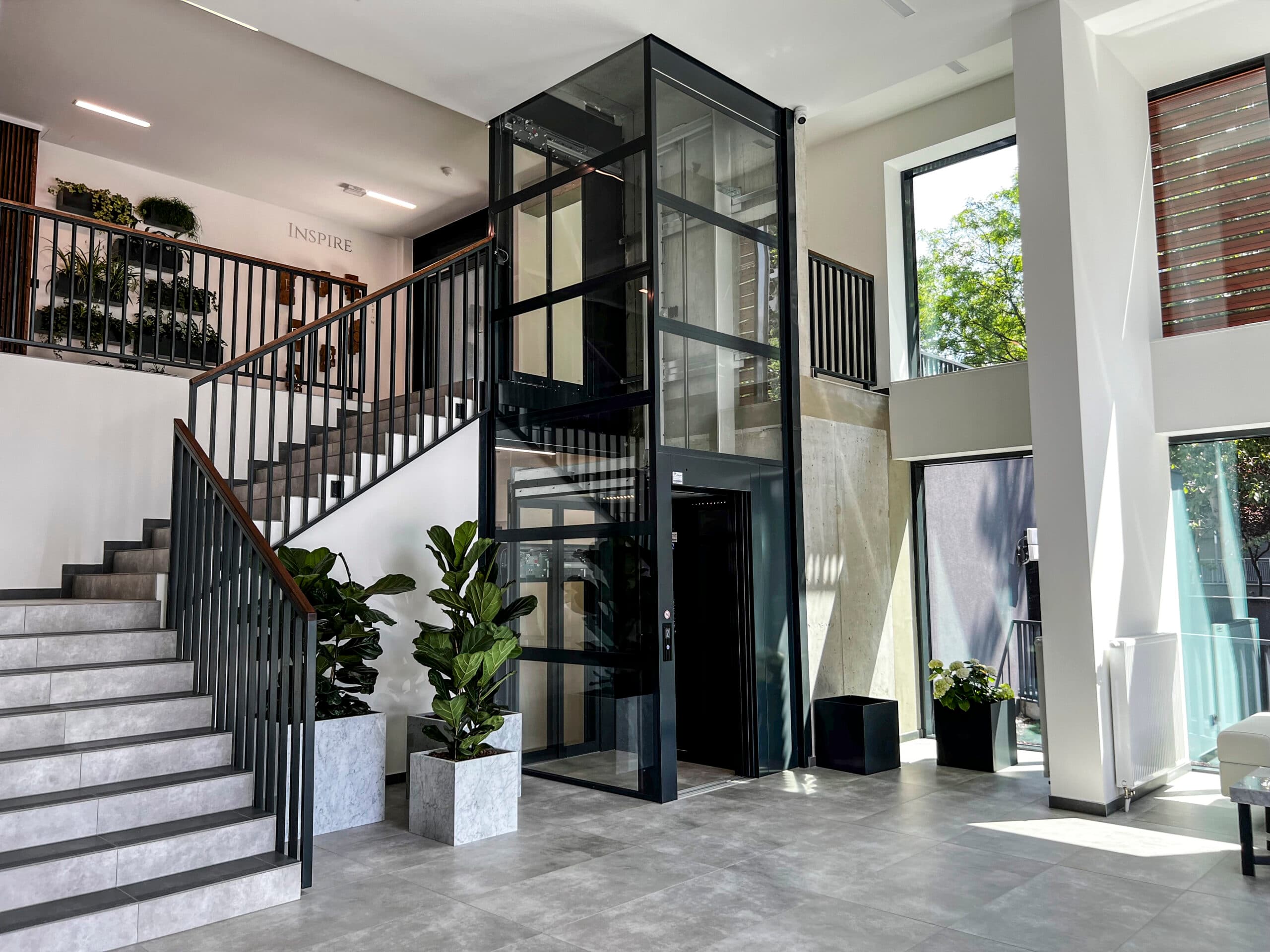
Cibes scandinavian design comes with lift shaft and panoramic glazing
Making an Informed Decision
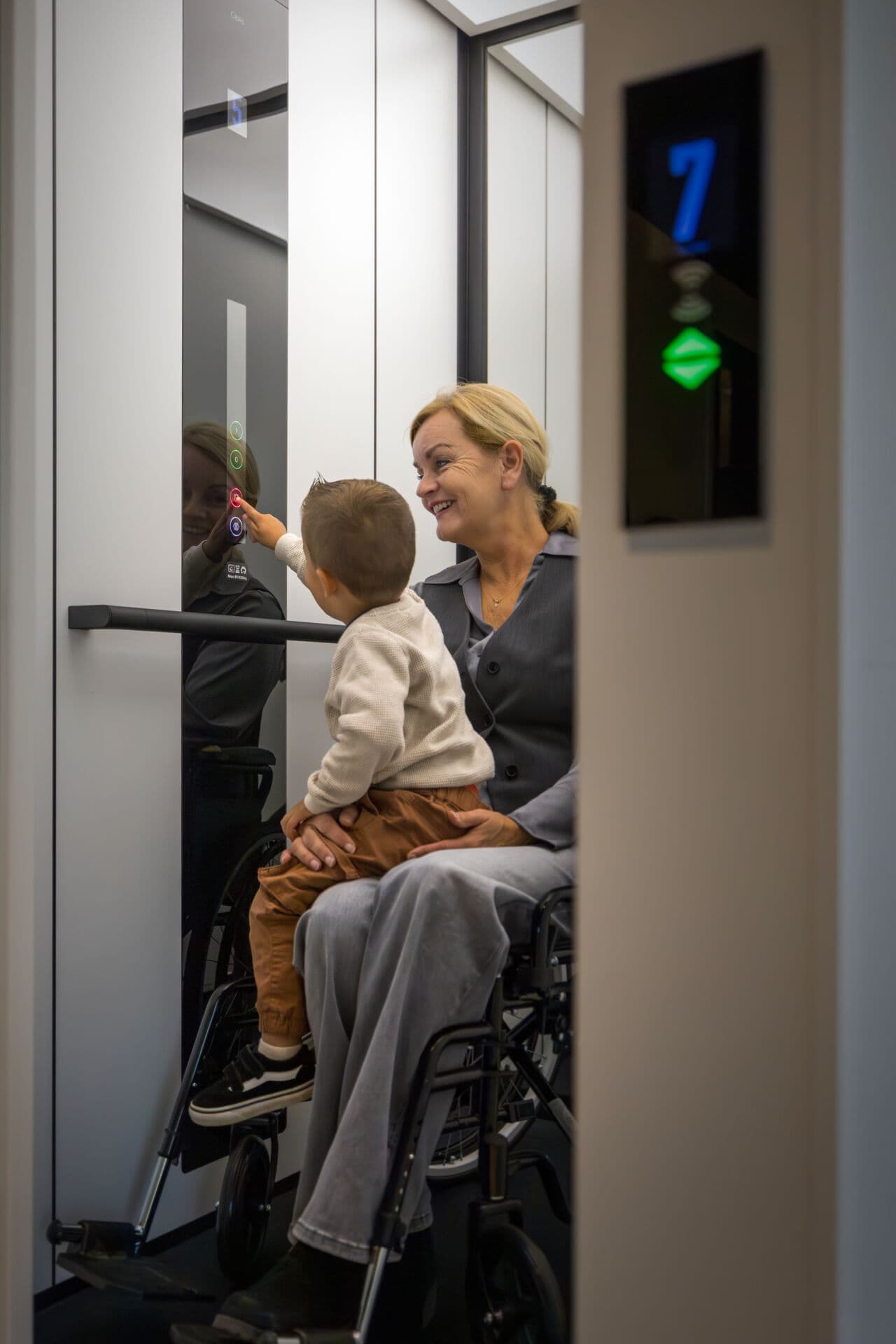
Installing a home lift is a practical decision that can improve accessibility, comfort, and long‑term usability of a property. Understanding the types of lifts available, how costs are structured, and what installation involves helps homeowners make informed choices.
Whether the goal is supporting mobility needs, planning for the future, or improving everyday convenience, a well‑specified home lift can add lasting value. Taking time to explore options, ask the right questions, and work with an experienced provider ensures the solution fits both the home and the people who live in it.
Are you living in the UK and want to buy or install a home lift in your building and not sure what fits? Book a call or quote with our team. Our goal is to make accessibility effortless in every building in the UK, and our team is always ready to support you to make the right decision.
Common Questions People Ask About Home Lifts in the UK
Can I have a lift instead of stairs?
The short answer is that in a vast majority of countries, you would not be allowed to replace your stairs with a lift, and for very valid safety reasons. There might be exceptions, but we strongly advise against replacing your staircase with a lift. If the lift breaks down, you need to have a staircase to ensure that you are not completely blocked on one floor. In addition, if there is a fire, you must never take the lift but evacuate by the stairs instead.
If you ask yourself this question because you do not think you have enough room for both a staircase and a lift inside your home, you should know that there are other solutions that are much better and safer. In many cases, it is possible to install one of our lifts at the centre of your staircase, or just beside it. Our smallest lift size only needs1 m2 of space. It is also possible to place a staircase outside your home. Another great solution is to install our outdoor lift on the outside of your home.
Are residential lifts safe?
Most residential lifts are safe, but you should check for certification and make sure that the lift gets regular and high-quality maintenance.
The first step is to check if your residential lift carries a safety label like the CE or UL label, for example. These labels guarantee that your lift fulfills certain verified safety standards, the European safety standards for the CE mark, and the US safety standards for the UL seal. All our lifts are CE type certified by the notified body Liftinstituut to comply with all relevant EU standards. Some of our lift models are also certified by the UL for the North American markets.
Maintenance makes residential lifts safe
Step two is to make sure that your lift is properly maintained. A home lift is only as safe as the quality of its maintenance. Just like your car, a lift needs regular technical checks and service. Always sign a contract for lift maintenance and always make sure to select a lift maintenance company that is certified and trained to maintain your lift brand. At Cibes, we train all our dealers to maintain our lifts, so that you can rest assured that the maintenance of your lift is handled by qualified and trained people.
Can I fit a lift in my house?
If you have 1m2 to spare, or the space to fit a wardrobe, you can fit a lift in your house. It might sound unbelievable, but it is true for our smallest lift with a platform size of 600×830 mm. Unfortunately, many people who live in small houses with limited space wrongly assume that there is no room for a lift in their home, although there most often is.
Space-efficient lifts for your house
Cibes platform lifts are very space-efficient and can be fitted in small and narrow spaces like the void at the centre of a staircase. Unlike most lifts, our platform lifts do not require a separate machine room and can be installed without a lift pit. On the top floor, a headroom (height between the floor and the ceiling) of only 2300 mm is required for a full-height door. The smart, space-saving construction makes it easy to fit our lifts in your home without major structural alterations.
No room for a lift inside your house?
If you do not want to sacrifice any of your indoor space, or if there is no good location for a lift inside your home, installing a lift on the outside of your house is also possible. A lift leading directly to the outside also offers you comfortable, direct access to your garden and ties your indoor and outdoor living spaces together. Our outdoor lifts are equipped for tough weather conditions, including snow and rain. Discover our outdoor lift solution here.
How do I order from Cibes Lift UK?
Before you begin, understanding how you want your lift to fit into your home and lifestyle is the first step you should take. You can do this by answering our preparation checklist. Once you’ve done that, arrange a free home visit with one of our dealers to talk about your needs. You can then go ahead and design your lift and receive a quote for the work to be carried out.
How does a home lift work?
A lift for your home is also referred to as a vertical platform lift, this is because it transports you vertically from floor to floor through the ceiling. With this concept, it is very similar to a traditional passenger lift that you would find in buildings and public settings such as hotels and offices – however, is a much more affordable solution.
Without the need for a lift pit, shaft or machine room, our lifts are self-supporting structures that feature innovative spindle drive technology. Benefiting from quiet operation and energy consumption savings.
Innovative and easy to use, our home lift models feature a handle with integrated control buttons. To operate the lift, you have to apply pressure by holding onto the handle. You don’t have to worry about your safety either, because all our lifts are equipped with extensive safety precautions. All our models are equipped with a safety bar – as soon as you touch it, the lift stops automatically. The same applies if the lift detects an obstacle.
How does a platform lift work?
The way a platform lift works depends on the manufacturer. In the case of Cibes, our platform lifts work with a safe and robust screw and nut drive system. The motor drives the nut to rotate around the screw and depending on the direction makes the lift travel upwards or downwards.
This reliable system enables our lifts to be installed quickly and efficiently without a pit or machine room, so that our lifts fit easily into your home or building without impacting its structure. The screw driven system works with a screw, nut and motor.
In Europe, platform lifts require a ‘hold-to-run’ function, which means you must hold the button of the floor you want to travel to until you’ve reached the floor. In Asia, the ‘hold-to-run’ function isn’t required, and you can travel in a platform lift as you would in a regular lift where you just press the button once instead of holding it.


Would you like to find a perfect lift for your home?
Just send us a message. We would love to help.