11 min read
How much does it cost to install a lift in 2025?
Blog article
In 2025, there are more lift alternatives for different purposes, users, and budgets than ever. That makes understanding the factors that affect the cost of installing a lift even more important, as it will enable you to make an informed and cost-effective decision. In this blog, we will explore the costs of installing a lift, providing a comprehensive overview of the investment, both from a short-term and a long-term perspective.
Factors affecting the cost of lift installation
The price of a lift installation depends on several factors, each of which can significantly influence the final cost. These include the type of lift, its dimensions and capacity, the number of floors the lift needs to serve and the level of customisation.
Lift type
The choice of lift type is a crucial factor that directly influences the cost of installation. In 2025, the options available are more diverse than ever before, each designed to meet specific needs in both commercial and private environments. Let us take a closer look at some of our most popular lift types:
Cibes platform lifts
A platform lift or vertical platform lift is a device that takes the passenger from one floor to the next, using a platform instead of an enclosed lift car. A platform lift does the same job as an elevator, albeit at a slightly lower speed and with lift controls that work a bit differently. Vertical platform lifts have many advantages, compared to classic elevators: For example, they take up less space, require less construction work and can be installed quickly. This lift type offers you a cost-efficient alternative to elevators for public, commercial and residential use.
Within the category of platform lifts, models range from simple and functional to high-end premium versions. These systems are particularly valued for their ability to integrate harmoniously into any environment, whether in a public building, private residence, or a commercial setting. Models such as the Cibes A5000 is known for its wheelchair accessibility and wide range of sizes. That makes the Cibes A5000 a popular choice for public and commercial establishments, but also for residential buildings and private homes. Other lift models, like the Cibes Air, offer the same benefits, plus additional luxury features like unique materials and intuitive design. The Cibes Air is a more expensive option, but it is ideal for any environment where you want to add a touch elegance and high-end sophistication.
Thanks to their compact design, the installation of vertical platform lifts requires fewer structural alterations than conventional elevator types. Therefore, they are much easier to integrate into existing buildings than elevators. Platform lifts are also very easy to plan for in new-builds.

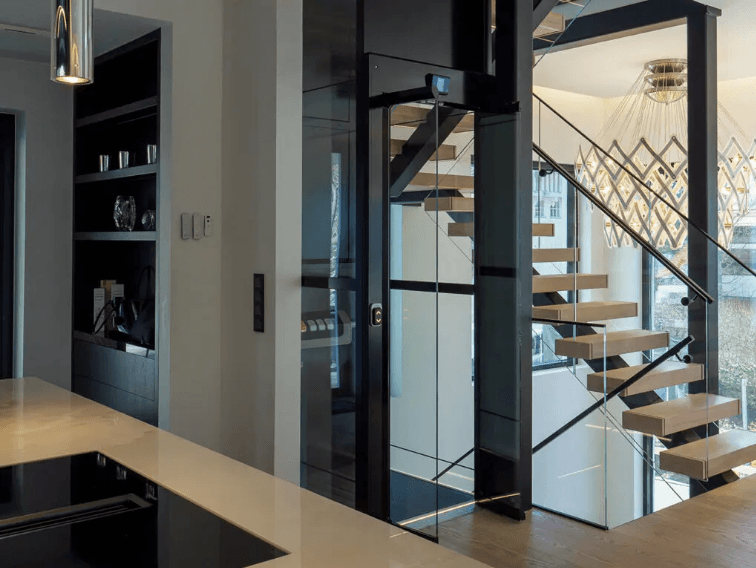
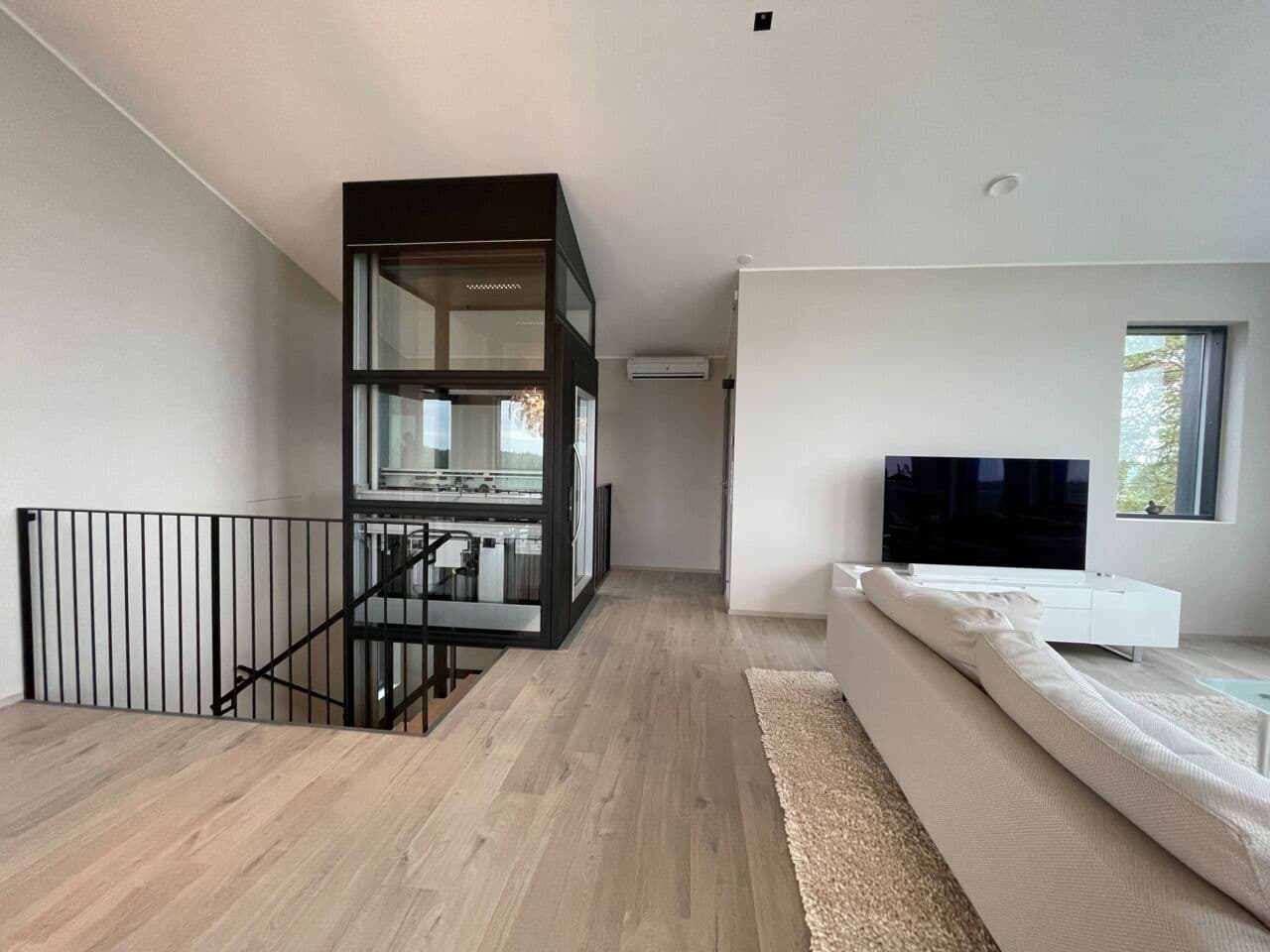
Cibes Cloud Plus, installed in a Finnish designer home
Our cabin lifts
Cibes cabin lifts offer a similar level of comfort to traditional elevators but are more space-efficient and much easier to install. For example, Cibes cabin lifts only require a 10 cm pit and no extra headroom on the top floor. Cibes offers you cabin lift solutions that are ideal for those looking for perfect integration with different architectural styles. The possibility of installing the lift in a masonry shaft enclosure or with our modular shaft makes the Cibes C1 Pure very versatile. In addition, the lift car is easy to customise in terms of style and function. It is thanks to this flexibility that the Cibes C1 Pure is so easy to adapt to any setting. This flexibility in design and installation makes the Cibes C1 Pure attractive for a wide range of applications, from residential to public and commercial buildings.

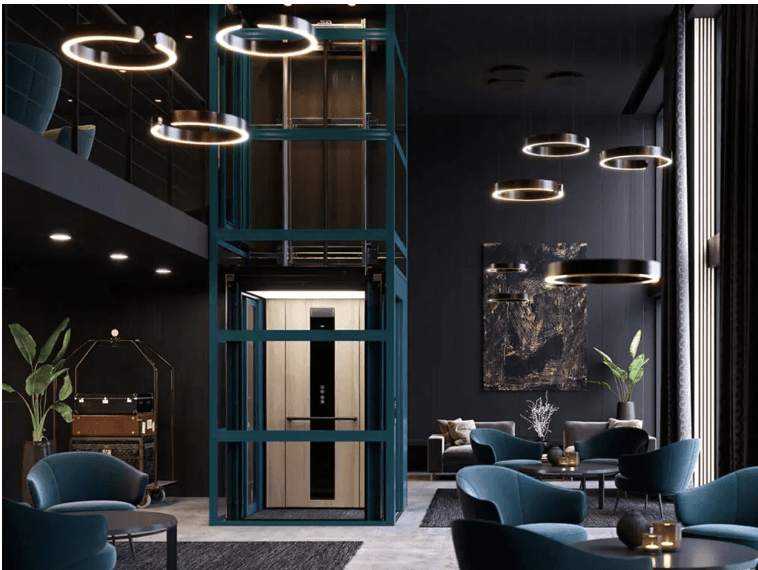
Cibes C1 Pure cabin lift, installed in a hotel restaurant
Cibes goods lifts
The Cibes A8000 Goods Lift is the ideal choice for transporting heavy equipment and people, as it can handle up to 1000 kg. The high load capacity makes it exceptionally versatile and suitable for a variety of buildings. Warehouses, office buildings, hotels, private clinics, museums, schools and libraries are just a few examples. Unlike traditional freight elevators, which are generally limited to transporting goods, Cibes goods lifts are also certified to transport people. Thanks to its large platform sizes and wide doors, the Cibes A8000, is ideal for safe transport of heavy goods with attending staff. This lift is also a great option for wheelchair and mobility scooter users. The biggest platform size is even large enough for stretcher and hospital beds and the robust design and integrated safety features of the lift ensure safe and efficient operation.

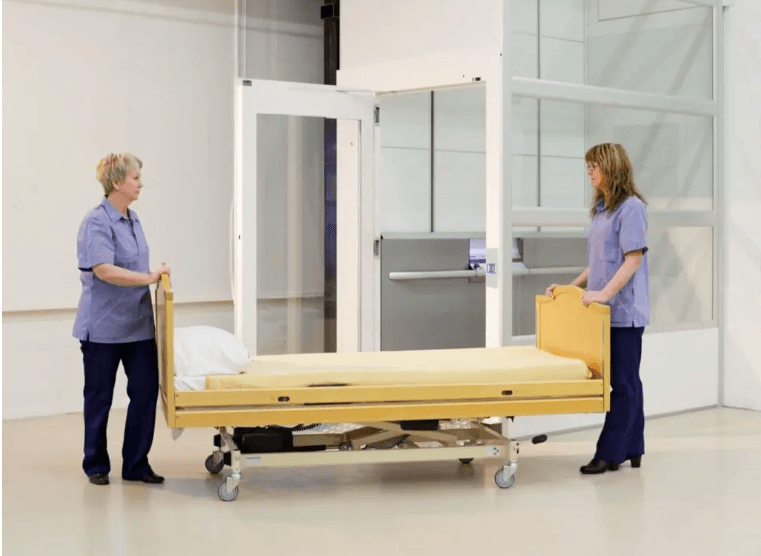
Cibes A8000 heavy-duty lift
Other important factors for the lift price
In short, the kind of lift you choose should not only align with the specific needs of the building and its users. It should also align with your budget. So, the choice between platform lifts, cabin lifts and goods lifts depends on many factors. Load capacity, space restrictions, accessibility requirements and aesthetic concerns are just a few examples. Carefully evaluating your priorities will help you make an informed decision and invest in a lift that meets your long-term expectations and needs.
Dimensions and capacity
The size and capacity of the lift are crucial factors in determining the cost. A larger lift, capable of carrying more people or heavy loads, will naturally come with a higher price tag. This is not only due to the increased cost of materials and machinery, but also to the complexity of the installation and the greater impact on the building structure. The lift or elevator itself has a price tag, but you should also always consider installation and surrounding building work to get an idea about the total cost.
Level of customisation
Customisation is key in 2025. It is important to know that you can tailor the lift design to your personal taste and requirements. However, it is also important to understand that customisation comes at a cost. Whether you customise your lift by adding your own floor, pick a fancier door model or choose between the over 250+ optional lift colours, it will affect the price. Customisation is often more than worth it, though. As a lift will last for many years, it is crucial that it blends in with its architectural surroundings. However, if customisation is not something you care about, you can always opt for the standard sizes, doors and finishes to reduce the costs.

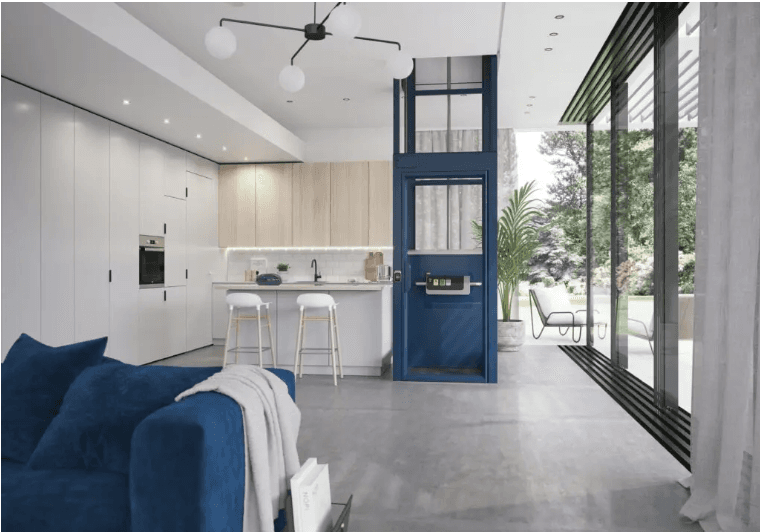
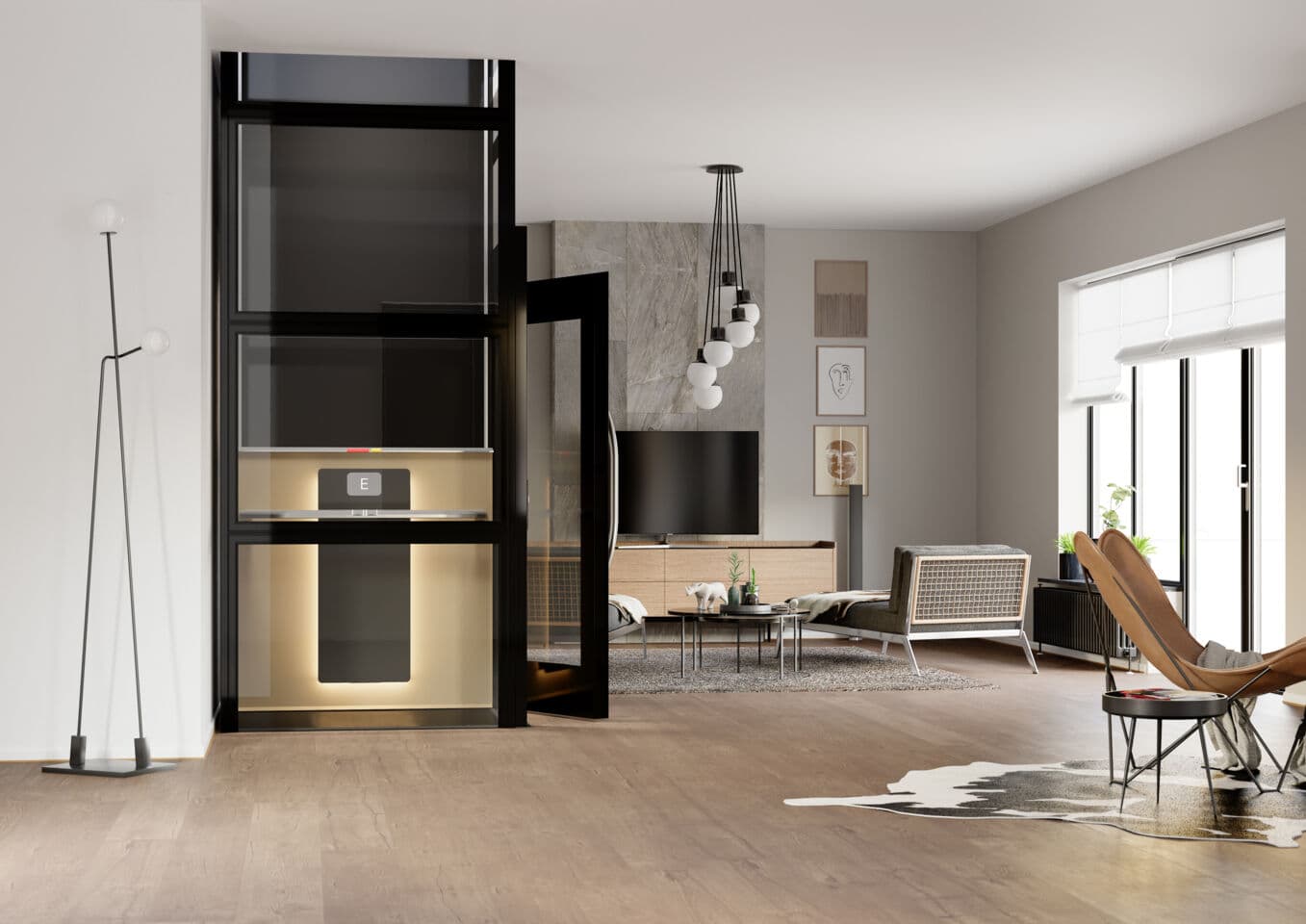
Cibes Cloud Plus, our most luxurious platform lift.
Energy efficiency
Much like any home appliance you purchase, not all lifts consume as much electricity. The addition of the EcoSilent drive system, for example, makes a Cibes lift run with 45% less energy than a lift without it. A lift with this optimised system has an energy consumption of approximately 215kWh/Year*, which is about the same as for a modern washing machine. The EcoSilent drive system comes at a cost, but it also reduces the impact of the lift on your electricity bill. Although the total amount of energy consumed by your lift also varies with factors, such as the frequency of use, the load and the travel height, the EcoSilent system reduces your energy costs.
Even if you do not opt for a Cibes lift with EcoSilent, all Cibes lifts are screw-driven and require less maintenance than conventional elevators by default. And, our standard drive system is not a bad choice either. A lift with a standard drive servicing 2 floors at a 3.6 metre travel height, with 20 trips a day consumes about 481kWh per year. For comparison, an electric water heater can consume 380-500 kWh per month.
*Yearly energy consumption based on a 2 stop lift with 3.6 m travel, equipped with EcoSilent and a frequency of use of 20 travels/day.
Average cost of lift installation in 2025
In 2025, the cost of installing a lift remains a significant investment, although it varies a lot depending on the type of lift you select. Understanding average costs and the factors that influence them is crucial to properly plan your spending.
Lifts in residential buildings
In residential buildings, the cost of installing a lift can vary significantly. It depends on factors such as the type of lift, the number of floors to be serviced and the specific characteristics of the building. For residential buildings, prices typically start at around £18,000, depending on whether more basic or advanced solutions are chosen.
The final price for your lift also depends a lot on the model you choose. For example, a Cibes A5000 with standard features can cost anything upwards of £18,000. The Cibes Air for instance, is a more high-end model that can exceed £50,000 – £60,000 if it includes our most expensive options. You also need to take additional building work into consideration. Even if Cibes lifts can be installed with minimal construction work, they will require some building adaptation. Our advice is to reach out to our specialists to receive an accurate quotation.
Lifts in public buildings
Installing a lift in a public building is not more expensive than in a residential building. As always, the cost of installing a lift in a public setting will depend on installation complexity, the number of floors and the choice of lift model. In general, a lift in a public setting can cost upwards of £18,000. Cibes A5000 for example, is a wheelchair accessible and affordable solution that meets European safety standards. The Cibes C1 Pure, on the other hand, is a lift model with a fully enclosed lift car and sliding doors and therefore comes with a higher price tag than our basic models.
Additional costs of lift installation
When installing a lift, the costs are not limited to the purchase price and installation of the equipment. There are several additional expenses that must be taken into account to get a complete picture of the total investment. These include regular maintenance and services, as well as possible structural modifications and works necessary for the installation.
Maintenance and services
Regular maintenance is crucial to ensure the safe and efficient operation of a lift. Maintenance costs may vary depending on the type of lift, its use and the complexity of the drive system. Generally, they include periodic inspections, repairs, and replacement of worn parts. In addition, additional services such as emergency line or updated safety systems may be required. These services are not only important to comply with current regulations, but also to ensure the safety of lift users.
Cibes screw-driven system is is comparatively low-maintenance. The reason is that the mechanics of screw-driven lifts contain few parts that can break, which makes them very robust. However, the system is quite unique and requires specific maintenance training. Therefore, we always advice you to sign a lift maintenance contract with a Cibes certified dealer, something which is also required by our warranty. Signing a maintenance contract is important, because a good maintenance plan reduces the risk of unexpected costs like, expensive repairs. It also keeps your lift running smoothly and efficiently, resulting in a longer lifetime.
Structural modifications and necessary works
In most cases, installing a lift requires some structural modifications to the building. If you install the lift through the floor, you will need to createfloor openings to accommodate the lift, for example. Structural changes may also include the creation or enlargement of a lift shaft, reinforcements of the surrounding walls, and the construction of a machine room. Cibes lifts have several advantages, compared to conventional elevators. For example,they come with a ready-made, modular shaft and do not need a separate machine room. Most Cibes models do not require you to dig out a lift pit either. That means that you can easily save money by simply installing the lift directly on the floor with a ramp.
Tips for reducing costs
Reducing costs does not necessarily mean choosing the cheapest option initially. In the long run, a high-quality and energy-efficient lift is often more economical due to lower maintenance and operational costs. Some strategies to optimise the investment include:
- Distinguish between ‘Need to have’ and ‘Want to have’ to pick the best options for your long-term needs.
- Consider lifts with better energy efficiency, which can reduce long-term operating costs.
- Make enquiries about the maintenance costs of the lift technology you choose. The maintenance of hydraulic lifts and traction elevators is quite expensive, for example.
- Investigate available government grants or incentives for lift installation, especially those that improve accessibility or energy efficiency.
- Install a lift that does not require a separate machine room or pit.
By taking all these factors into account, you can make more informed and strategic decisions, ensuring that your investment in a lift is beneficial, both short and long term.
Conclusion
Installing a lift in 2025 involves considering a variety of factors. This includes the type of lift, installation and maintenance costs, the specific needs of your building, and legal regulations. Although the initial investment can be considerable, the right lift solution will both add accessibility and significant value to your property. With careful planning and consideration of all the options and aids available, you can ensure an investment that meets your needs and expectations over the long term.
Remember that every installation is different. If you need advice or a quote, our team of experts is ready to provide that for you. Let us have a chat!