11 min read
Can you install a lift or an elevator in a protected building?
Blog article
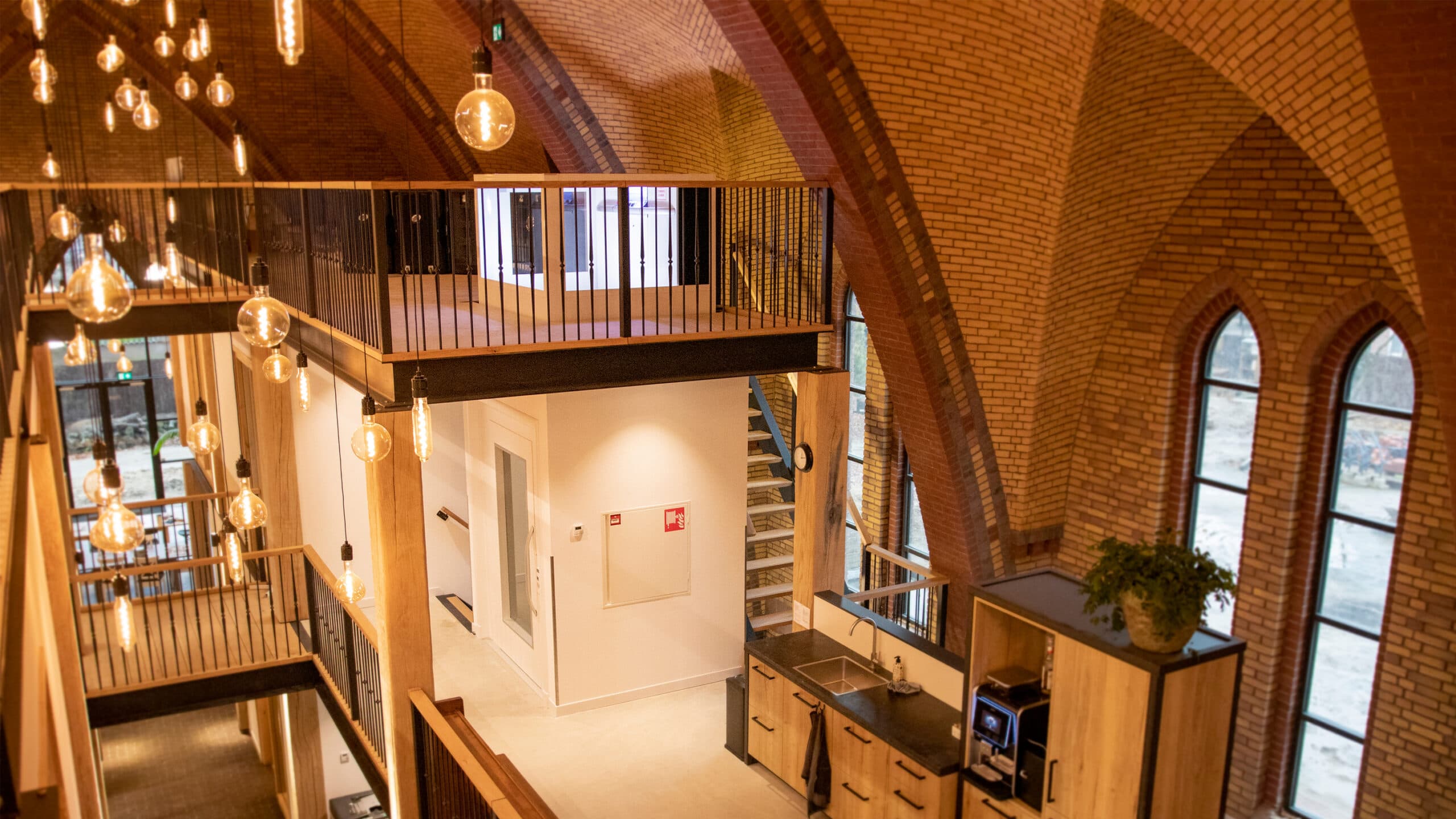
Despite what many people think, it is almost always possible to install a lift or an elevator in a protected building. But the complexity of the process depends on many factors, such as the type of heritage building at hand, its degree of protection, and your choice of elevator solution.
That is why installing a lift in a protected historic building always requires careful investigation and planning. But knowing what to do and when to do it will make the process easier and smoother. In this article, we offer you a guide based on frequently asked questions about lift installation in protected or listed buildings, accompanied by useful tips and advice.
Guide to installing a lift in a historic building
1. Who grants permission to install a lift in a period home or heritage building?
2. What permits and consents do you need to add an elevator to a historic building?
3. What is the best elevator for a protected or listed building?
4. How do you design a lift for a heritage home or listed building?
1. Who grants permission to install a lift in a period home or heritage building?
The authorities granting permission to install a lift in protected buildings like period homes and heritage buildings vary between countries However, in general, the official bodies involved are:
- Local planning authorities
- The regional/local heritage or conservation office
- Your local building control department/inspector
Tip: Getting in touch with your local planning authority to discuss your project is usually a good first step. In many cases, your local planning authority will also provide useful information about other official bodies and people to contact.
Is it difficult to get permission to install a lift in a protected property?
How difficult it is to get permission to install a lift in a protected property comes down to three main factors:
- The building conservation regulations in your country: In most countries, it is easier to get approval for adding an indoor lift to a protected building than an outdoor one. The main reason is that an outdoor elevator changes the exterior aspect of the historic building and is much more visible to the public.
- The degree of protection of your specific building: It is usually easier to get consent for an elevator in a heritage home or an already converted historic building than for historic landmarks. But even if it is more complicated to add a lift to a historic landmark, it is almost always possible. You just need to find the right elevator solution and design.
- The structural impact on the building: It is usually easier to get approval if the lift installation does not require structural changes of the floors and ceilings of the building. That is why it is wise to choose a lift solution that does not require a deep elevator pit or a lot of extra headroom above the lift.
For more inspiration and ideas for lift installations in period properties, read our blog Is it possible to retrofit a lift into an old building?.
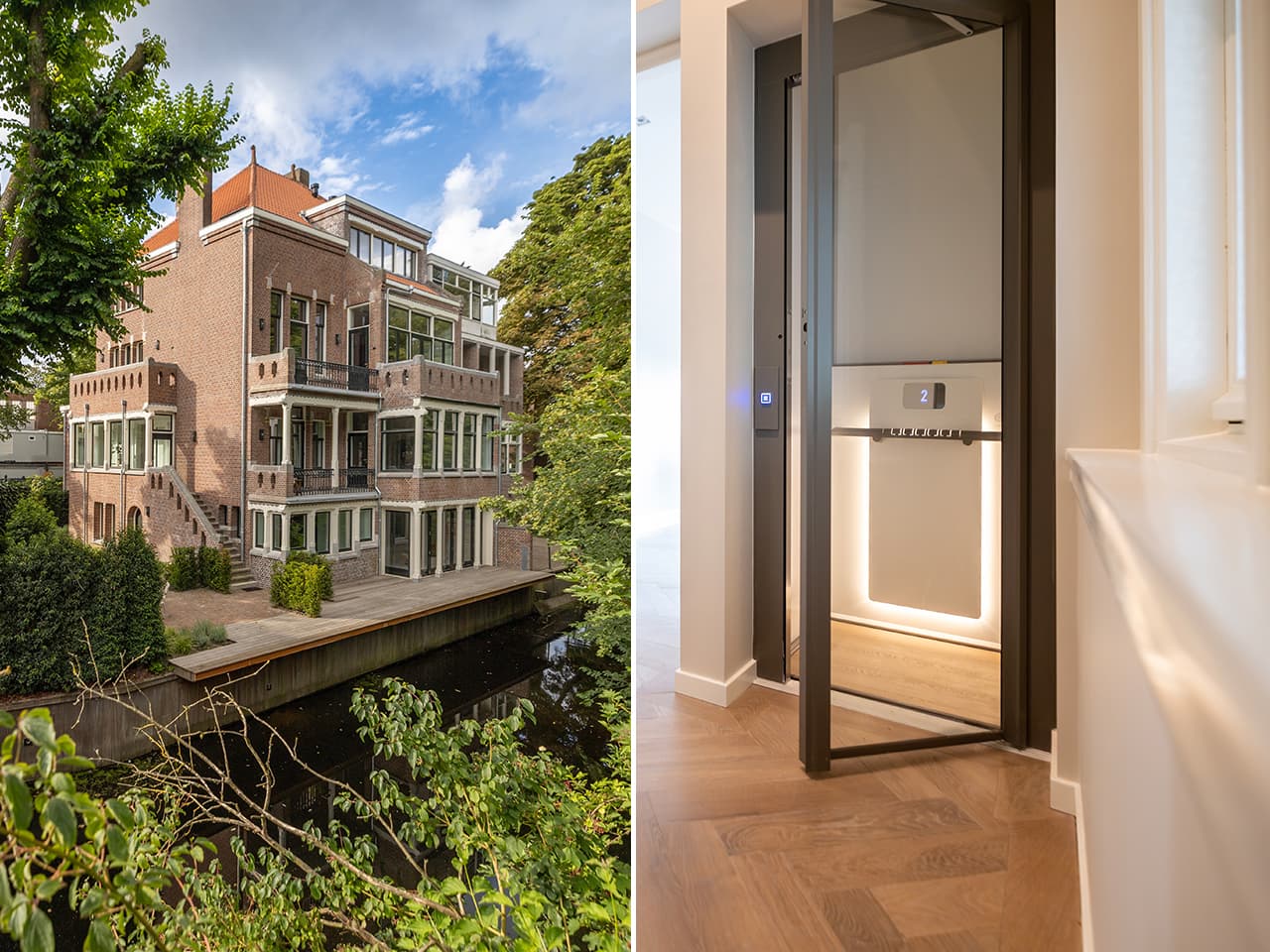
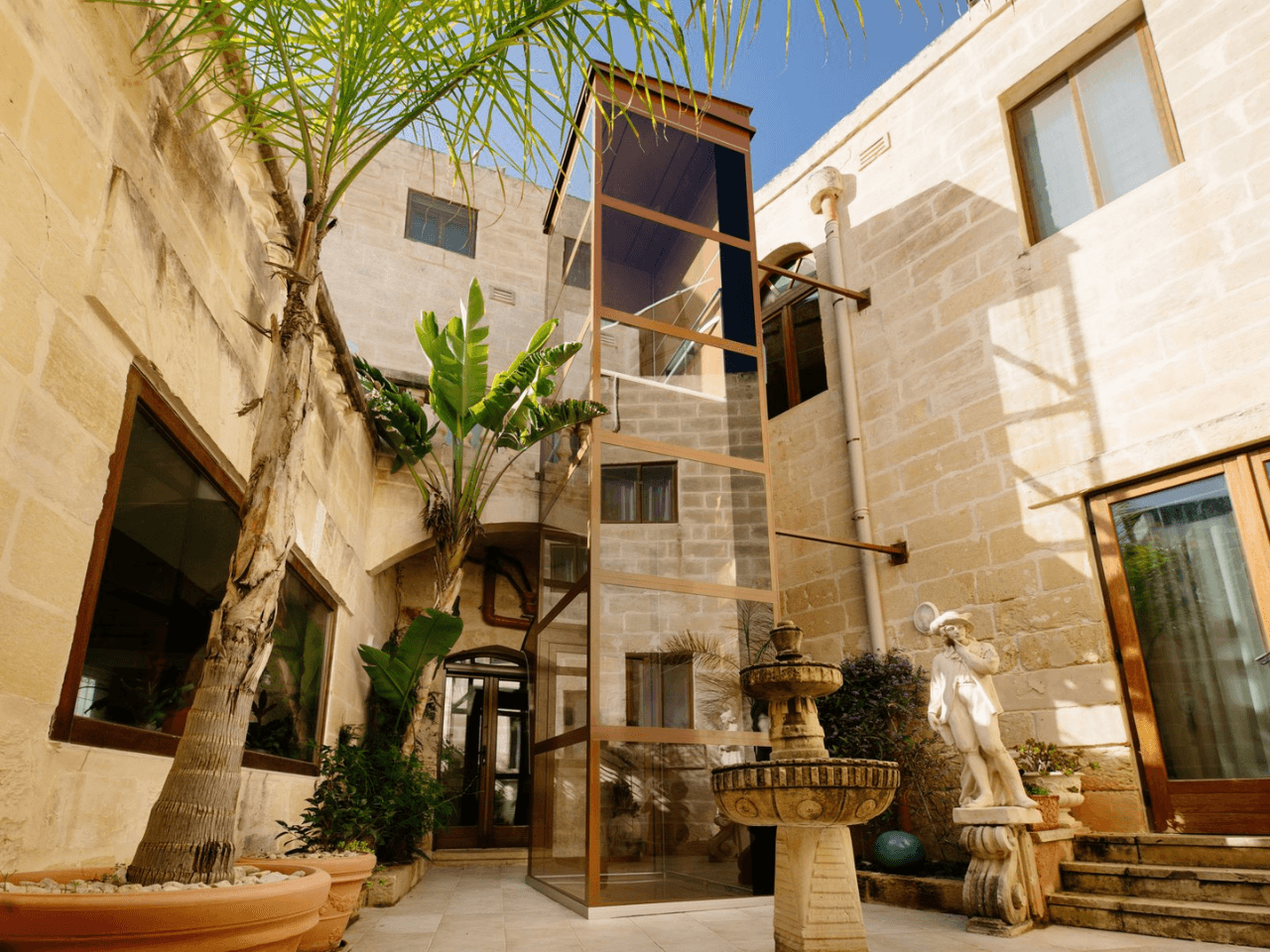
Cibes Air residential platform elevator installed in a period home in the Netherlands.
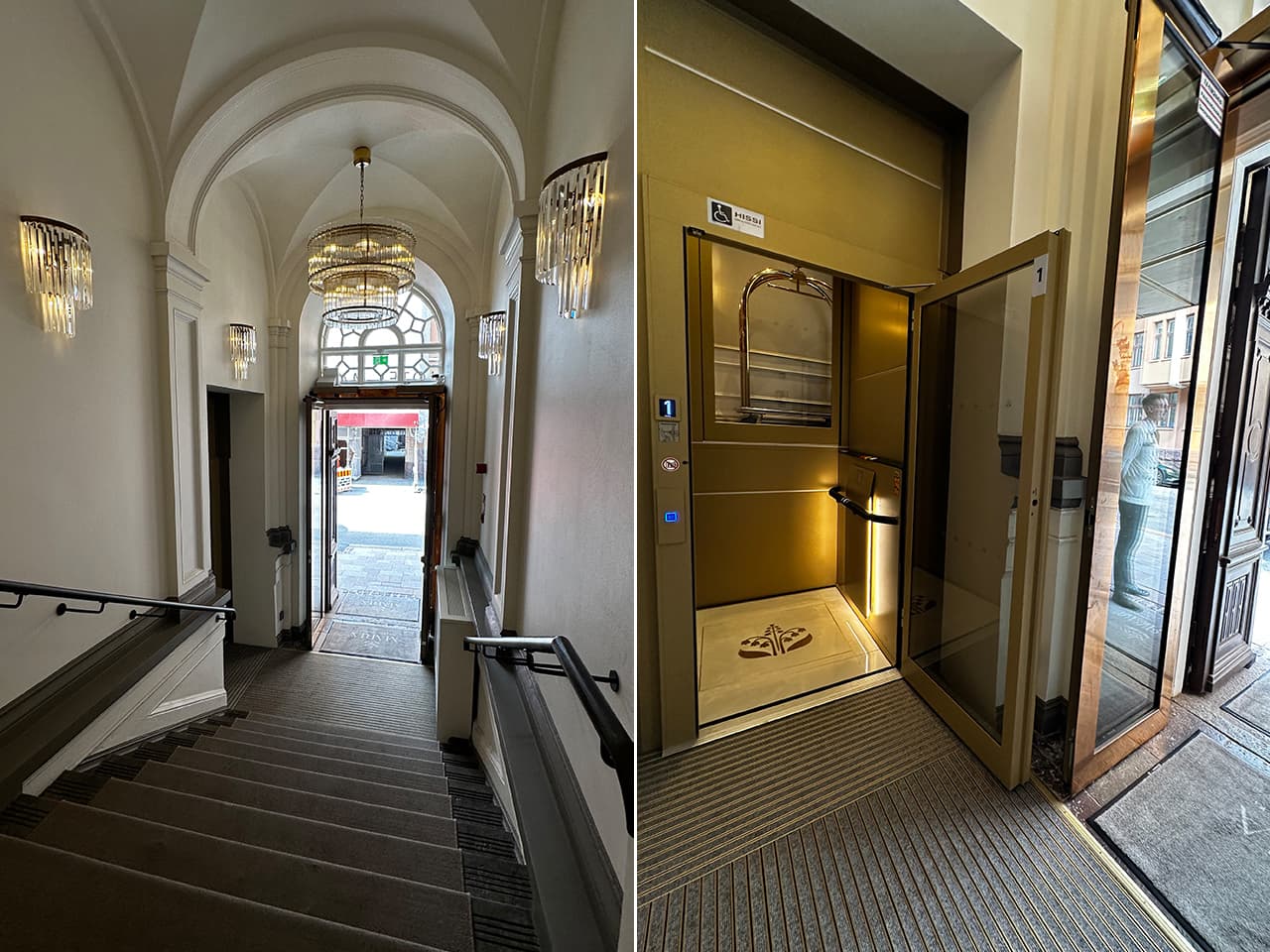
Vertical platform lift Cibes Air installed in a hotel from the Art Deco era in Finland.
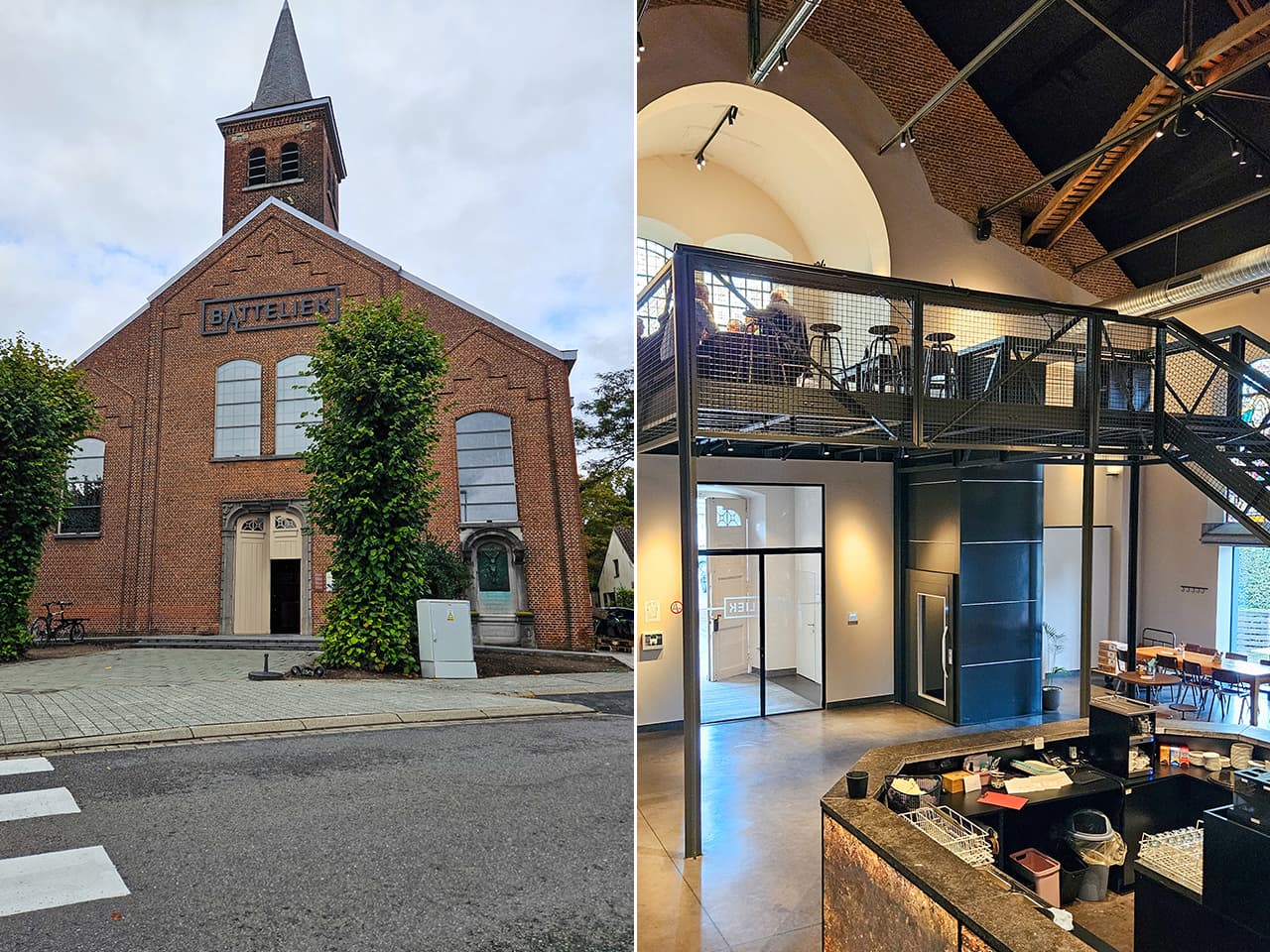
Cibes A5000 platform lift in an old chapel converted into a micro brewery in Belgium.
2. What permits and consents do you need to add an elevator to a historic building?
The permissions and consents you need for installing an elevator in a lift in a historic building vary, but here are the most important ones to investigate:
- Heritage or listed building consent – aiming to preserve as much of the building’s original architecture, structure and character as possible.
- Planning permission – generally required for outdoor elevator installation and in some cases for indoor lifts as well.
- Building regulations approval – to ensure that the lift installation is up to code, meaning that it complies with safety, structural and health standards.
For indoor lift installations in historic homes and already converted heritage buildings all these permissions are not always necessary. But it is always better to check. Therefore, we always recommend contacting your local planning and building conservation authorities for advice.
Tip: Contact your local conservation and planning offices well in advance to find out what permits and consents you need and how long it takes to get them. If you plan for processing time, your project will go smoother.
How do you find a good contractor for a protected building?
Although there are many good building companies out there, not all have the knowledge to perform work in a listed or protected building. Therefore, it is important to find a contractor with the right competence to perform the building work for your lift. That work mainly consists of two parts:
- Site preparations – elevator pit, floor cut-outs or railing cutaways, for example.
- Finishing touches – like cover strips to cover gaps around the elevator, for example.
In the UK, CIOB (Chartered Institute of Building) and RICS (Royal Institution of Chartered Surveyors) provide registers of accredited historic building professionals. But such registers are not unique for the UK. In most countries, heritage and conservation bodies keep registers of contractors certified to work in protected buildings.
Tip: Ask your conservation or heritage office for advice on the best accredited builders for listed or protected buildings near you. They have probably worked together with most of them and know what company would be suitable for your project.
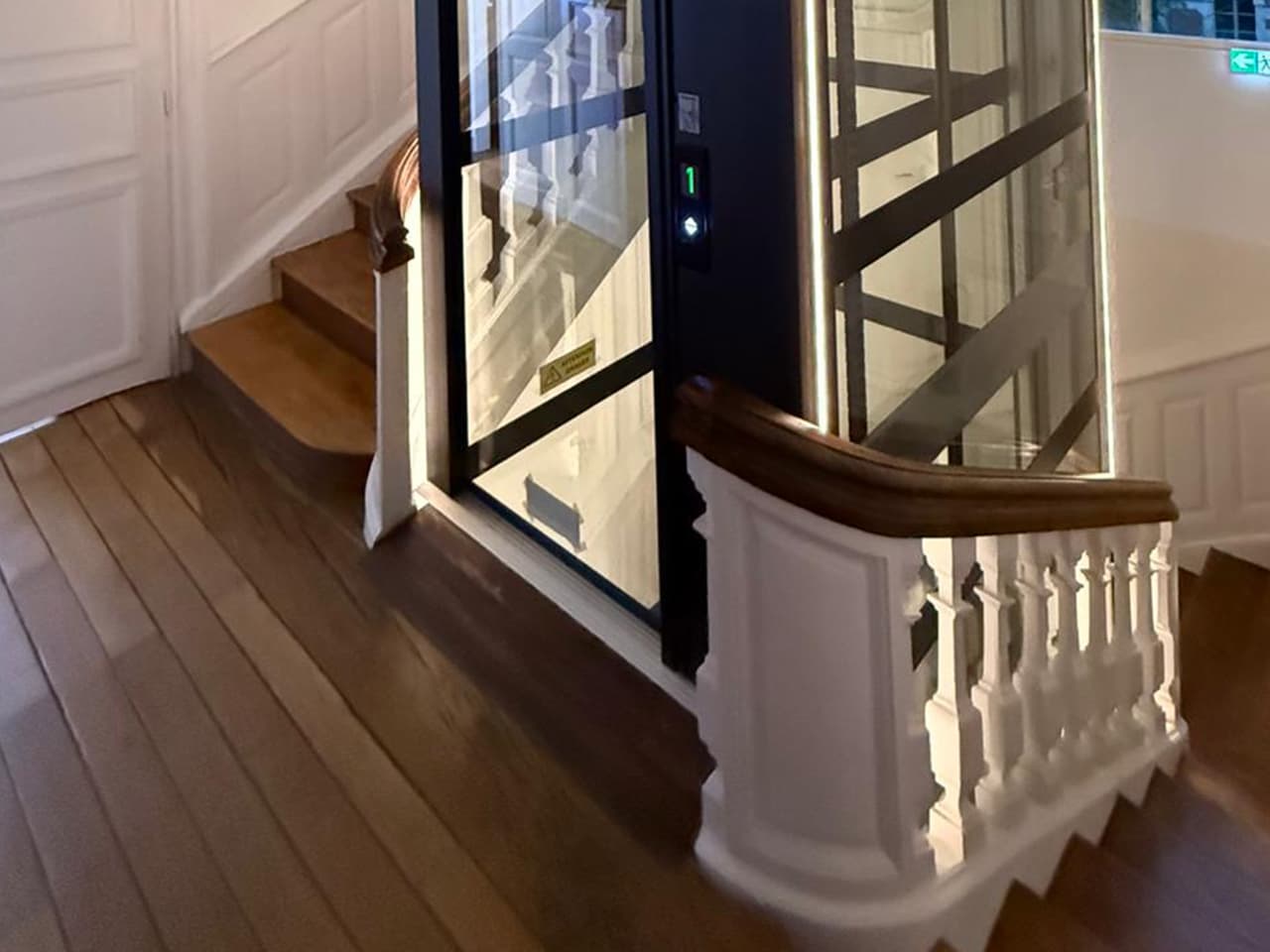
Example of an elegant Cibes A5000 elevator with elegant railing cutaway.
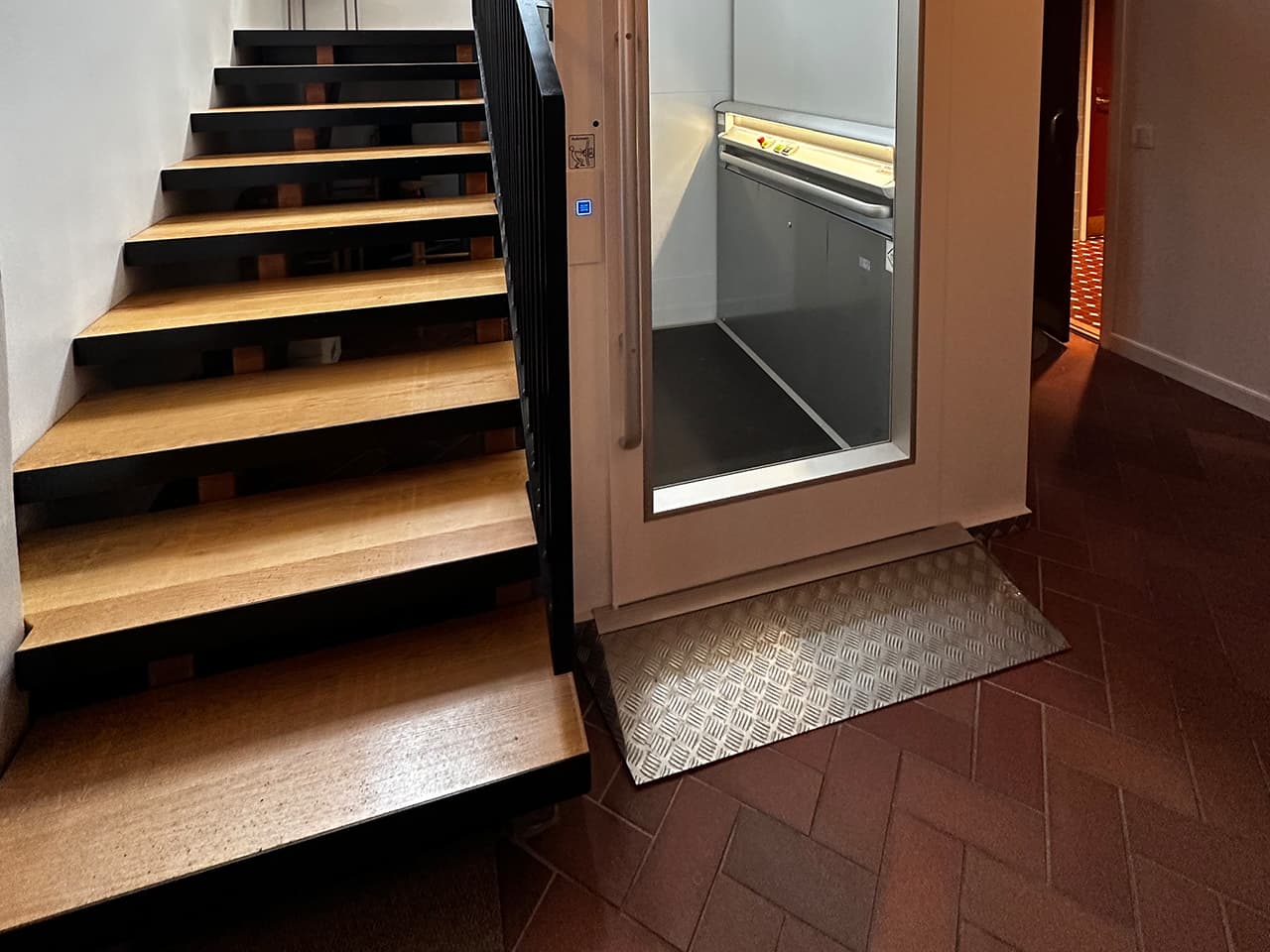
Cibes platform lift installed without an elevator pit.
Related questions & answers
What is a protected or listed building?
A protected or listed building has historic, architectural or cultural values that building conservation authorities have decided to protect and preserve through building conservation regulation.
Alterations to protected buildings are strictly regulated and generally require heritage consent or listed building consent. The possibilities of making bigger changes, like adding an extension, for example, are usually very limited for protected buildings. Also minor changes like adding a vertical platform lift or a home lift may need heritage or listed building consent. Even necessary changes, such as renovations and repairs may need consent. However, getting heritage or listed building consent for minor alterations is usually possible as long as you
Can any type of building be protected or listed?
All kinds of buildings can be protected or listed, not only public institutions, places of worship and heritage mansions. Commercial properties, like old factories and warehouses, as well as period homes and old apartment buildings can be protected too. Even utility buildings, like workshops, old barns and outbuildings can be listed or protected.
How do I know if my home or building is listed or protected?
Most listed homes and protected buildings are old, but age alone is not enough. Your home or building must also possess architectural, historical or cultural values that conservation authorities have decided to preserve for the future. If you are unsure about whether your home or building is protected, contact your building conservation office. They keep registers of listed and protected buildings.
Can you add a lift or an elevator to a historic or listed building?
In most cases, you can, but you usually need heritage or listed building consent to add a lift to a historic or listed building. To understand the rules and regulations for lift installation in your specific case, it is always best to contact your building conservation office. There are however some key aspects to consider that can increase your chances for consent:
- Building impact: The lower the structural impact the elevator has on the building, the better.
- Lift design: The better the lift blends in with the building, the greater your chances for approval. Choose colours and materials with care.
- Location of the lift: Getting consent for installing the lift inside the building is generally easier than if you place on the outside.
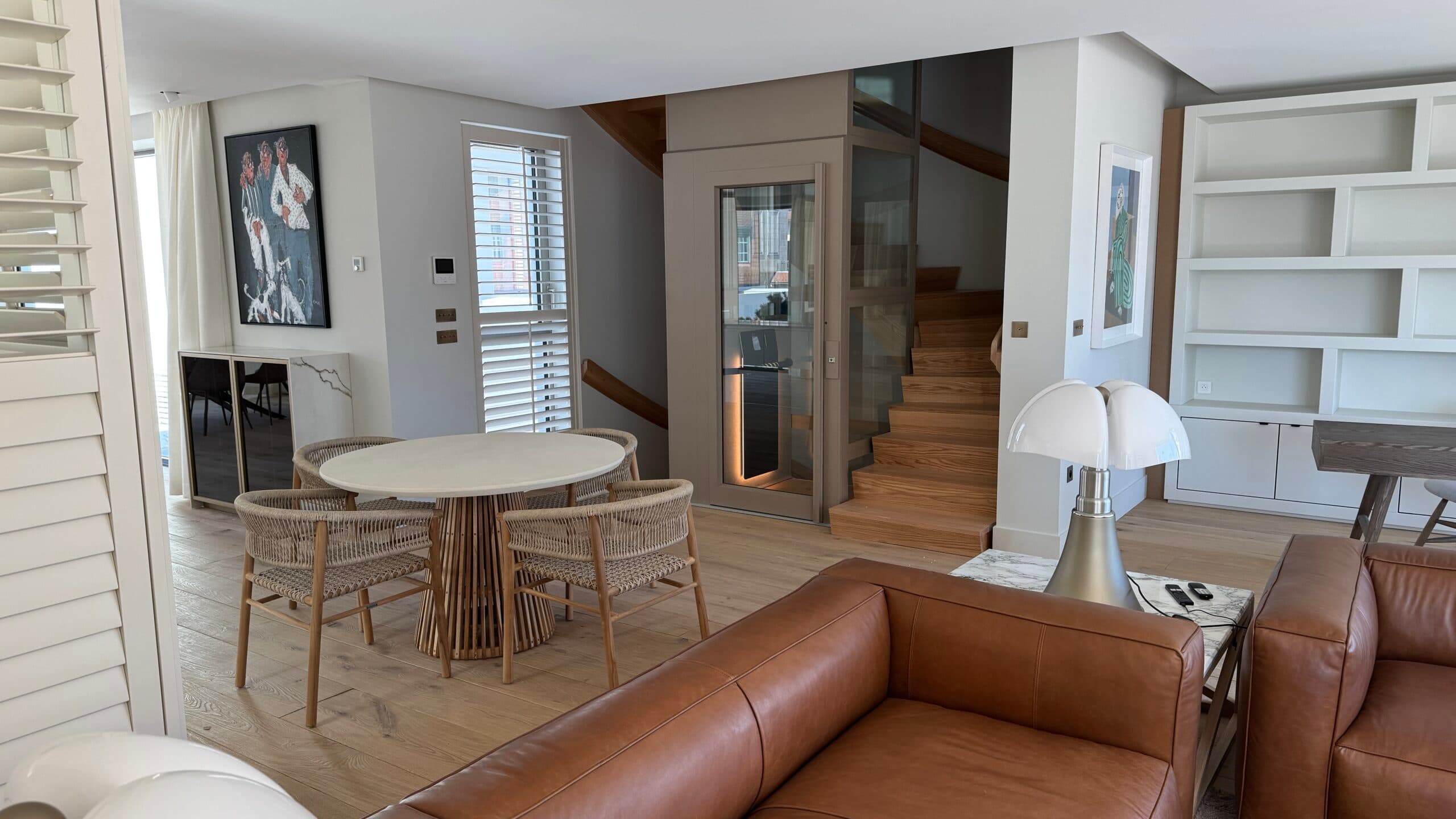
Cibes screw-driven platform lifts and cabin lifts have much lower impact on the structure of protected buildings than conventional elevators. Furthermore, our lifts are compact enough to fit into small and narrow spaces like staircases where a lift generates the least impact. In addition, our wide choice of lift models, colours and materials makes it easy to create a lift design in keeping with the period and style of your building.
Can you install a lift in an existing house?
Yes, it is possible to install a lift in an existing house, and today there are many space-saving and cost-efficient home lifts that are easier to install in an existing home than conventional residential elevators.
While conventional elevators generally need a lot of space above and beneath the lift as well as the construction of a bulky, concrete hoistway, there are other lift solutions. Screw-driven platform lifts, for example are compact, preassembled solutions that even include a ready-made, modular lift shaft. As platform lifts require minimal building work and can be installed on a much smaller footprint than conventional lifts, they offer you a space-saving and cost-efficient alternative that will fit into almost any existing home.
3. What is the best elevator for a protected or listed building?
The best lift or elevator for a listed or protected building is one that fulfils your needs of passenger transport while altering the building as little as possible. One of the most versatile lift types that require only minor building adaptations are vertical platform lifts
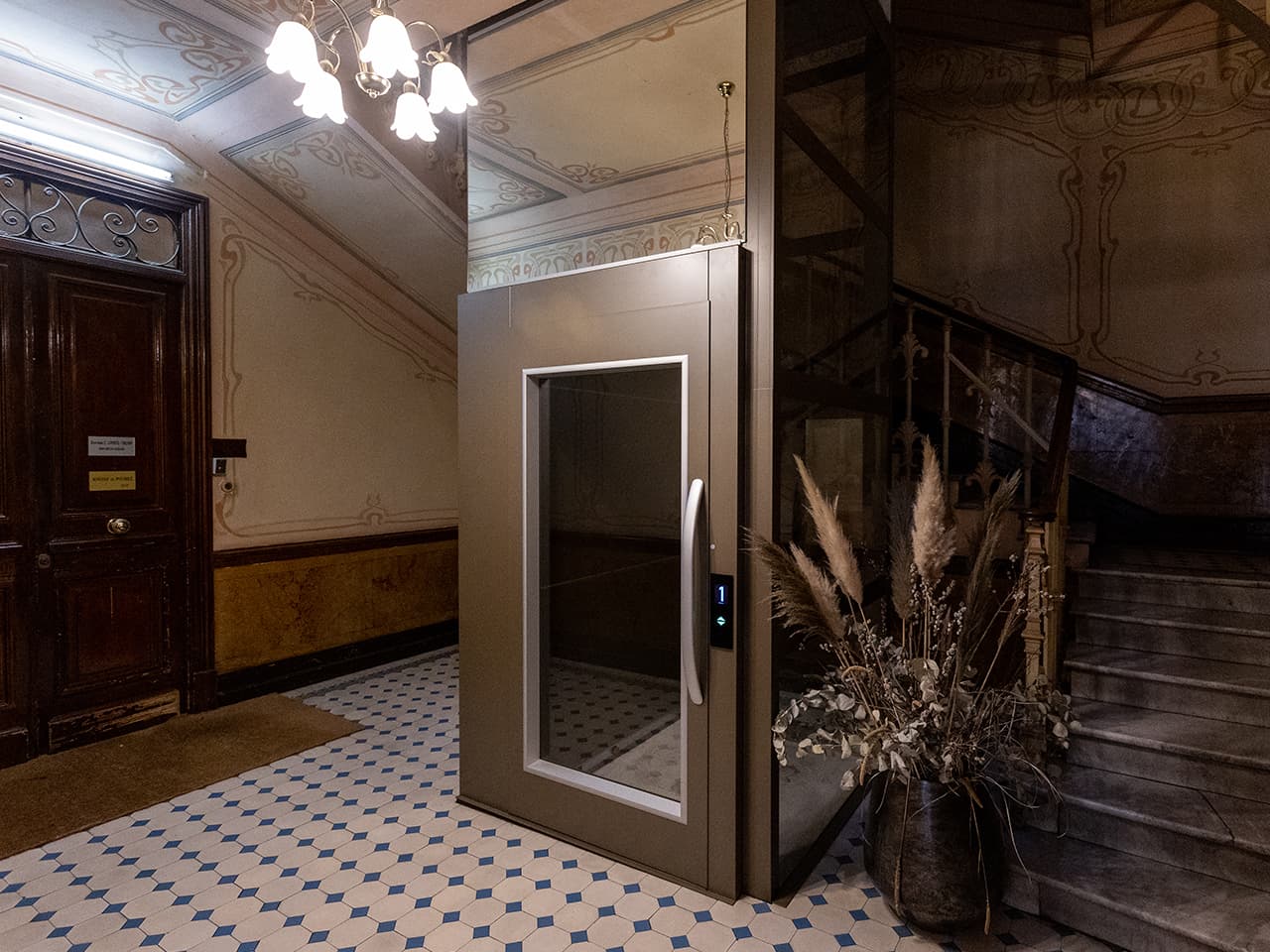
Cibes vertical platform lifts for period properties
Cibes is a leading manufacturers of vertical platform lifts. Over the years, our company has gained extensive experience in installing lifts in heritage buildings and historic properties. One of the main reasons is that our screw-driven lifts have very low structural impact on existing homes and buildings. That is a big advantage in protected period properties where you want to keep the original architecture as untouched as possible.
Picture showing a Cibes A5000 vertical platform lift installed in an elegant Art Nouveau staircase in France.
Inclined platform lifts and stairlifts compared to vertical platform lifts
Inclined platform lifts and stairlifts travel along rails or tubes attached to the walls or banisters of the staircase. Inclined platform lifts transport the passenger, usually seated in a wheelchair, while stairlifts carry the passenger up the stairs in a chair. They are comparatively cheap to buy and offer improved accessibility with minimal impact on period homes and listed buildings. However, installing an inclined platform lift or a stairlift rarely increases the value of a period property. Why? Because inclined platform lifts and stairlifts are generally only used by persons with impaired mobility and can only transport one passenger at a time which limits their usability.
Vertical platform lifts, on the other hand, are more expensive than inclined platform lifts or stairlifts but also add more value to a period property. The main reason is that vertical platform lifts work much more like normal elevators. They are easy and comfortable for everyone to use and have capacity for several passengers.
What is the best lift for your protected building?
Thinking through your reasons for getting an elevator and how it will be used will help you find the best lift solution for your protected building. Ask yourself these questions:
- Why do you need to get an elevator? If the lift or elevator is for a historic public building, compliance with accessibility standards is a top priority. That generally rules out stairlifts as they are not for public use. But if you are looking for a residential lift for a heritage home, you only need to focus on your personal needs.
- How many passengers do you want the lift to take? If transporting only one passenger at a time is enough, a stairlift or inclined platform lift can be a good option. But if it needs to carry several persons at a time, a platform lift is a better choice.
- Is it important that the lift adds property value? If adding real estate value to your period property is a priority, a vertical platform lift is a better choice than a stairlift or an inclined platform lift.
For more information about vertical platform elevators and stairlifts, please visit our page A great alternative to stairlifts. To get general tips and ideas for lifts in existing houses, we recommend reading our blog Can you add a home elevator to an existing house and what type of elevator is needed?.
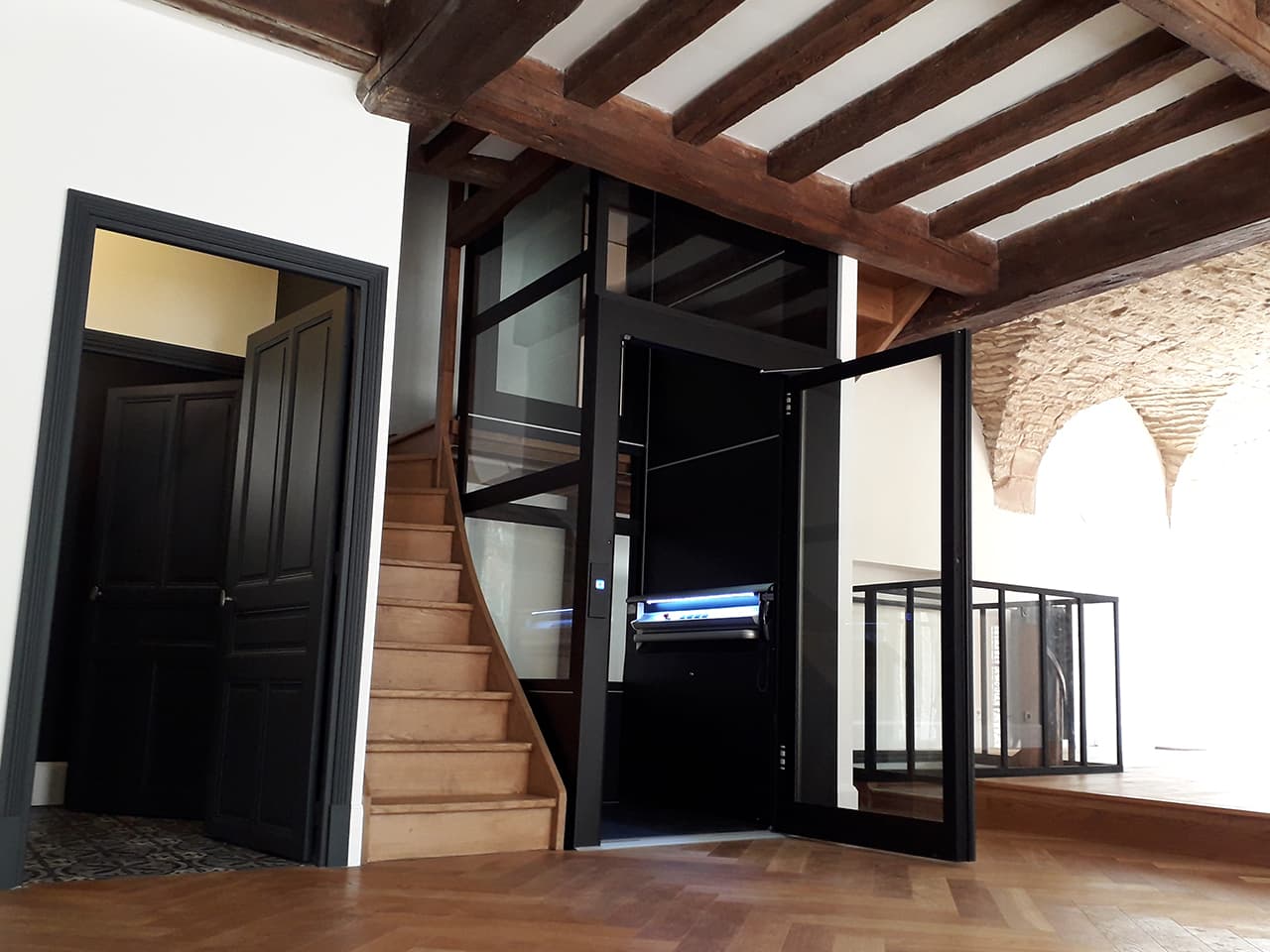
Comparison of lifts for historic buildings
The table below compares the most common elevator alternatives for period homes and listed buildings:
| Characteristic | Vertical platform lifts | Inclined platform lifts | Stairlifts |
| Purchase price | Affordable | Low | Cheap |
| Structural impact | Very low | Minimal | Minimal |
| Capacity | 1-5 persons | 1 person | 1 person |
| Usability | Universal | Limited | Limited |
| Added property value | Significant | Uncertain | Uncertain |
4. How do you design a lift for a heritage home or listed building?
The best design of a lift or an elevator for a heritage home or listed building blends in with the architectural style and preserves the structure of the building. But how do you achieve this? We have listed some of the most important aspects to think about below:
- Choose a lift type with small structural impact: Vertical platform lifts, inclined platform lifts and stairlifts have much lower impact on the structure of the building than conventional elevators.
- Find an installation spot that requires minimal building adaptation: Placing the lift inside a staircase or next to a mezzanine floor avoids extensive changes to the structure of the building.
- Design a lift that blends in with the building: Choose the colours and materials of your lift carefully to make the lift design blend in with its surroundings.
Fulfilling the above requirements usually increases your chances of getting heritage or listed building consent, but you should always discuss your installation and design choices with your local building conservation officer. Every protected building is unique, and alterations and additions are evaluated on a case-by-case basis.
Tip: Adding customised flooring that matches the floors of the protected building is a great way to make the lift blend in with the surrounding architecture.
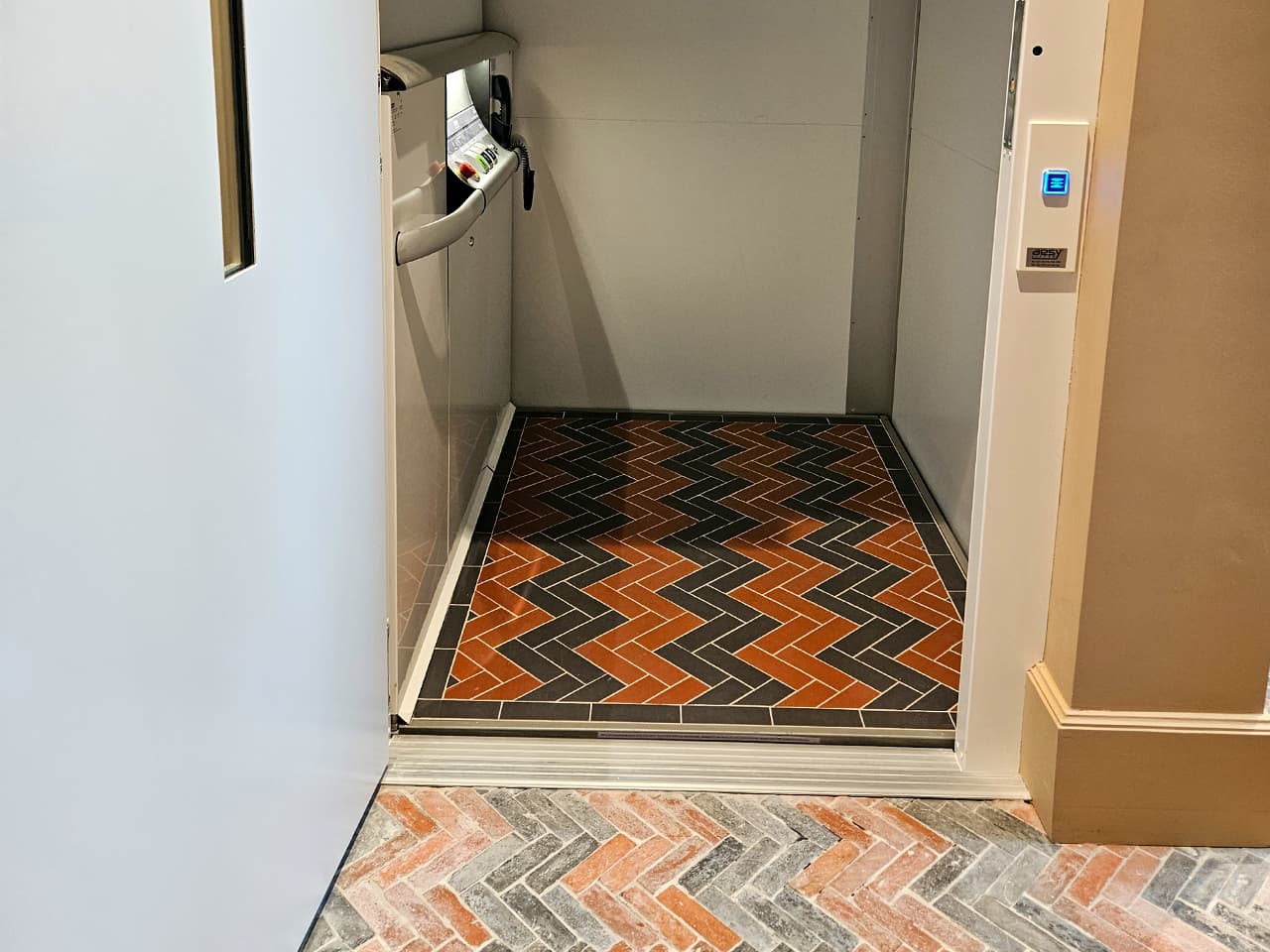
Customised stone tile flooring
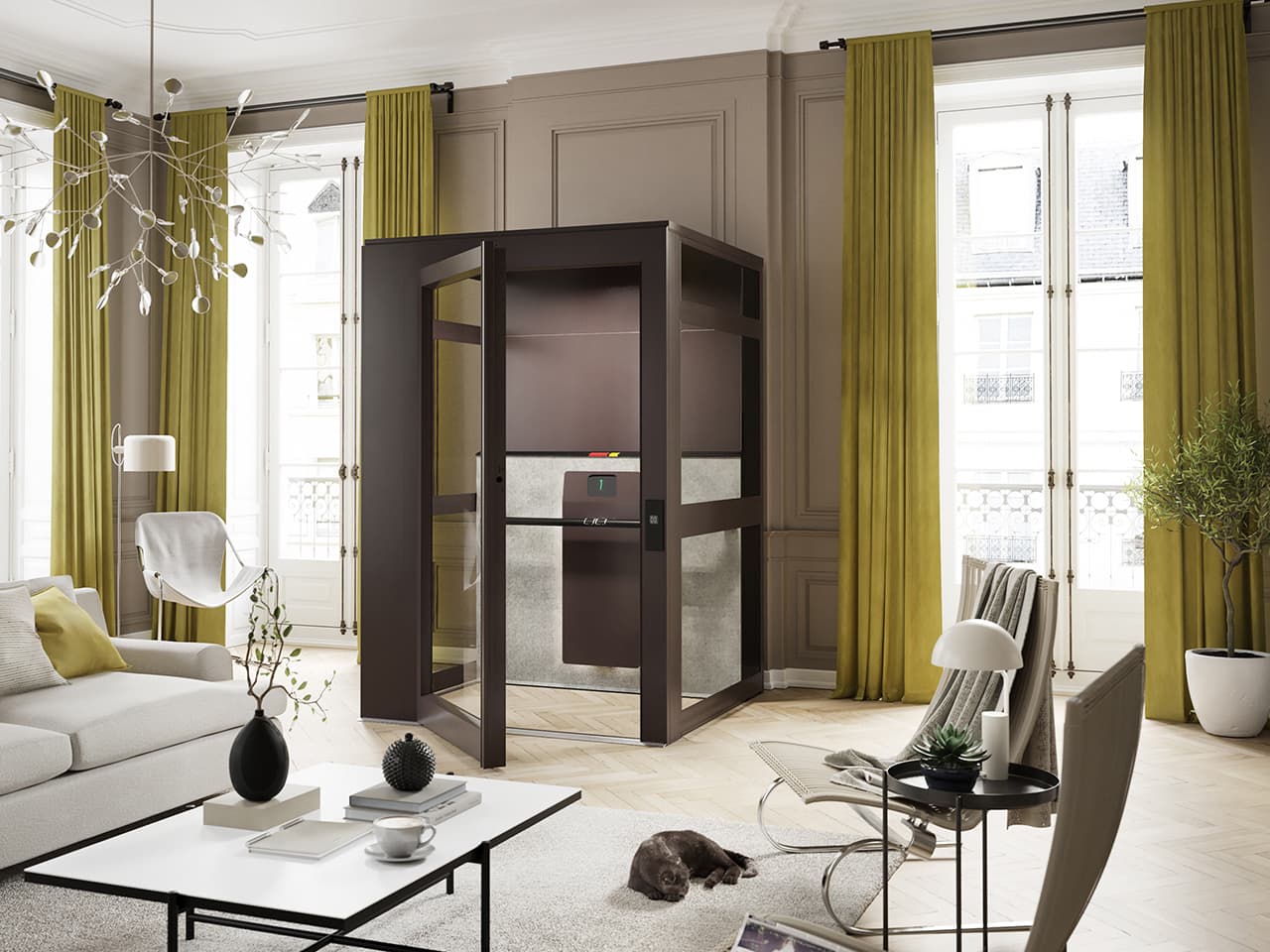
Matching wooden floors
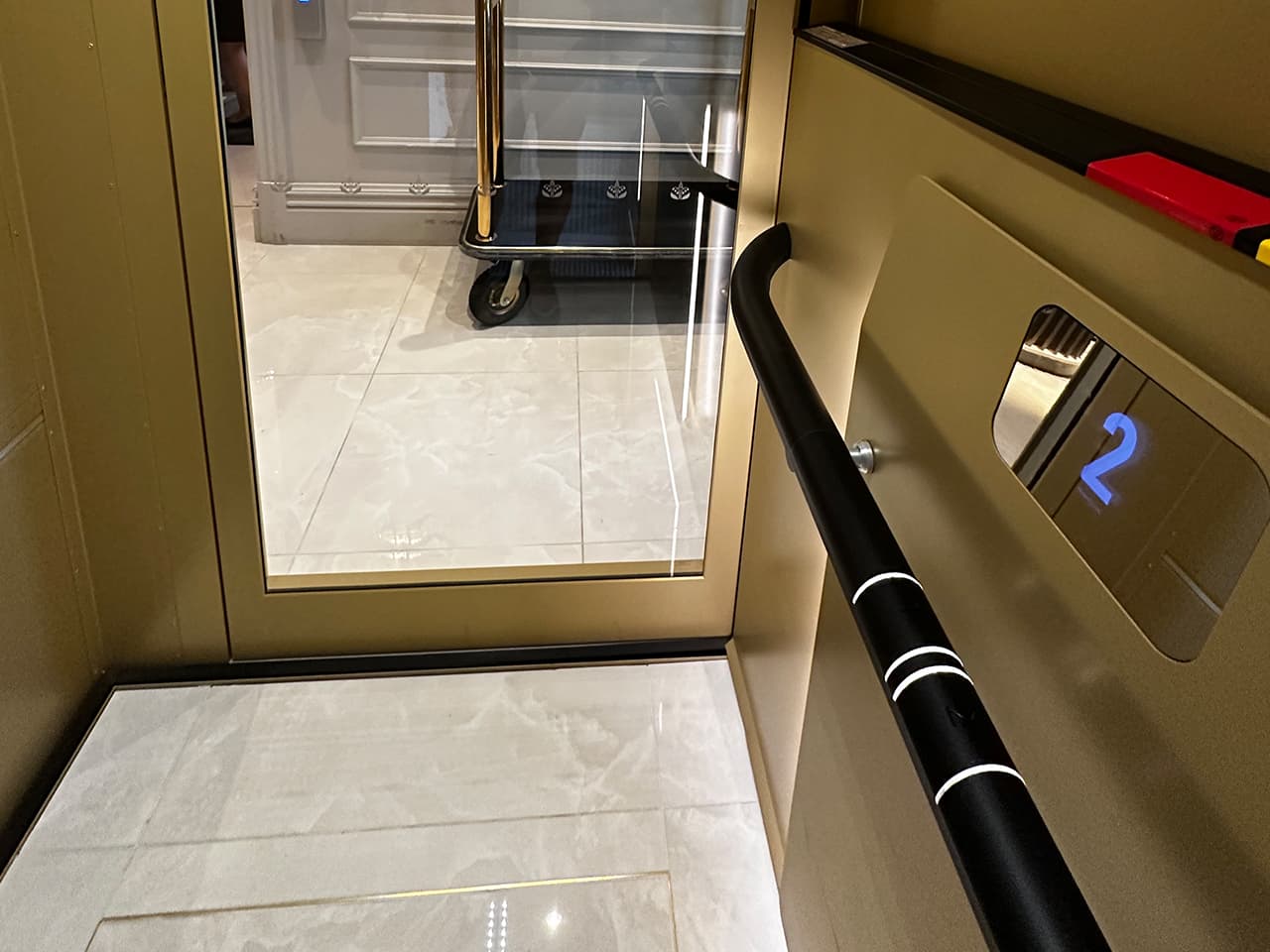
Customised marble floor tiles
To conclude
Installing an elevator in a protected building is rarely a fast and easy process. But it is almost always possible and knowledge and preparation will make everything go smoother. If you plan for processing time, maintain a good dialogue with authorities and builders and choose your elevator design carefully, you will succeed.
We hope that our guide has provided useful tips and information that will make it easier to bring your project to completion.
If you want to discuss different lift alternatives for your period property with a professional, just reach out through the contact form below.
Our lift experts offer free consultations, no strings attached.
Written by

Johanna AawCopywriter & Content Marketing Specialist , Author