10 min read
5 reasons why architects recommend screw-type lifts
Blog article

The number of architects who recommend our screw-driven lift solutions to homeowners, property developers and builders is increasing every day. But why is that? As a leading manufacturer of screw-type lifts we work closely with architects in many different countries, and these are the 5 reasons that we hear most often:
- Lifts with screw and nut drive are space-efficient
- Screw-type lifts have low structural impact
- Screw-driven lifts are fast and easy to install
- Lifts with screw and nut drive are very reliable
- Screw-type lifts offer great design options
In this article, we will go through and explain the reasons why so many architects choose to recommend our screw-driven lifts to homeowners, builders and property developers.
1. Lifts with screw and nut drive are space-efficient
One of the main advantages of screw-driven lifts often cited by architects is that they are very compact and space-saving compared to other elevator technologies. For architects, space efficiency is just as important for a small home as for a commercial building where every lost square metre is a cost.

Screw-driven platform lifts save space
While most conventional elevators require a big and bulky concrete shaftway and a lot of additional space to make room for machinery and electrics, platform lifts with screw and nut drive do not. The table below compares the space-efficiency of screw-driven lifts with other lift types:
| Determining factor | Screw-driven | Hydraulic | Traction |
| Electrical cabinet | Integrated | Separate | Separate |
| Headroom (top floor) | 2.35 m | 2.4-3.4 m | 2.7-3.4 m |
| Lift pit (bottom floor) | 5 cm/0 cm | 15-140 cm | 50-140 cm |
| Shaftway | Modular shaft* | Concrete | Concrete |
| Space efficiency | High | Average | Low |
*Space-saving, ready-made lift shaft in glass or steel panels.

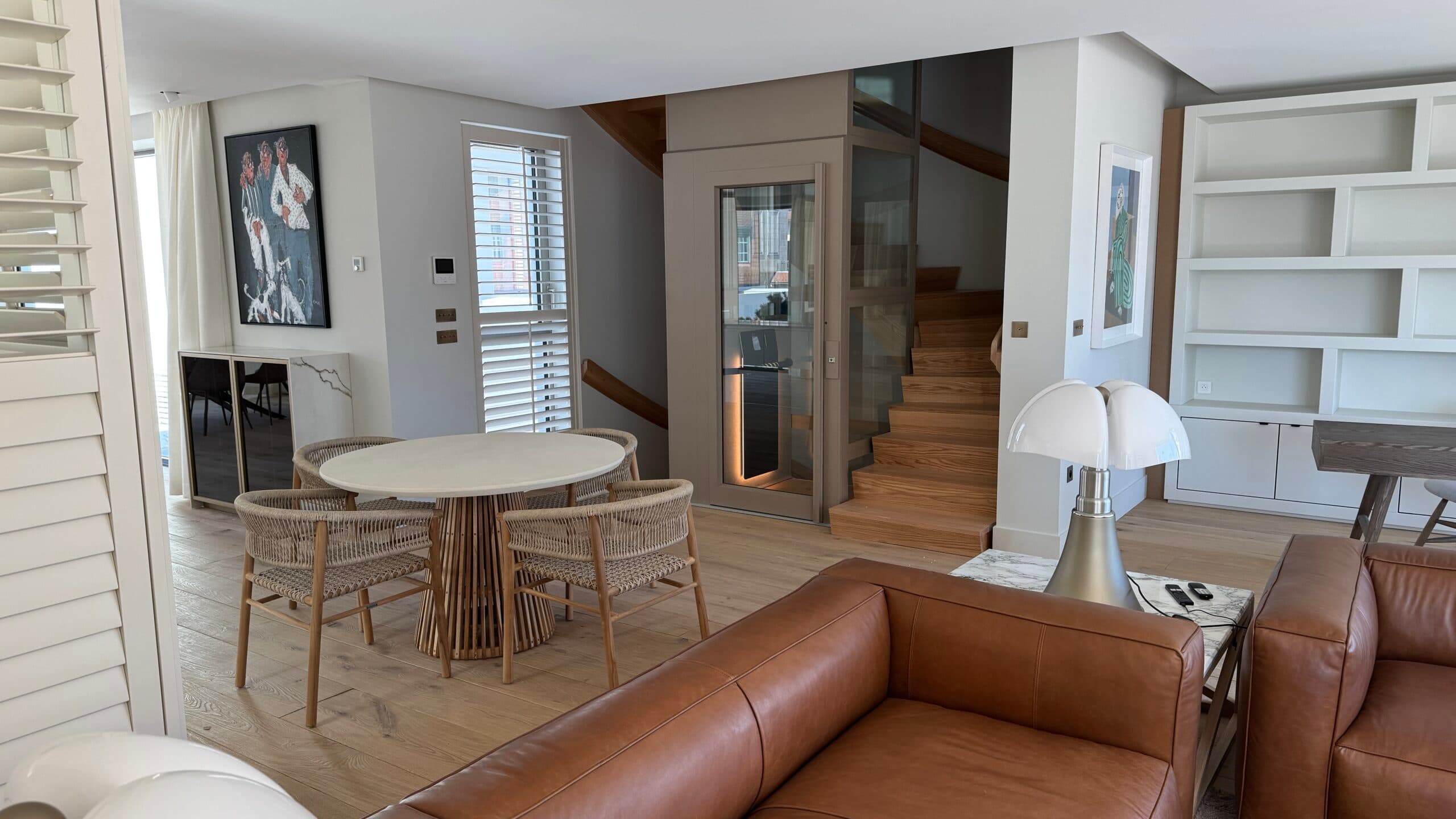
Space-efficient lift in a staircase
While many classic passenger elevators require at least 3-4 square metres of floor space, most of Cibes screw-driven platform lifts only need 1-2 square metres. That makes it easy for screw-type lifts to fit in unused spaces like the void inside of a staircase, for example.

Pitless lift installation
Unlike traditional elevators, platform lifts with screw and nut drive do not require a lift pit on the bottom floor. Pitless lifts are always delivered with an access ramp to facilitate entry and exit which is especially useful for passengers using a wheelchair.

Low headroom on the top floor
Because screw-type lifts to not have any machinery at the top, it is possible to choose a 1.1- 1.3 metre gate for the top floor, instead of a full-height door. The gate saves headroom space and is ideal for top floors with low or slanted ceilings. Even with a normal, full-height door, a screw-driven lift will easily fit under a 2.4 metre high ceiling.
2. Screw-type lifts have low structural impact
Thanks to their compact and ready-made design, screw-type lifts have a much smaller impact on the building than hydraulic lifts and traction elevators. In the eyes of many of the architects we have talked to, this is a great advantage because it:
- Lowers the material and labour costs for structural work
- Preserves the structural integrity of the building
- Makes it easy to fit the lift into existing homes and building
Screw-driven lifts are ideal for existing buildings
The minimal need for structural work makes screw-driven lifts very easy to integrate into existing homes and buildings. That is especially important for old houses and historic buildings where you want to preserve as much of the original architecture as possible.

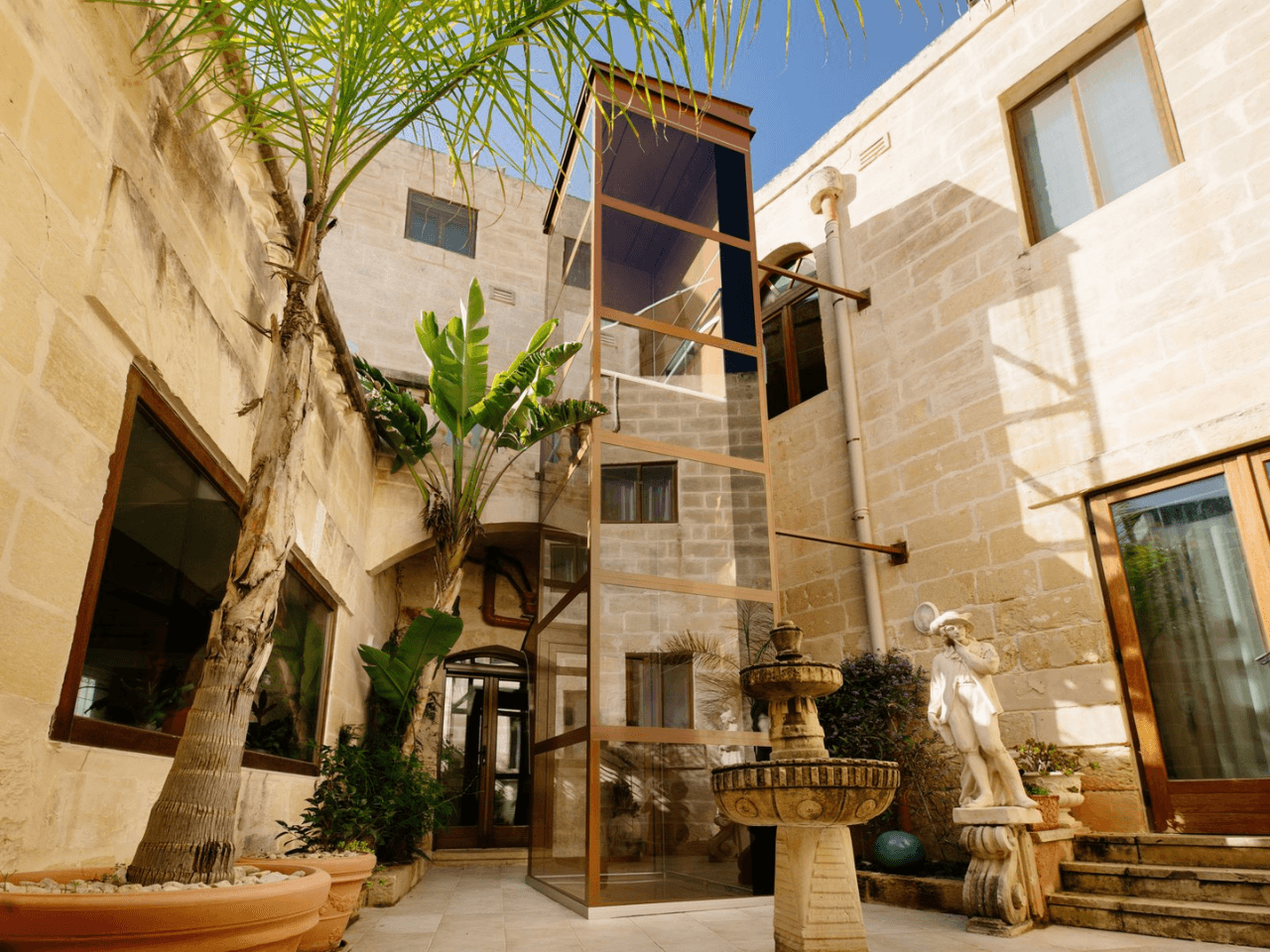
Lift in an old stone cottage
Thanks to its compact dimensions and elegant design, this screw-driven Cibes Air platform lift fits in seamlessly with the old stone cottage in France.

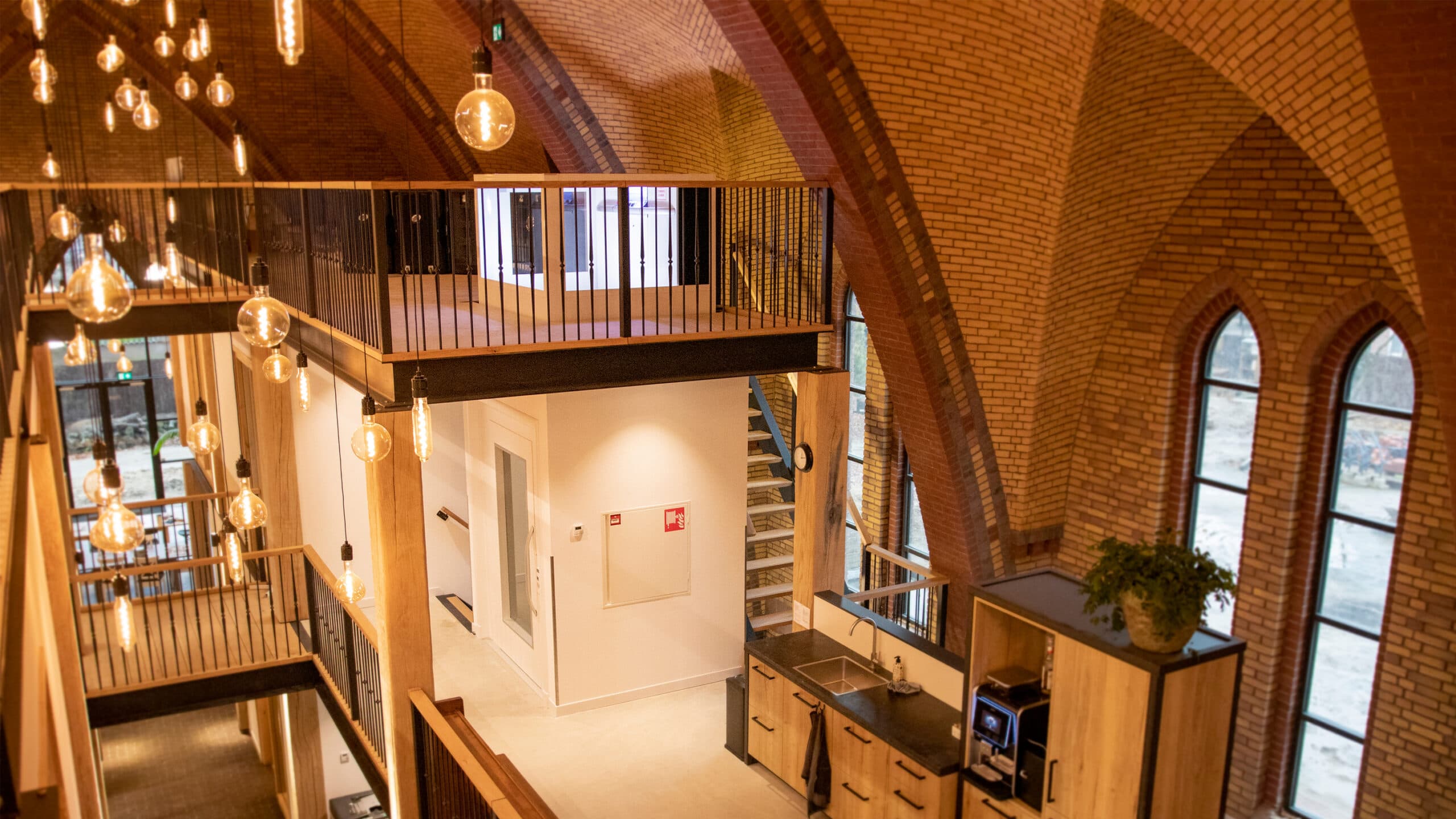
Platform lift in an old school
This Cibes A5000 platform lift is installed in the staircase of an old school building in the Netherlands. No floor openings are necessary, as the lift fits inside the void at the centre of the staircase.
3. Screw-driven lifts are fast and easy to install
Another reason why architects recommend our screw-type lifts is that they are fast and easy to install. So why is that important to an architect? The most obvious reasons are low labour and installation costs. But that is not all. Smooth and speedy elevator installation also makes project planning more predictable as it contributes to improved cost control and time management.

Why screw-type lifts have a short installation time
A lot of it comes down to our space-saving, ready-made lift concept that makes the installation of a screw-driven lift both speedy and predictable. Cibes screw-driven lifts are delivered in ready-made kits, including the lift shaft. That makes it easier to stay in control of the installation time and cost.
Table of the average installation time per lift type:
| Screw-driven | Hydraulic | Traction |
| 2-5 days | 3-10 days | 1-3 weeks |
4. Lifts with screw and nut drive are very reliable
When architects recommend our elevator solutions to builders and homeowners, it shows that they trust our lifts to deliver on quality and performance, not only now, but over time. Thanks to its simple and robust construction, our screw and nut drive system is reliable, hard-wearing and designed to last for decades.

Robust and reliable drive
The screw and nut drive of our lifts is very durable. As it only relies on electric power and simple screw-driven mechanics, it is also very reliable and robust over time. If correctly maintained, a lift with screw and nut drive will last up to 25 years.

Low-maintenance lifts
The maintenance needs of all lifts and elevators depends how often they are used. In general, screw-type lifts require fewer service visits than hydraulic and traction elevators, which also lowers the cost.
Table of maintenance needs and cost per lift type:
| Factors | Screw-driven | Hydraulic | Traction |
| Service visits | 1-3 /year | 2-4 /year | 4-6 /year |
| Risk of repairs | Low | High | Low |
| Maintenance cost | Low | High | Medium |
Note: Service visits are estimated on lifts used up to 15 times per day. National legislation or more frequent use may increase the number of visits.
Related questions & answers
What is a screw-driven lift?
A screw-driven lift has a simple but ingenious system for elevation: The platform or cabin of the lift is attached to a drive nut that moves up and down the screw, powered by an electric motor. When the motor turns one way, the drive nut makes the lift travel upwards, and when the motor turns the other way, the drive nut makes the lift travel downwards.
Advantages of screw-driven lift technology
The screw and nut drive is a very safe and reliable system that has a long lifespan (approximately 25-30 years with proper maintenance). The secret behind its longevity is its simplicity. Thanks to the reduced number of moving parts and the robust and durable mechanics, there simply is not that much that could go wrong. The drive system is also compact enough to be fitted inside the lift shaft, which is why this type of lift requires no separate machine room, nor extra headroom. Another advantage is that many lifts with screw and nut drive can be installed without a lift pit.
Low maintenance drive system
The screw and nut system is very robust and requires less maintenance than hydraulic or belt-driven lifts. Our lifts have an auto lubrication system that keeps the screw oiled at all times, so that maintenance visits are needed less frequently.
What are the different types of lifts and elevators?
There are many different types of lifts and elevator technologies to choose from; traction elevators, hydraulic lifts, screw-driven lifts, vacuum lifts and belt-driven lifts. All lift types have their pros and cons and there are many more different kinds of lifts than we can mention here. The same goes for the pros and cons. However, to take a few examples:
Hydraulic and traction elevators
Conventional hydraulic and traction elevators can travel fast, from 0.6 m/s to several metres per second, but they also take up a lot of room, given that they require a deep lift pit, a lot of headroom, and the construction of a big and bulky concrete elevator shaft. Most traction and hydraulic elevators also need a separate electrical cabinet placed in close proximity of the lift. Some traction elevators even need a separate machine room and/or control room on the outside of the elevator and many hydraulic lifts need a separate space for a hydraulic tank.
Screw-driven lifts
Our screw-driven lifts travel at a speed of 0.15 m/s, but take up a lot less room than hydraulic lifts and traction lifts, given that our lifts can be installed without a pit and have a top height of only 2250- 2350 mm (top height = the physical height of the lift on the top floor). The machine room and electrics are fitted inside the lift shaft, which also makes the whole construction very compact and space-efficient compared to conventional lifts.
Vacuum and belt-driven lifts
Just like lifts with screw and nut drive, vacuum lifts and belt-driven lifts are space-efficient. But vacuum lift technology is very expensive, and the lifting capacity is limited, while belt-driven lifts are sensitive to temperature changes as well as to wear and tear as the steel belts wear out.
To learn more about different kinds of lifts and elevators, explore this guide to elevator and lift types.
Can you install a lift in an existing house?
Yes, it is possible to install a lift in an existing house, and today there are many space-saving and cost-efficient home lifts that are easier to install in an existing home than conventional residential elevators.
While conventional elevators generally need a lot of space above and beneath the lift as well as the construction of a bulky, concrete hoistway, there are other lift solutions. Screw-driven platform lifts, for example are compact, preassembled solutions that even include a ready-made, modular lift shaft. As platform lifts require minimal building work and can be installed on a much smaller footprint than conventional lifts, they offer you a space-saving and cost-efficient alternative that will fit into almost any existing home.
5. Screw-type lifts offer great design options
Screw-driven lifts also offer great freedom and flexibility when it comes to design and that is something we know that architects appreciate. One feature that we know is particularly popular among architects is the possibility to glaze all four sides of the lift shaft. Glass blends in well with most architectural styles. It lets the natural light in and makes the space feel open and airy.

Panoramic glass elevators
Thanks to the open platform and the simplicity of our screw-driven machinery, our panoramic glass lifts look exceptionally sleek and elegant. Especially when paired with panoramic AL6 aluminium doors, like in this example.

Wide range of lift design options
We provide one of the widest choices of lift models, door designs, colours, materials, sizes and accessories on the low-speed lift market. The combinations of colours and materials are virtually endless to fit almost any setting. Most of our lift models can also be fitted with bespoke flooring, supplied and delivered by the provider of your choice.
The image shows a gold-coloured Cibes Air with bespoke stone flooring in a hotel in Finland.

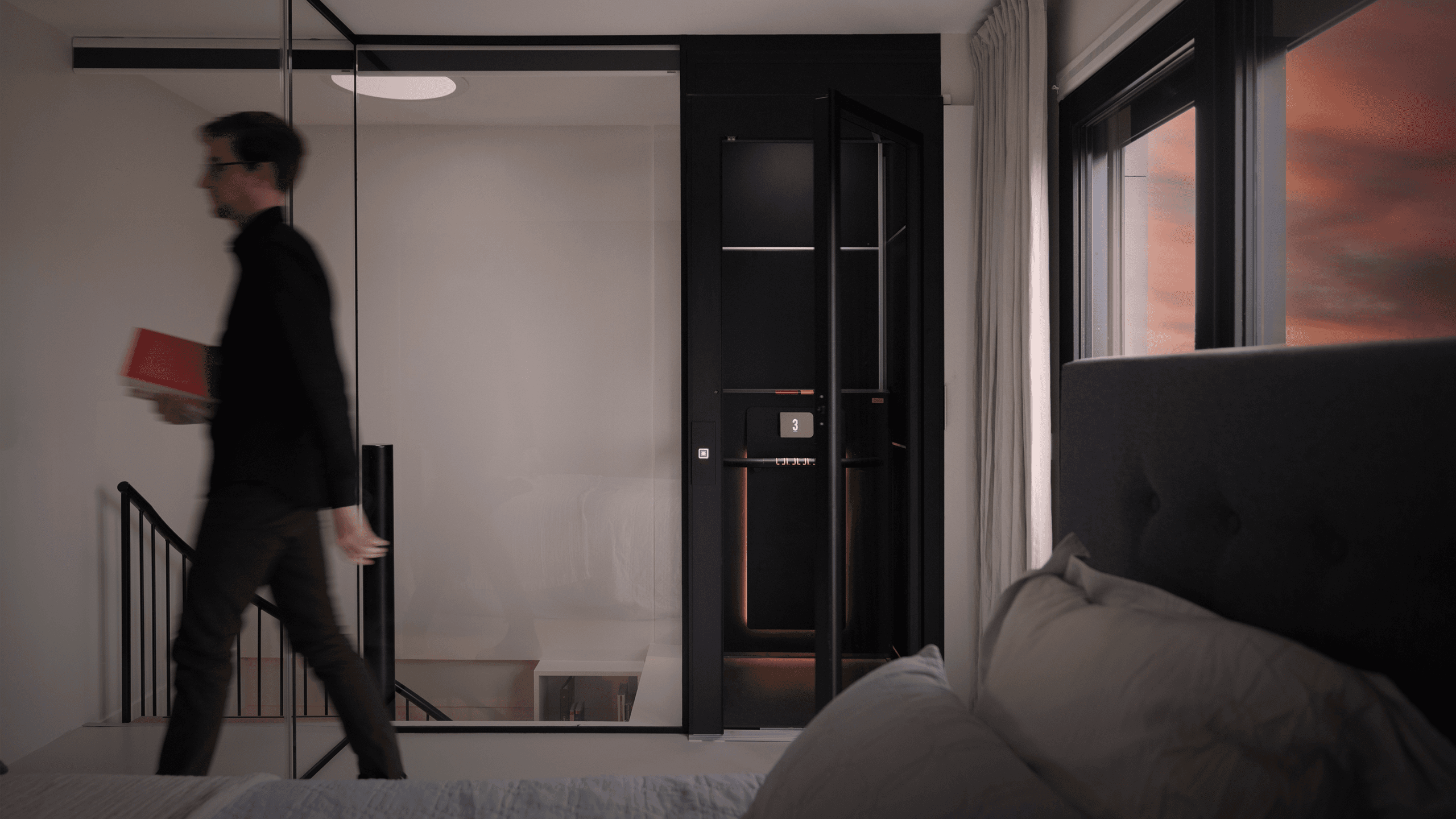
Home lift Cibes Air in a luxury villa with minimalist design

Platform lift Cibes A5000 in an old apartment building

Cibes outdoor lift installed in an atrium garden

To conclude
More architects than ever are recognising the benefits of screw-type lifts, and it is easy to see why. Screw-driven elevators are space-efficient and have minimal structural impact, which makes them easy to integrate with both new and existing buildings. Furthermore, they are fast and easy to install and offer you stable and reliable function over time. Not to mention that lifts with screw and nut drive offer design options that enable them to blend in seamlessly with most architectural styles.
A screw-type lift is often not always the cheapest alternative, at least not if you only consider the price of the lift equipment. However, looking at the total cost, including site preparations, structural work, and maintenance needs, a screw-driven lift is a robust and reliable option that becomes increasingly cost-effective over time.
Do you want to know more about Cibes lift solutions? Get in touch with us through the contact form below and we will get back to you shortly.
Contact us. Our lift experts are ready to help you.
We offer free consultation, no strings attached.
Written by

Johanna AawCopywriter & Content Marketing Specialist , Author